Interaction between Neighborhood Exposome and Genetic Risk in Child Psychotic-like Experiences
Yinxian Chen, Qingyue Yuan, Lina Dimitrov, Benjamin Risk, Benson Ku, Anke Huels

TL;DR
This study explores how neighborhood environments and genetic risk interact to influence distressing psychotic-like experiences in children.
Contribution
The novel finding is that neighborhood exposures have a stronger impact on psychotic-like experiences in children with lower genetic risk.
Findings
Genetic risk alone was not significantly linked to persistent distressing psychotic-like experiences.
Neighborhood exposome scores were significantly associated with these experiences.
Higher genetic risk reduced the impact of neighborhood exposures on these experiences.
Abstract
Persistent distressing psychotic-like experiences (PLE) among children may be driven by genetics and neighborhood environmental exposures. However, the gene-environment interaction to persistent distressing PLE is unknown. The study included 6,449 participants from the Adolescent Brain and Cognitive Development Study. Genetic risk was measured by a multi-ancestry schizophrenia polygenic risk score (SCZ-PRS). Multi-dimensional neighborhood-level exposures were used to form a neighborhood exposome (NE) score. SCZ-PRS was not statistically significantly associated with odds of persistent distressing PLE (OR = 1.04, 95% CI: 0.97, 1.13, P = 0.280), whereas NE score was (OR = 1.15, 95% CI: 1.05, 1.26, P = 0.003). The association between NE score and persistent distressing PLE was statistically significantly attenuated as SCZ-PRS increased (OR for interaction = 0.92, 95% CI: 0.86, 1.00, P =…
Genes, proteins, chemicals, diseases, species, mutations and cell lines named across the full text — each resolved to its canonical identifier and authoritative record.
Click any figure to enlarge with its caption.
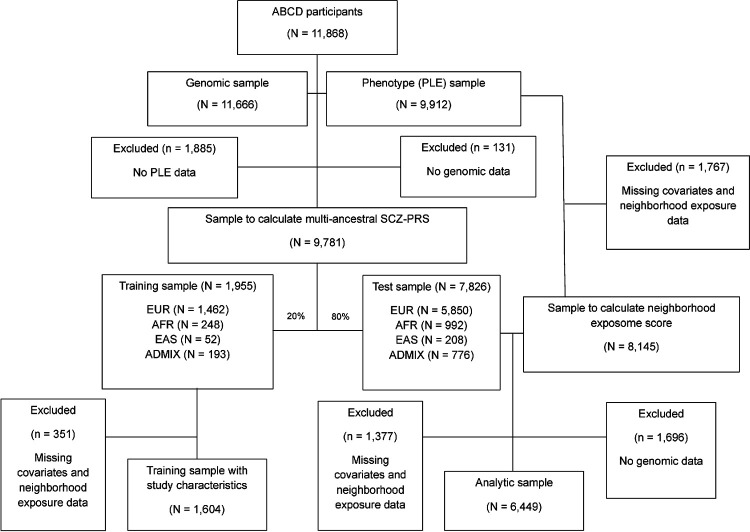 Figure 1
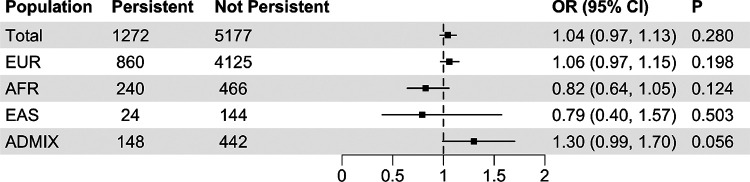 Figure 2
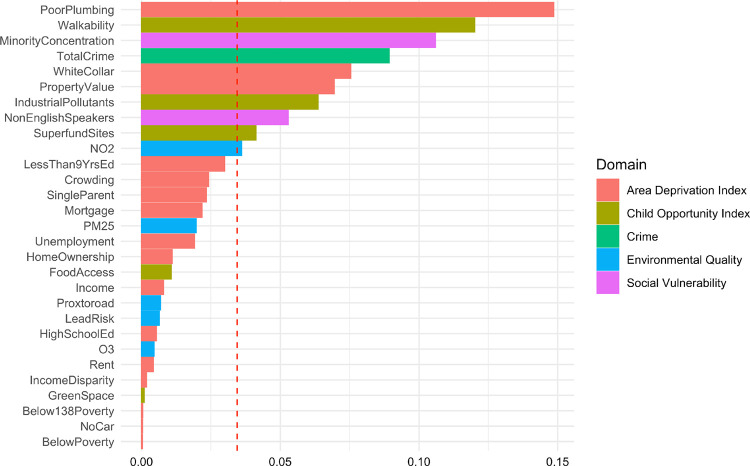 Figure 3
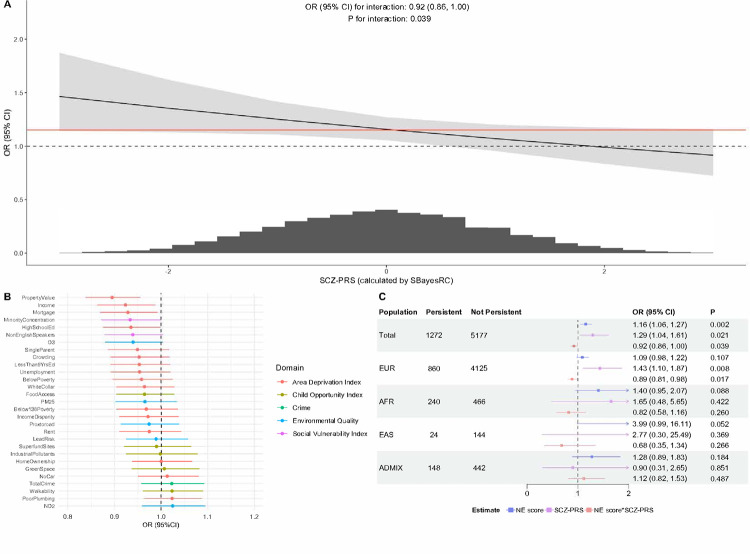 Figure 4
Peer Reviews
No public reviews on file for this paper yet. If you reviewed it on a platform where reviews are public (OpenReview, ICLR, NeurIPS, ICML), you can paste yours below so the community can read it here.
Videos
No videos yet. Explain this paper in a talk, walkthrough, or lecture? Add one.
Taxonomy
TopicsHealth, Environment, Cognitive Aging · Genetic Associations and Epidemiology · Obesity, Physical Activity, Diet