A Large-Scale Genome-wide Association Study of Blood Pressure Accounting for Gene-Depressive Symptomatology Interactions in 564,680 Individuals from Diverse Populations
Songmi Lee, Clint L Miller, Amy R Bentley, Michael R Brown, Pavithra Nagarajan, Raymond Noordam, John Morrison, Karen Schwander, Kenneth Westerman, Minjung Kho, Aldi T Kraja, Paul S de Vries, Farah Ammous, Hughes Aschard, Traci M Bartz, Anh Do, Charles T Dupont, Mary F Feitosa

TL;DR
This study finds new genetic links between blood pressure and depressive symptoms in a large, diverse population, highlighting potential drug targets and pathways connecting mood and hypertension.
Contribution
The study identifies novel gene-depressive symptom interaction loci for blood pressure in diverse populations and highlights druggable targets.
Findings
Seven novel gene-DEPR interaction loci for blood pressure were discovered, including genes involved in neurogenesis and lipid metabolism.
Nine known BP loci showed evidence of gene-DEPR interactions, linking mood disturbance to BP regulation.
Eleven of the 16 identified loci came from non-European populations, emphasizing the importance of diversity in genetic studies.
Abstract
Gene-environment interactions may enhance our understanding of hypertension. Our previous study highlighted the importance of considering psychosocial factors in gene discovery for blood pressure (BP) but was limited in statistical power and population diversity. To address these challenges, we conducted a multi-population genome-wide association study (GWAS) of BP accounting for gene-depressive symptomatology (DEPR) interactions in a larger and more diverse sample. Our study included 564,680 adults aged 18 years or older from 67 cohorts and 4 population backgrounds (African (5%), Asian (7%), European (85%), and Hispanic (3%)). We discovered seven novel gene-DEPR interaction loci for BP traits. These loci mapped to genes implicated in neurogenesis (TGFA, CASP3), lipid metabolism (ACSL1), neuronal apoptosis (CASP3), and synaptic activity (CNTN6, DBI). We also identified evidence for…
Genes, proteins, chemicals, diseases, species, mutations and cell lines named across the full text — each resolved to its canonical identifier and authoritative record.
Click any figure to enlarge with its caption.
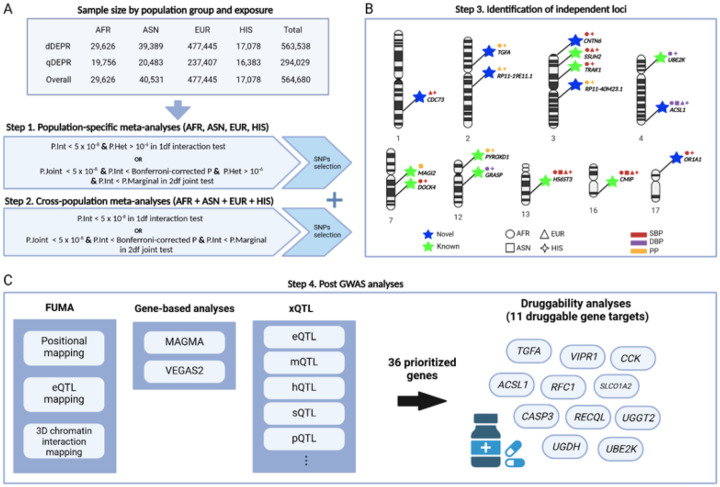 Figure 1
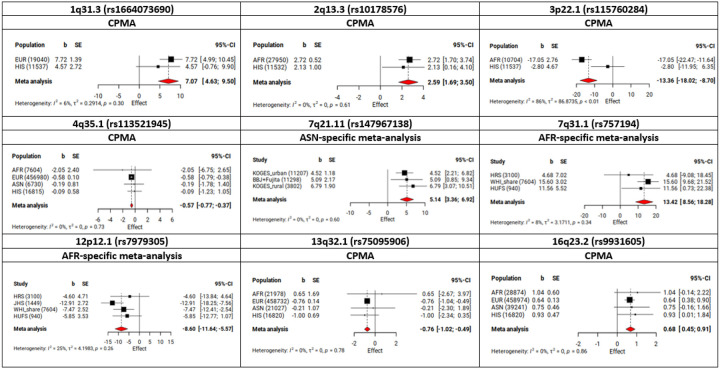 Figure 2
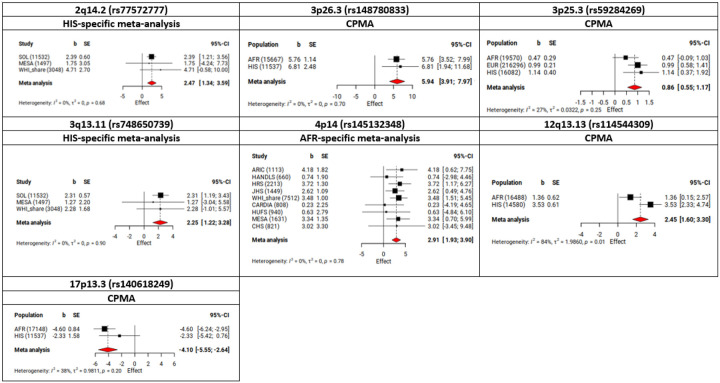 Figure 3
Peer Reviews
No public reviews on file for this paper yet. If you reviewed it on a platform where reviews are public (OpenReview, ICLR, NeurIPS, ICML), you can paste yours below so the community can read it here.
Videos
No videos yet. Explain this paper in a talk, walkthrough, or lecture? Add one.
Taxonomy
TopicsGenetic Associations and Epidemiology · Birth, Development, and Health · Hormonal Regulation and Hypertension