Intravenous streptozotocin induces variants in painful diabetic peripheral neuropathy in female mice
Michelle Hagenimana, Audrey R. Green, Jessica A. Tierney, Melissa E. Lenert, Michael D. Burton

TL;DR
A new method using intravenous streptozotocin induces diabetic neuropathy in both male and female mice, enabling better preclinical research.
Contribution
Intravenous STZ administration induces consistent diabetic neuropathy in both sexes, overcoming limitations of existing models.
Findings
Intravenous STZ induced elevated blood glucose and pain behaviors in both male and female mice.
Calcium imaging showed diabetic mice had faster capsaicin-induced neuronal responses compared to controls.
A subset of STZ-insensitive mice showed elevated glucose levels but not pain hypersensitivity.
Abstract
At least half of the 34 million diabetic patients in the U.S. develop painful diabetic peripheral neuropathy (DPN). Recent evidence suggests that there are sex differences in the prevalence and mechanisms underlying pathological pain states. However, due to technical limitations in murine models, there is a dearth of the use of females in diabetic neuropathy research. There is a need to develop a reproducible model to induce painful DPN in both sexes. The predominately used model employs streptozotocin (STZ) administration via intraperitoneal injections. This strategy consistently induces diabetic pathology in males, but not females. We set out to enhance a current murine DPN model by identifying a method for inducing diabetic pathologies in male and female mice and tracking the development of painful neuropathy. Painful DPN was induced in both male and female mice through five daily…
Genes, proteins, chemicals, diseases, species, mutations and cell lines named across the full text — each resolved to its canonical identifier and authoritative record.
Click any figure to enlarge with its caption.
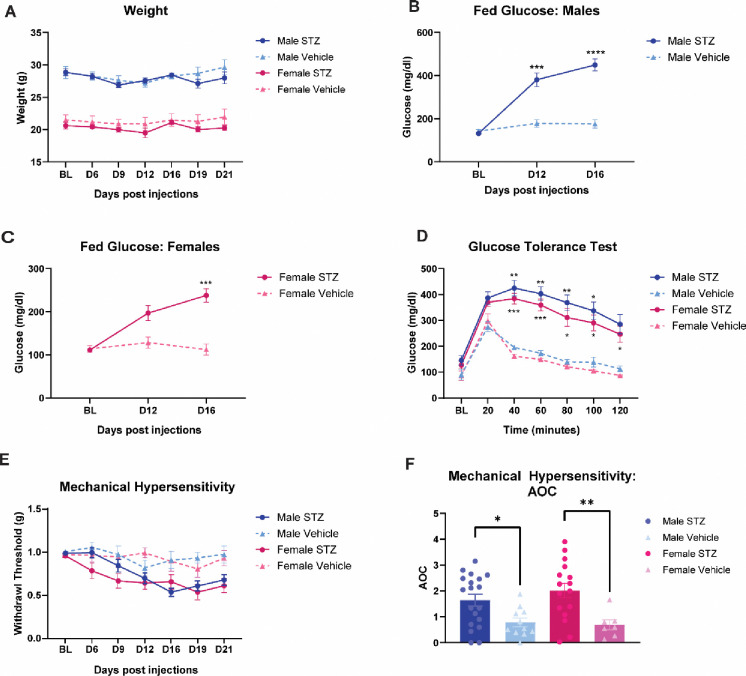 Figure 1
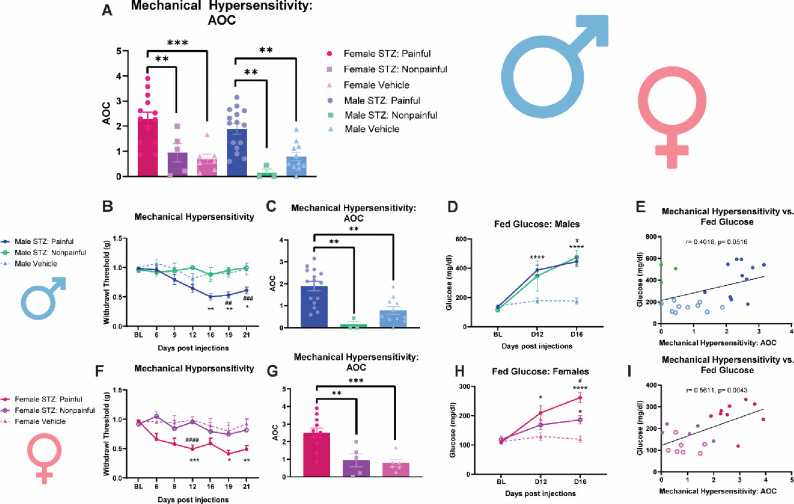 Figure 2
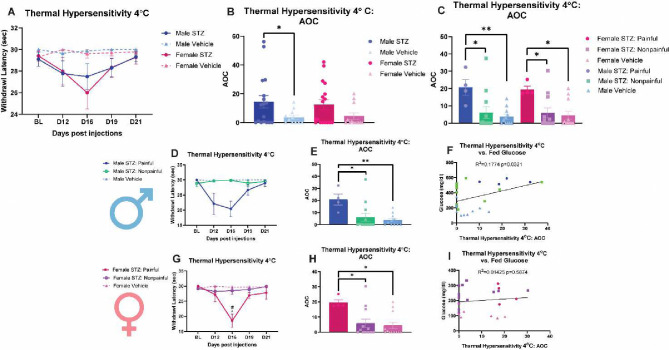 Figure 3
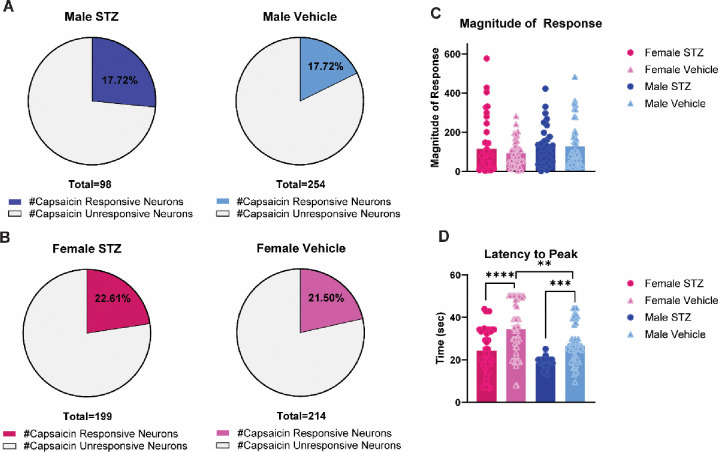 Figure 4
Peer Reviews
No public reviews on file for this paper yet. If you reviewed it on a platform where reviews are public (OpenReview, ICLR, NeurIPS, ICML), you can paste yours below so the community can read it here.
Videos
No videos yet. Explain this paper in a talk, walkthrough, or lecture? Add one.
Taxonomy
TopicsPain Mechanisms and Treatments · Botulinum Toxin and Related Neurological Disorders · Nerve injury and regeneration