Development of a 3D-Printed Wistar Rat Model From Digital Imaging and Communications in Medicine (DICOM) Data for Medical Education and Research Applications
Todor G Bogdanov, Todor A Hikov, Zafer A Sabit, Radka Tafradzhiyska-Hadzhiolova, Daliya T Pencheva

TL;DR
This paper describes a 3D-printed Wistar rat model made from medical imaging data to aid education and research.
Contribution
A freely accessible 3D-printed Wistar rat model derived from DICOM data is developed for educational and research use.
Findings
The 3D model accurately replicates the Wistar rat's anatomy for educational and preclinical applications.
The model is compatible with common 3D printing technologies like FDM and SLA.
Open access to the STL file promotes widespread use in medical and veterinary education and research.
Abstract
Three-dimensional (3D) printing has revolutionized medical education and research by enabling the creation of accurate anatomical models derived from imaging studies. This report details the development of a 3D-printed Wistar rat model, produced using DICOM (Digital Imaging and Communications in Medicine) data from a single radiological study. The model was designed to serve as an educational tool for medical and veterinary students and as a resource for researchers. DICOM data from a single animal study was segmented and converted into a high-resolution 3D model using specialized software that converts the voxels from the slices into a waterfall volume with a uniform surface. The resulting STL file underwent optimization to ensure compatibility with common 3D printing technologies, such as fused deposition modeling (FDM) and stereolithography (SLA). The final printed model replicates…
Genes, proteins, chemicals, diseases, species, mutations and cell lines named across the full text — each resolved to its canonical identifier and authoritative record.
Click any figure to enlarge with its caption.
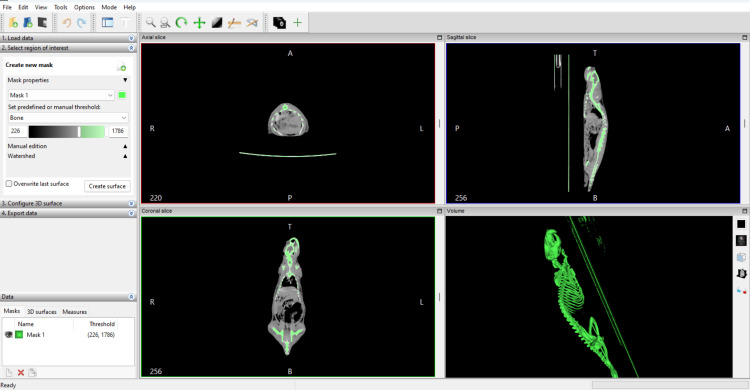 Figure 1
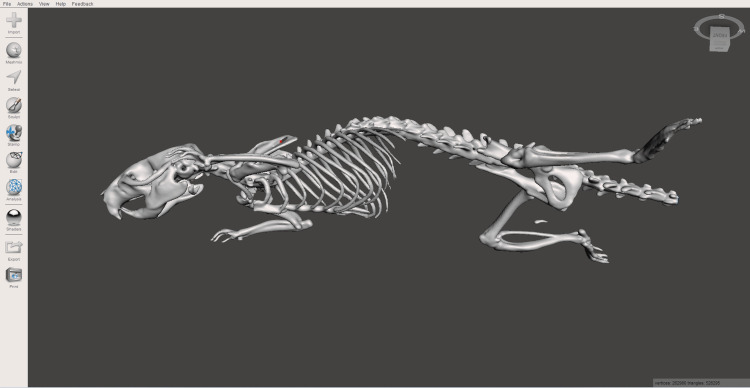 Figure 2
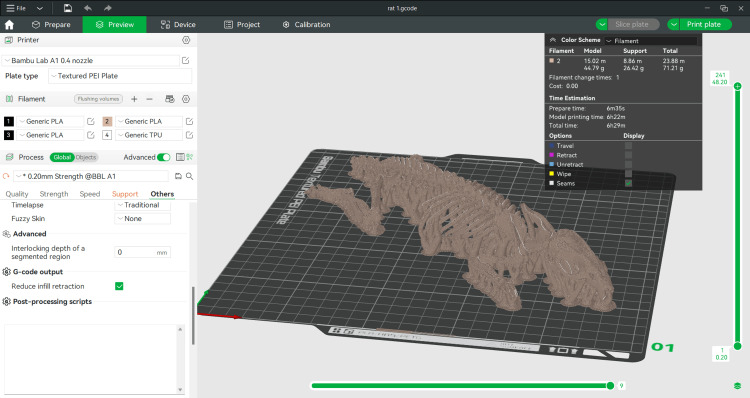 Figure 3
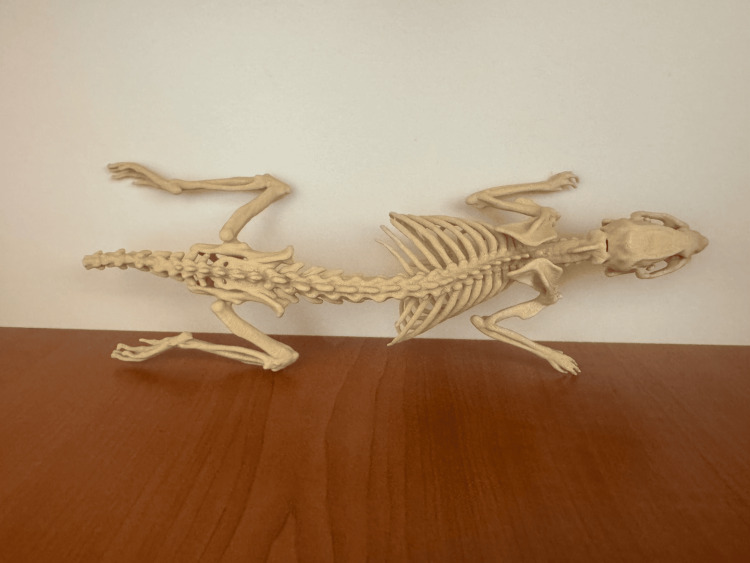 Figure 4
Peer Reviews
No public reviews on file for this paper yet. If you reviewed it on a platform where reviews are public (OpenReview, ICLR, NeurIPS, ICML), you can paste yours below so the community can read it here.
Videos
No videos yet. Explain this paper in a talk, walkthrough, or lecture? Add one.
Taxonomy
TopicsAnatomy and Medical Technology · Surgical Simulation and Training · Biomedical and Engineering Education