Cardiotocography-Based Experimental Comparison of Artificial Intelligence and Human Judgment in Assessing Fetal Asphyxia During Delivery
Kohei Miyata, Chihiro Shibata, Hiroaki Fukunishi, Kazunari Hemmi, Hayato Kinoshita, Toyofumi Hirakawa, Daichi Urushiyama, Masamitsu Kurakazu, Fusanori Yotsumoto

TL;DR
This study compares AI and human experts in assessing fetal asphyxia using CTG data, finding that human judgment outperforms AI in accuracy but AI can help reduce false positives.
Contribution
The study experimentally compares AI and human specialists in predicting fetal asphyxia using CTG data, revealing the potential of AI to complement human judgment.
Findings
Human specialists achieved a higher AUC (0.693) than AI-based methods (ML: 0.514, DL: 0.524) in predicting fetal asphyxia.
Combining human and AI predictions improved specificity but did not surpass human accuracy alone.
AI has potential to reduce false positives and complement human judgment in clinical settings.
Abstract
Cardiotocography (CTG) has long been the standard method for monitoring fetal status during delivery. Despite its widespread use, human error and variability in CTG interpretation contribute to adverse neonatal outcomes, with over 70% of stillbirths, neonatal deaths, and brain injuries potentially avoidable through accurate analysis. Recent advancements in artificial intelligence (AI) offer opportunities to address these challenges by complementing human judgment. This study experimentally compared the diagnostic accuracy of AI and human specialists in predicting fetal asphyxia using CTG data. Machine learning (ML) and deep learning (DL) algorithms were developed and trained on 3,519 CTG datasets. Human specialists independently assessed 50 CTG figures each through web-based questionnaires. A total of 984 CTG figures from singleton pregnancies were evaluated, and outcomes were compared…
Genes, proteins, chemicals, diseases, species, mutations and cell lines named across the full text — each resolved to its canonical identifier and authoritative record.
Click any figure to enlarge with its caption.
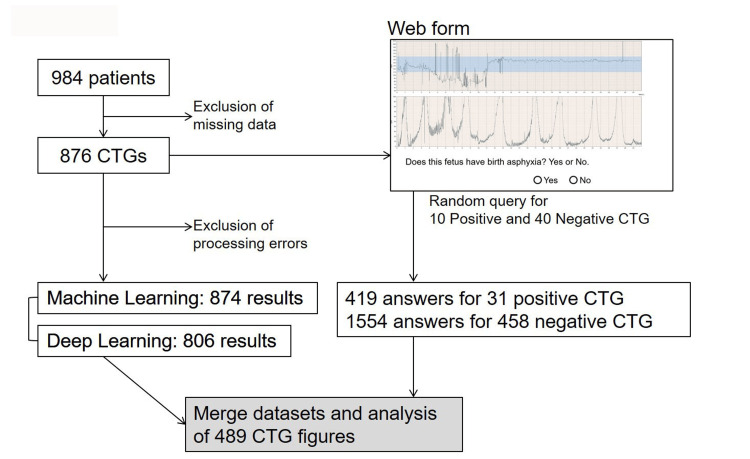 Figure 1
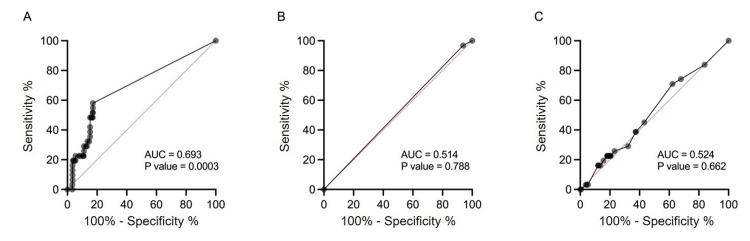 Figure 2
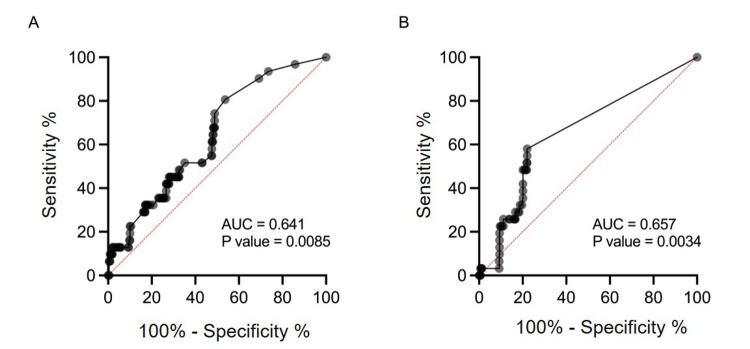 Figure 3
Peer Reviews
No public reviews on file for this paper yet. If you reviewed it on a platform where reviews are public (OpenReview, ICLR, NeurIPS, ICML), you can paste yours below so the community can read it here.
Videos
No videos yet. Explain this paper in a talk, walkthrough, or lecture? Add one.
Taxonomy
TopicsNeonatal and fetal brain pathology · Emergency and Acute Care Studies · Neonatal Respiratory Health Research