A Reduced Order Model for Sea Water Intrusion Simulation Using Proper Orthogonal Decomposition
Mohammadali Geranmehr, Domenico Bau, Alex S. Mayer, Weijiang Yu

TL;DR
This paper introduces a new reduced-order model for simulating seawater intrusion in coastal aquifers, offering faster and efficient simulations.
Contribution
The novel contribution is a finite-difference proper orthogonal decomposition (FD-POD) model for simulating seawater intrusion with high accuracy and efficiency.
Findings
The FD-POD approach shows high accuracy in simulating seawater intrusion in both homogeneous and heterogeneous systems.
The model provides significant computational efficiency gains while maintaining accuracy.
The FD-POD model is compatible with popular variable-density flow models like MODFLOW.
Abstract
Sea water intrusion (SWI) simulators are essential tools to assist the sustainable management of coastal aquifers. These simulators require the solution of coupled variable‐density partial differential equations (PDEs), which reproduce the processes of groundwater flow and dissolved salt transport. The solution of these PDEs is typically addressed numerically with the use of density‐dependent flow simulators, which are computationally intensive in most practical applications. To this end, model surrogates are generally developed as substitutes for full‐scale aquifer models to trade off accuracy in exchange for computational efficiency. Surrogates represent an attractive option to support groundwater management situations in which fast simulators are required to evaluate large sets of alternative pumping strategies. Reduced‐order models, a sub‐category of surrogate models, are based on…
Genes, proteins, chemicals, diseases, species, mutations and cell lines named across the full text — each resolved to its canonical identifier and authoritative record.
Click any figure to enlarge with its caption.
 Figure 1
 Figure 2
 Figure 3
 Figure 4
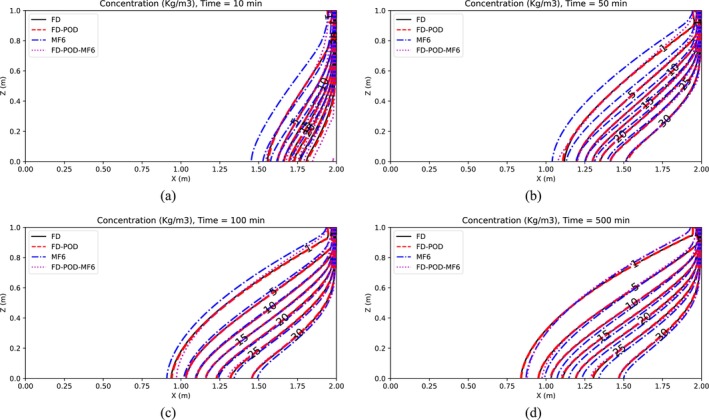 Figure 5
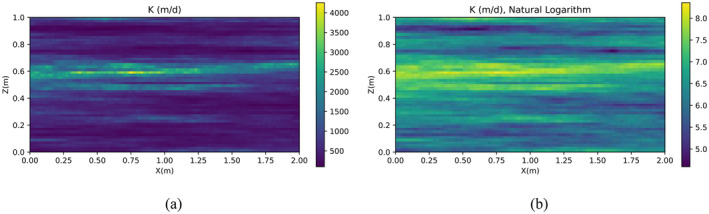 Figure 6
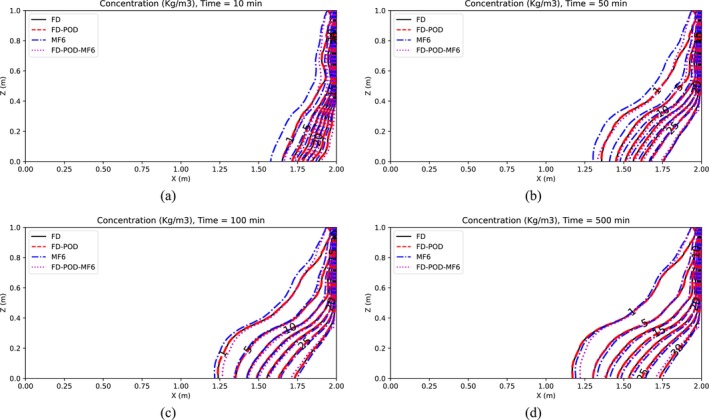 Figure 7
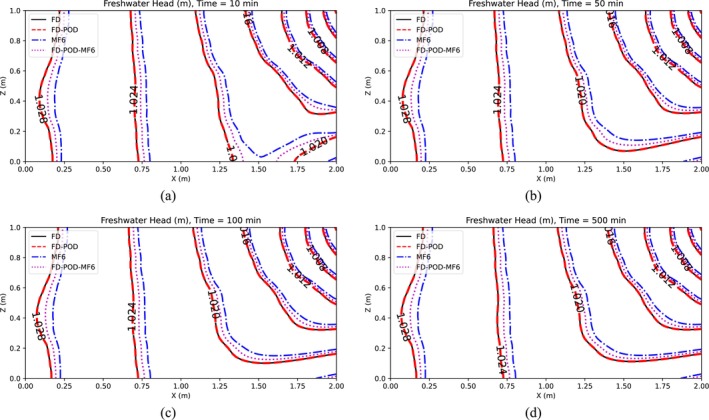 Figure 8
Peer Reviews
No public reviews on file for this paper yet. If you reviewed it on a platform where reviews are public (OpenReview, ICLR, NeurIPS, ICML), you can paste yours below so the community can read it here.
Videos
No videos yet. Explain this paper in a talk, walkthrough, or lecture? Add one.
Taxonomy
TopicsGroundwater flow and contamination studies · Hydrological Forecasting Using AI · Soil and Unsaturated Flow