Cockayne syndrome B protein is implicated in transcription and associated chromatin dynamics in homeostatic and genotoxic conditions
Anastasios Liakos, Katerina Z. Ntakou‐Zamplara, Nelina Angelova, Dimitris Konstantopoulos, Anna‐Chloe Synacheri, Zoi Spyropoulou, Iason A. Tsarmaklis, Despoina Korrou‐Karava, Georgios Nikolopoulos, Matthieu D. Lavigne, Maria Fousteri

TL;DR
This study shows how the Cockayne syndrome B protein (CSB) affects transcription and chromatin structure in normal and stressed cells, revealing new roles beyond DNA repair.
Contribution
The study reveals novel roles of CSB in transcription and chromatin dynamics, independent of its known DNA repair function.
Findings
CSB absence causes delayed transcription progression and more compact chromatin structure.
CSB-deficient cells show increased retention of RNA transcripts and elongating RNA polymerase II after UV exposure.
Transcription initiation remains active in CSB-deficient cells despite chromatin changes.
Abstract
The integrity of the actively transcribed genome against helix‐distorting DNA lesions relies on a multilayered cellular response that enhances Transcription‐Coupled Nucleotide Excision Repair (TC‐NER). When defective, TC‐NER is causatively associated with Cockayne‐Syndrome (CS), a rare severe human progeroid disorder. Although the presence of unresolved transcription‐blocking lesions is considered a driver of the aging process, the molecular features of the transcription‐driven response to genotoxic stress in CS‐B cells remain largely unknown. Here, an in‐depth view of the transcriptional and associated chromatin dynamics that occur in CS‐B cells illuminates the role of CSB therein. By employing high‐throughput genome‐wide approaches, we observed that absence of a functional CSB protein results in a delay in transcription progression, more positioned +1 nucleosomes, and less dynamic…
Genes, proteins, chemicals, diseases, species, mutations and cell lines named across the full text — each resolved to its canonical identifier and authoritative record.
Click any figure to enlarge with its caption.
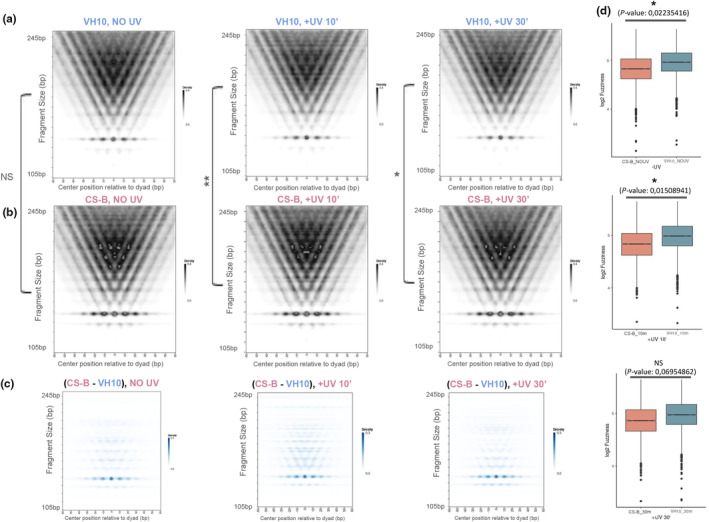 Figure 1
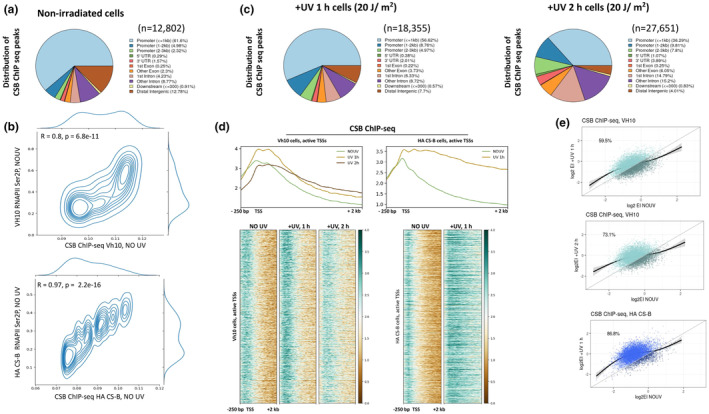 Figure 2
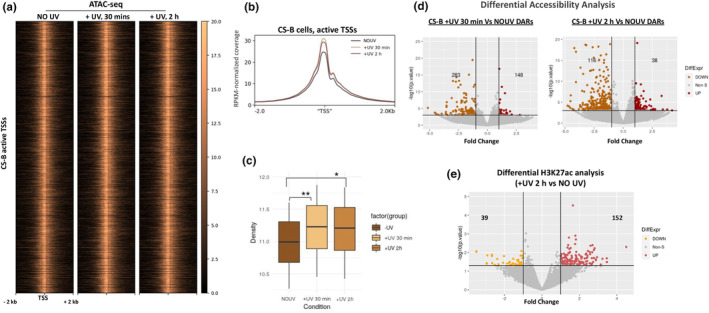 Figure 3
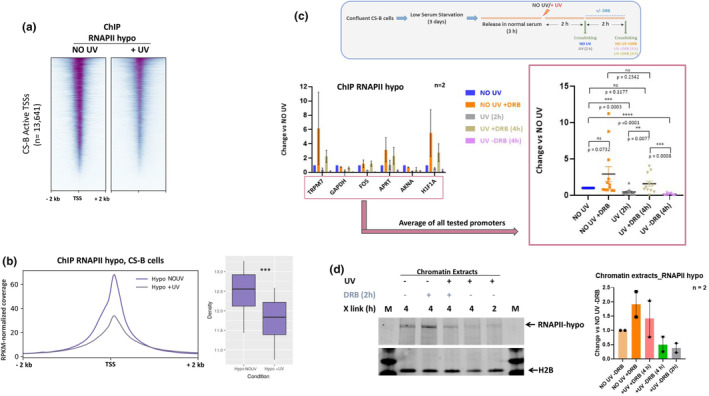 Figure 4
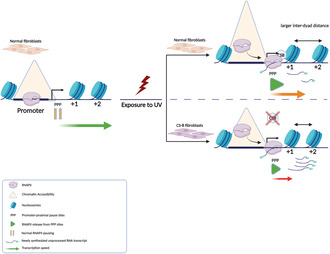 Figure 5
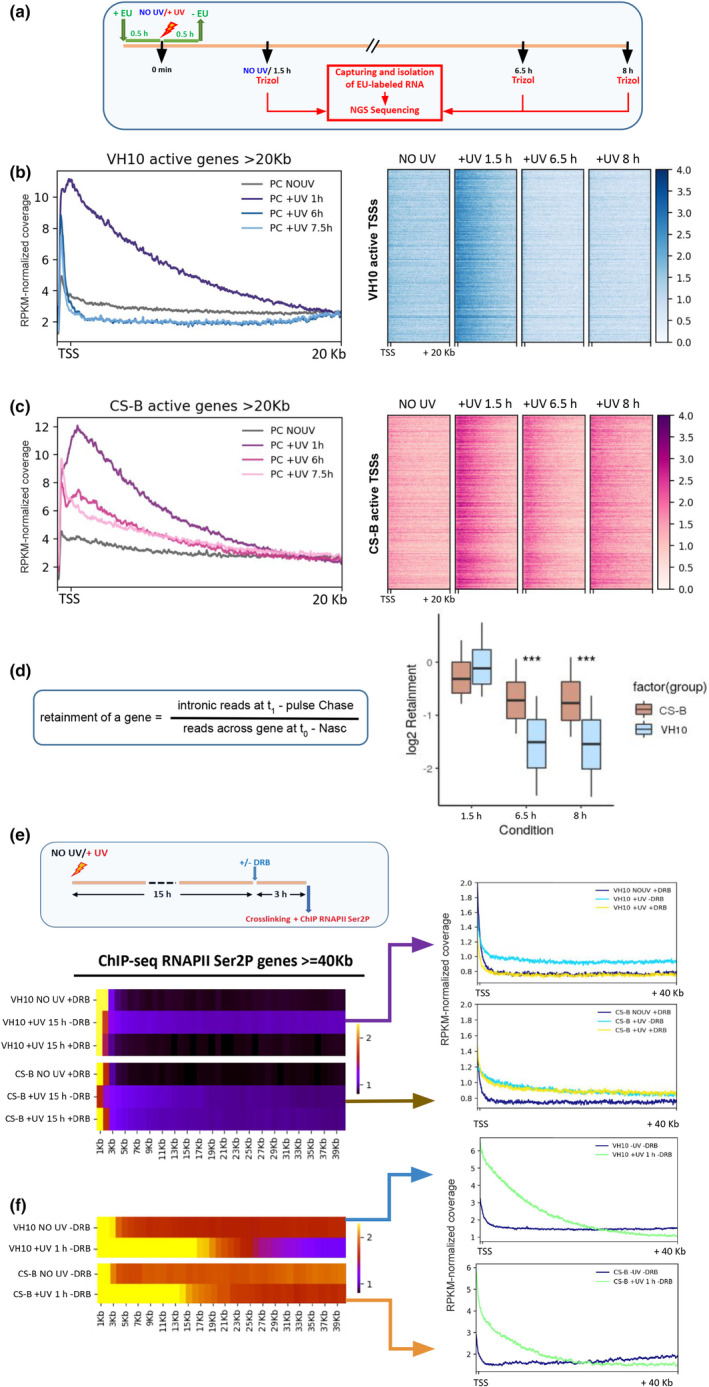 Figure 6
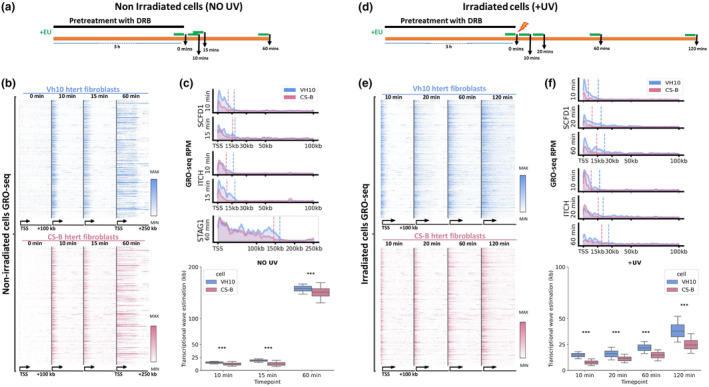 Figure 7
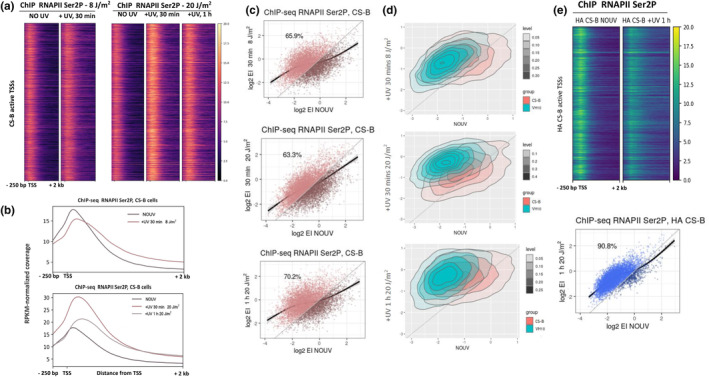 Figure 8
Peer Reviews
No public reviews on file for this paper yet. If you reviewed it on a platform where reviews are public (OpenReview, ICLR, NeurIPS, ICML), you can paste yours below so the community can read it here.
Videos
No videos yet. Explain this paper in a talk, walkthrough, or lecture? Add one.
Taxonomy
TopicsGenomics and Chromatin Dynamics · DNA Repair Mechanisms · Chromosomal and Genetic Variations