Postmortem genetic diagnosis of hereditary leiomyomatosis and renal cell carcinoma syndrome: Identification through normal kidney tissues after surgical removal
Shodai Suzuki, Yoshiyuki Yamamoto, Taigo Kato, Koji Hatano, Takahiro Matsui, Kae Hashimoto, Takako Miyamura, Yoji Nagashima, Norio Nonomura, Atsunari Kawashima

TL;DR
A man with aggressive kidney cancer was diagnosed posthumously with a hereditary cancer syndrome using genetic testing on surgical tissue, enabling genetic counseling for his family.
Contribution
Demonstrates the feasibility of postmortem genetic diagnosis of hereditary leiomyomatosis and renal cell cancer using normal kidney tissue from surgical specimens.
Findings
FH gene mutation was confirmed postmortem in normal kidney tissue from a surgical specimen.
Postmortem genetic testing enabled a diagnosis of hereditary leiomyomatosis and renal cell cancer after it was not possible during the patient's lifetime.
This approach allows for genetic counseling for family members despite limitations during the patient's life.
Abstract
Hereditary leiomyomatosis and renal cell cancer is an autosomal dominant disorder caused by germline mutations in the FH gene and is associated with poor prognosis of aggressive renal cancer. A 33‐year‐old man presented with asymptomatic gross hematuria and was diagnosed with a right renal tumor, cT3aN1M0. He underwent open radical nephrectomy, and pathological examination revealed papillary renal cell carcinoma. Despite aggressive treatment, the disease progressed rapidly, and discussions regarding genetic testing could not take place during his lifetime, although circulating‐tumor DNA showed mutation of FH gene. After death, his wife requested postmortem genetic testing. Genetic analysis using DNA extracted from normal kidney tissues in surgical specimens (blood sample absence) confirmed the FH mutation, and hereditary leiomyomatosis and renal cell cancer was diagnosed posthumously.…
Genes, proteins, chemicals, diseases, species, mutations and cell lines named across the full text — each resolved to its canonical identifier and authoritative record.
Click any figure to enlarge with its caption.
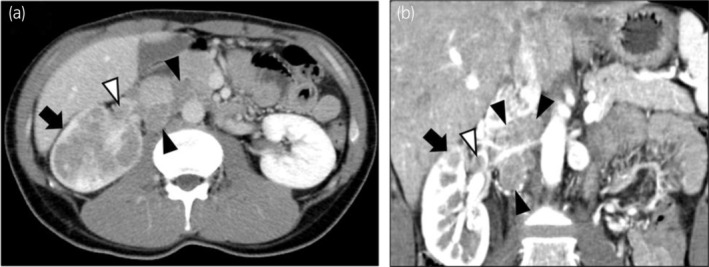 Figure 1
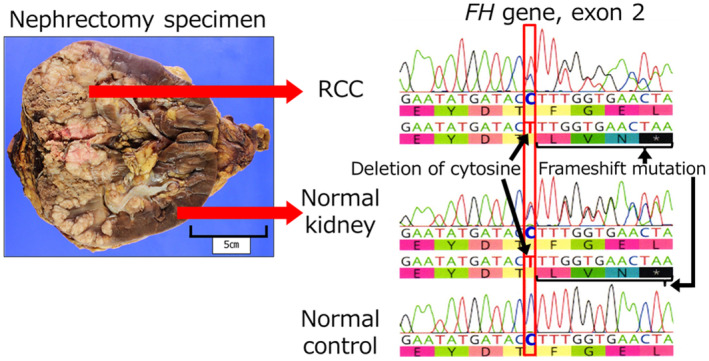 Figure 2
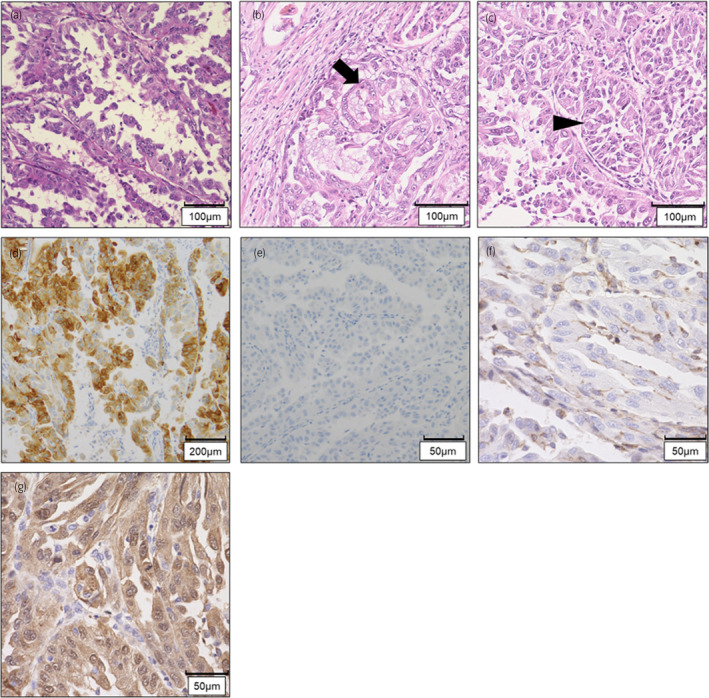 Figure 3
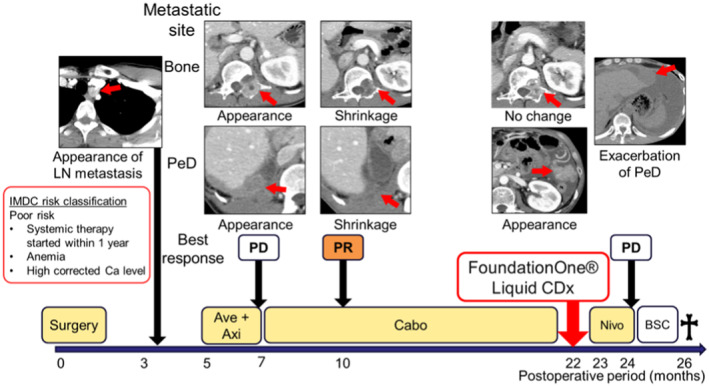 Figure 4
Peer Reviews
No public reviews on file for this paper yet. If you reviewed it on a platform where reviews are public (OpenReview, ICLR, NeurIPS, ICML), you can paste yours below so the community can read it here.
Videos
No videos yet. Explain this paper in a talk, walkthrough, or lecture? Add one.
Taxonomy
TopicsRenal cell carcinoma treatment · Urinary and Genital Oncology Studies · Uterine Myomas and Treatments