Kaat koort: Study protocol for a pragmatic randomized controlled trial of a multifactorial, multidisciplinary Aboriginal Health Practitioner-led Aboriginal dementia prevention intervention
Carrington CJ. Shepherd, Melissa A. Dunham, Lina Gubhaju, Karen E. Lamb, Digsu N. Koye, Phoebe Fitzpatrick, Emily Banks, Kaarin J. Anstey, Melinda Carrington, Daniel McAullay, Ofra Kalter-Leibovici, Grace Joshy, Lesley Nelson, Jason Agostino, Ellie Paige, Kathleen Abu-Saad

TL;DR
This study tests a lifestyle intervention led by Aboriginal health practitioners to reduce dementia risk by lowering blood pressure in an at-risk population.
Contribution
The study introduces a culturally tailored, multifactorial dementia prevention trial for Aboriginal Australians.
Findings
The trial will assess the impact of a 12-month lifestyle intervention on blood pressure and cardiovascular risk factors.
Cognitive functioning and lifestyle adherence will be evaluated alongside primary outcomes.
Results may inform scalable dementia prevention strategies for Aboriginal populations.
Abstract
Limited available data indicate that dementia prevalence rates among Aboriginal and Torres Strait Islander (hereafter Aboriginal) peoples are 3–5 times higher than the overall Australian population. Effective, pragmatic and scalable interventions are urgently required to address this disproportionate burden of dementia in Aboriginal populations. Kaat Koort is a pragmatic two-arm parallel-group randomized controlled trial which will recruit a sample of 354 participants from two Aboriginal community-controlled health services in the south-west of Western Australia. Eligible participants are aged 35–60 years with risk factors for cardiovascular disease. Participants will be randomized in a 1:1 ratio to receive either a 12-month multifactorial lifestyle intervention (guided by Aboriginal Health Practitioners) that involves cardiovascular risk management, a lifestyle program targeting diet…
Genes, proteins, chemicals, diseases, species, mutations and cell lines named across the full text — each resolved to its canonical identifier and authoritative record.
Click any figure to enlarge with its caption.
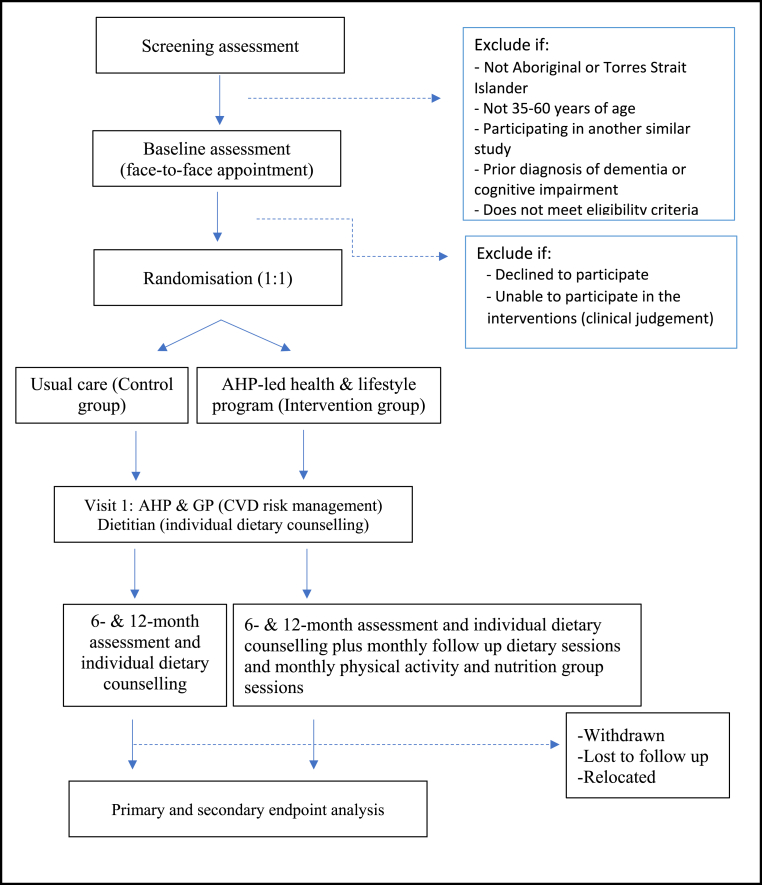 Figure 1
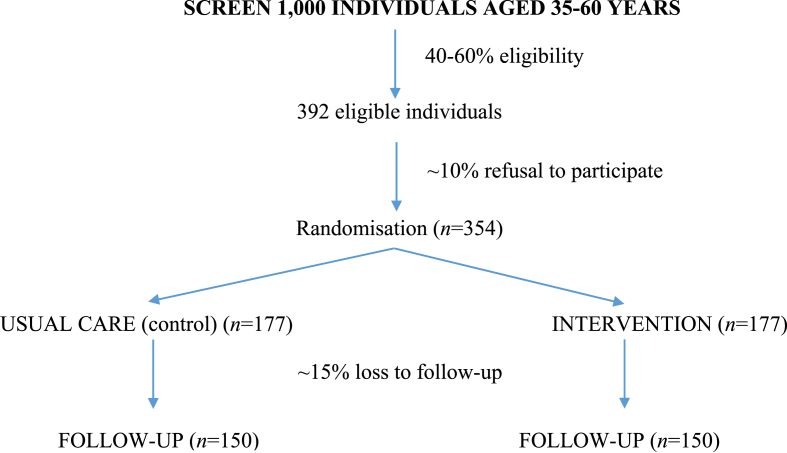 Figure 2
Peer Reviews
No public reviews on file for this paper yet. If you reviewed it on a platform where reviews are public (OpenReview, ICLR, NeurIPS, ICML), you can paste yours below so the community can read it here.
Videos
No videos yet. Explain this paper in a talk, walkthrough, or lecture? Add one.
Taxonomy
TopicsIndigenous Health, Education, and Rights · Indigenous Studies and Ecology · Dementia and Cognitive Impairment Research