Optimal input DNA thresholds for genome skimming in marine crustacean zooplankton
Junya Hirai

TL;DR
This study determines the minimum DNA required for effective genome skimming in marine crustacean zooplankton to improve genetic research.
Contribution
Identifies optimal DNA thresholds for genome skimming in two marine zooplankton species using de novo assembly.
Findings
≥ 10 pg DNA for Euphausia pacifica and ≥ 100 pg for Calanus glacialis is needed for complete mitogenome retrieval.
Low DNA inputs (≤ 10 pg) result in poor sequence quality and high duplication due to amplification.
Nuclear ribosomal repeats and histone 3 were identified in assembled contigs from genome skimming.
Abstract
Crustacean zooplanktons are key secondary and tertiary producers in marine ecosystems, yet their genomic resources remain poorly understood. To advance biodiversity research on crustacean zooplankton, this study evaluated the effectiveness of genome skimming, a method that assembles genetic regions, including mitogenome, from shotgun genome sequencing data. Because the small amount of DNA available is a limitation in zooplankton genetics, different input DNA amounts (1 pg–10 ng) were prepared for library construction for genome skimming using two large species: Euphausia pacifica (Euphausiacea) and Calanus glacialis (Copepoda). Additionally, de novo assembly was used to obtain long contigs from short reads because reference-guided assembly can not be applied to all crustacean zooplankton. Evaluation of the raw sequence reads showed increased proportions of high-quality and distinct…
Genes, proteins, chemicals, diseases, species, mutations and cell lines named across the full text — each resolved to its canonical identifier and authoritative record.
Click any figure to enlarge with its caption.
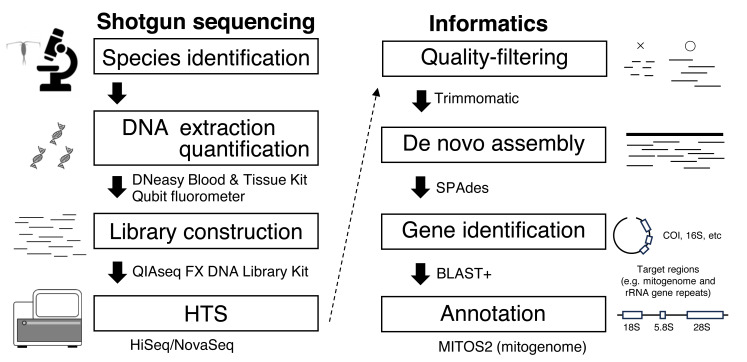 Figure 1
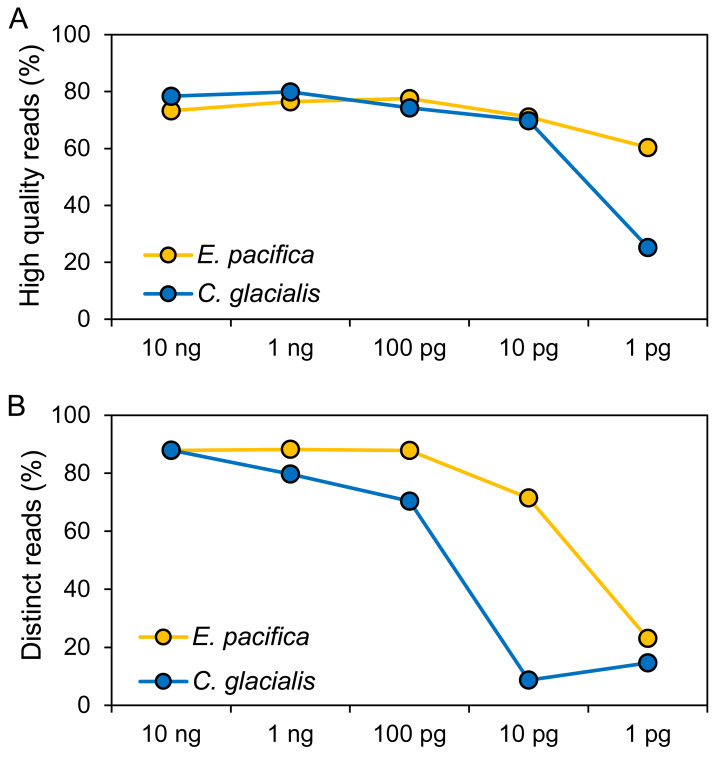 Figure 2
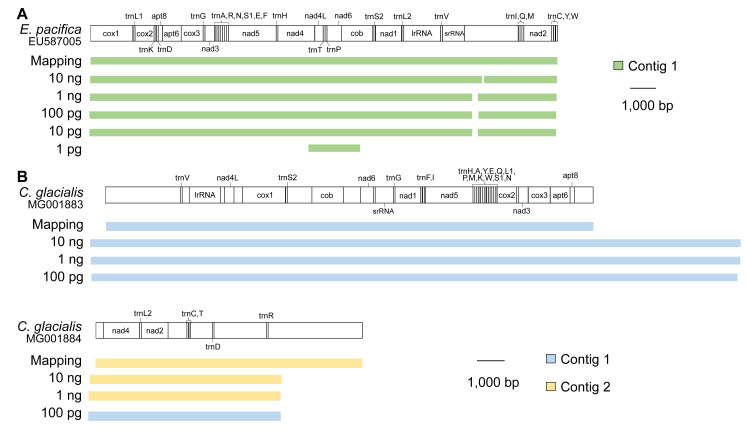 Figure 3
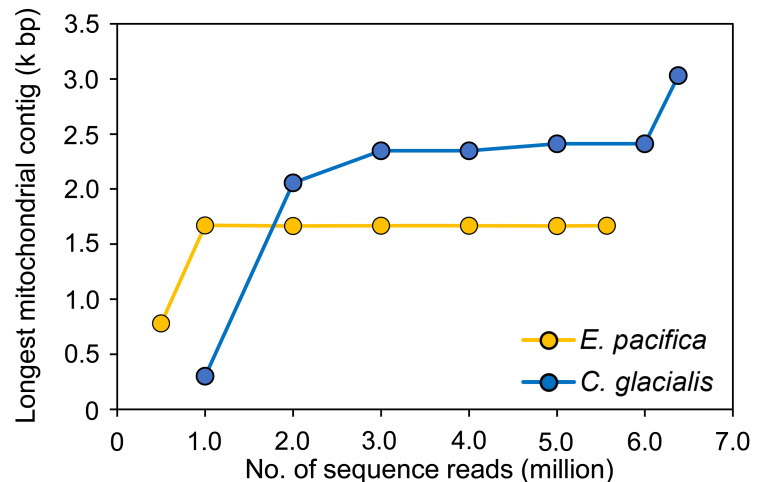 Figure 4
 Figure 5
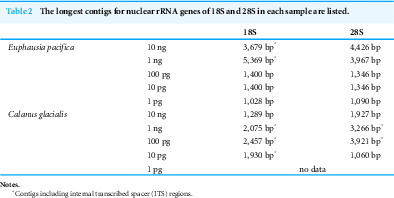 Figure 6
Peer Reviews
No public reviews on file for this paper yet. If you reviewed it on a platform where reviews are public (OpenReview, ICLR, NeurIPS, ICML), you can paste yours below so the community can read it here.
Videos
No videos yet. Explain this paper in a talk, walkthrough, or lecture? Add one.
Taxonomy
TopicsEnvironmental DNA in Biodiversity Studies · Crustacean biology and ecology · Coral and Marine Ecosystems Studies