In vitro activity of rifampicin, rifapentine and rifabutin in combination with their 25-deacetyl-metabolites against various Mycobacterium tuberculosis lineages
Charlotte Genestet, Chloé Bourg, Elisabeth Hodille, Olivier Bahuaud, Florence Ader, Sylvain Goutelle, Oana Dumitrescu

TL;DR
This study examines how rifamycin drugs and their metabolites work together against tuberculosis bacteria, finding that they have additive effects.
Contribution
The study reveals that rifamycin metabolites additively interact with their parent drugs against various tuberculosis lineages.
Findings
Rifamycin metabolites showed additive effects with their parent drugs, with no antagonism observed.
MICs varied across rifamycins, with RIF and its metabolite showing the highest MICs.
The additive effects were consistent across different Mycobacterium tuberculosis complex lineages.
Abstract
Rifamycin agents (rifampicin (RIF), rifapentine (RFP), rifabutin (RFB)) are the cornerstone of tuberculosis (TB) therapy. Rifamycins are metabolized into 25-deacetyl-metabolites, which have been described has active and may contribute to in vivo drug effect. However, little is known about the combined effect of rifamycins and their metabolites across different Mycobacterium tuberculosis complex (MTBC) lineages. This study included 14 MTBC strains representing the main lineages. Minimum inhibitory concentrations (MICs) were determined using microdilution assays for the three rifamycins and their metabolites. A checkerboard assay was used to assess drug interactions, with the fractional inhibitory concentration (FIC) index calculated for synergy or antagonism. MICs varied across rifamycins, RIF and its metabolite showed the highest MICs, followed by RFP and RFB and their respective…
Genes, proteins, chemicals, diseases, species, mutations and cell lines named across the full text — each resolved to its canonical identifier and authoritative record.
Click any figure to enlarge with its caption.
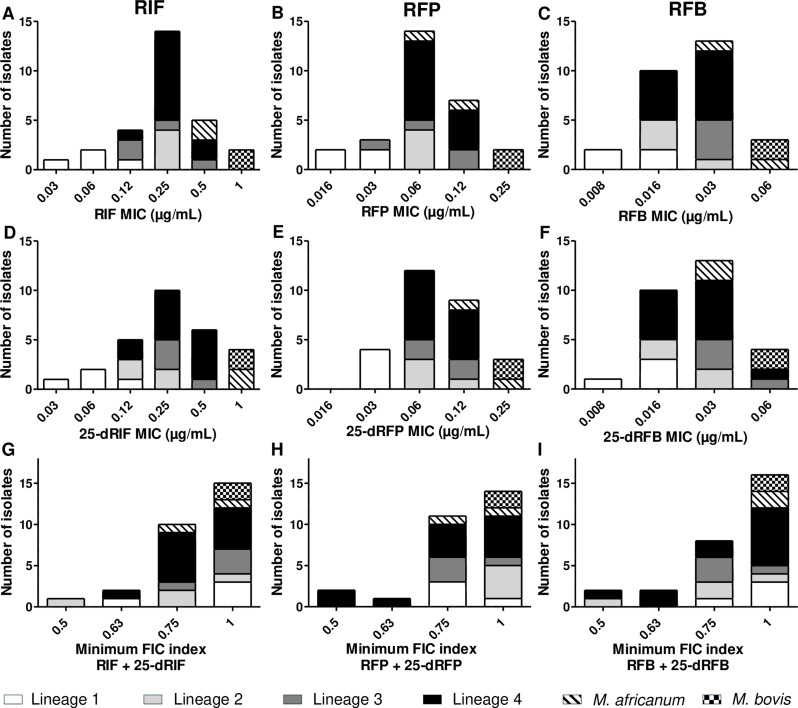 Figure 1
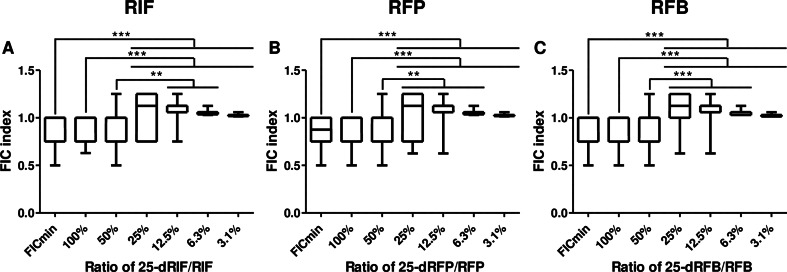 Figure 2
Peer Reviews
No public reviews on file for this paper yet. If you reviewed it on a platform where reviews are public (OpenReview, ICLR, NeurIPS, ICML), you can paste yours below so the community can read it here.
Videos
No videos yet. Explain this paper in a talk, walkthrough, or lecture? Add one.
Taxonomy
TopicsTuberculosis Research and Epidemiology · Mycobacterium research and diagnosis · HIV/AIDS drug development and treatment