A pathogenic NR2F1 gene variant disrupts transcriptional activity and causes severe neurodevelopmental delay in Bosch-Boonstra-Schaaf syndrome
Juan Liu, Jihong Hu, Pingqiu Zhou, Yaqin Duan, Shuigui Yin

TL;DR
A new mutation in the NR2F1 gene disrupts its function and causes severe developmental delays and optic atrophy in a young child.
Contribution
A novel NR2F1 variant is identified and shown to affect protein structure and transcriptional activity, expanding the known genetic spectrum of the syndrome.
Findings
A novel NR2F1 variant (c.452T > A, p.Met151Lys) was found in a patient with severe developmental delay and optic atrophy.
Molecular dynamics simulations suggest the variant destabilizes the DNA-binding domain of NR2F1.
Dual-luciferase assays show the variant reduces transcriptional activation of NR2F1.
Abstract
Nuclear receptor subfamily 2, group F, member 1 (NR2F1) gene variations are associated with Bosch–Boonstra–Schaaf optic atrophy syndrome. The NR2F1 genotype correlates with its phenotype; variants within the DNA-binding domain may cause severe psychomotor developmental disorders. However, the mechanisms underlying these phenotypes remain unclear. Whole-exome sequencing was performed on the proband and her parents DNA. Candidate variants were verified by Sanger sequencing and bioinformatics analyses. Molecular dynamics simulations were performed to predict structural changes in the mutant NR2F1 protein. A dual-luciferase assay was used to analyze the variant’s effect on transcriptional activation. The proband was a 10-month-old girl with severe motor and cognitive developmental delays accompanied by bilateral optic nerve pallor. Genetic testing revealed a novel NR2F1 gene variant,…
Genes, proteins, chemicals, diseases, species, mutations and cell lines named across the full text — each resolved to its canonical identifier and authoritative record.
Click any figure to enlarge with its caption.
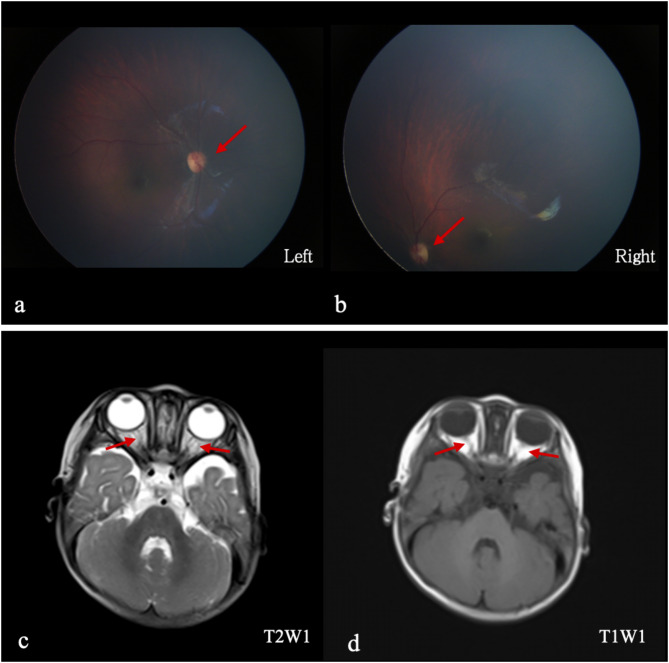 Figure 1
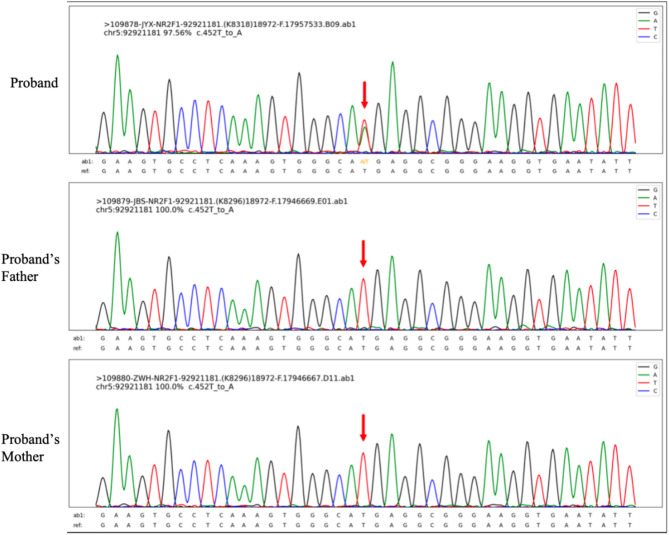 Figure 2
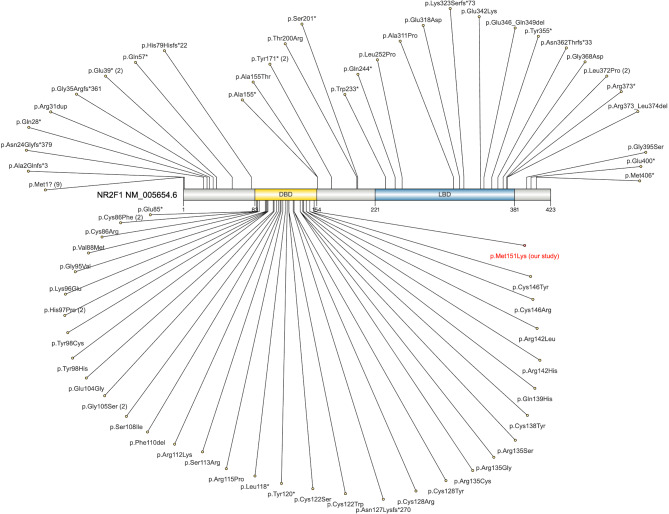 Figure 3
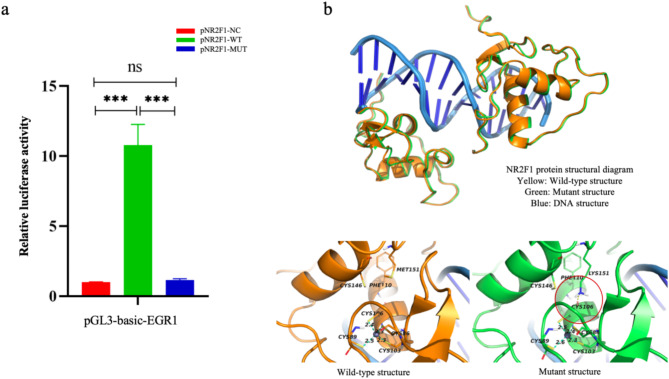 Figure 4
Peer Reviews
No public reviews on file for this paper yet. If you reviewed it on a platform where reviews are public (OpenReview, ICLR, NeurIPS, ICML), you can paste yours below so the community can read it here.
Videos
No videos yet. Explain this paper in a talk, walkthrough, or lecture? Add one.
Taxonomy
TopicsGenetic Syndromes and Imprinting · Genomics and Rare Diseases · Genetic factors in colorectal cancer