Application of Staining Methods to Compare Chromatin Condensation in Fresh and Freeze‐Thawed Dog Semen
Elisa‐Marie Laux, Abbas Farshad, Axel Wehrend, Mohamad Eid Hammadeh

TL;DR
This study compares different staining methods for analyzing chromatin condensation in dog semen, finding that toluidine blue works well for light microscopy and CMA3 is best for fluorescence microscopy.
Contribution
The study provides a direct comparison of multiple staining techniques using identical canine semen samples, identifying optimal methods for different microscopy approaches.
Findings
Aniline blue staining showed significant differences compared to toluidine blue, AcO, and CMA3.
CMA3 is recommended for fluorescence microscopy due to its simplicity, rapidity, and cost-effectiveness.
Correlations between staining methods varied, with AcO showing strong correlations with aniline blue and CMA3 in both fresh and frozen samples.
Abstract
Various staining techniques have been used for canine sperm analysis, but direct comparisons using identical semen samples are lacking. This study aimed to assess the efficiency, time requirements and cost‐effectiveness of different staining techniques: aniline blue, toluidine blue, acridine orange (AcO), chromomycin A3 (CMA3) and terminal deoxynucleotidyl transferase d‐UTP nick‐end labeling (TUNEL). Forty semen samples (20 fresh and 20 frozen–thawed) were used to assess chromatin condensation. Significant differences (p < 0.01) were found using two‐factor repeated measures variance analysis. Aniline blue staining differed significantly (p < 0.01) from toluidine blue, AcO and CMA3 staining. A significant difference (p < 0.05) was observed between AcO and TUNEL staining for fresh sperm, with no significant differences between TUNEL and other methods. Correlations in fresh sperm samples…
Genes, proteins, chemicals, diseases, species, mutations and cell lines named across the full text — each resolved to its canonical identifier and authoritative record.
Click any figure to enlarge with its caption.
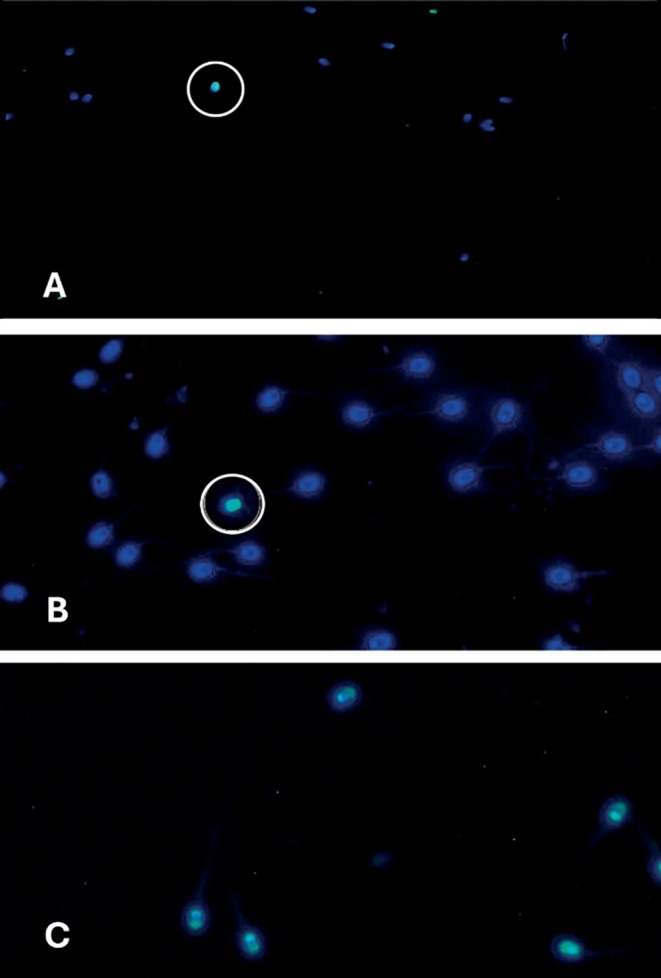 Figure 1
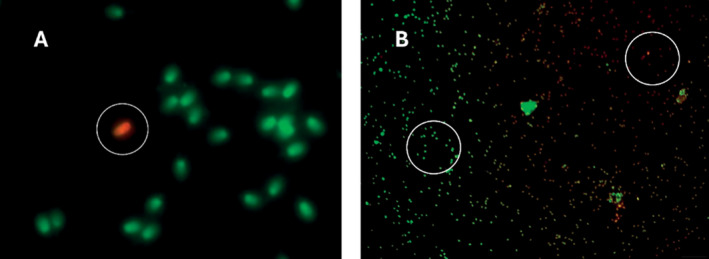 Figure 2
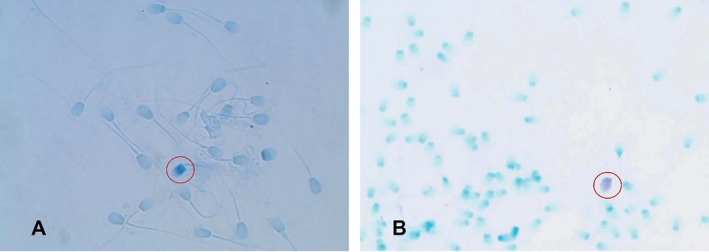 Figure 3
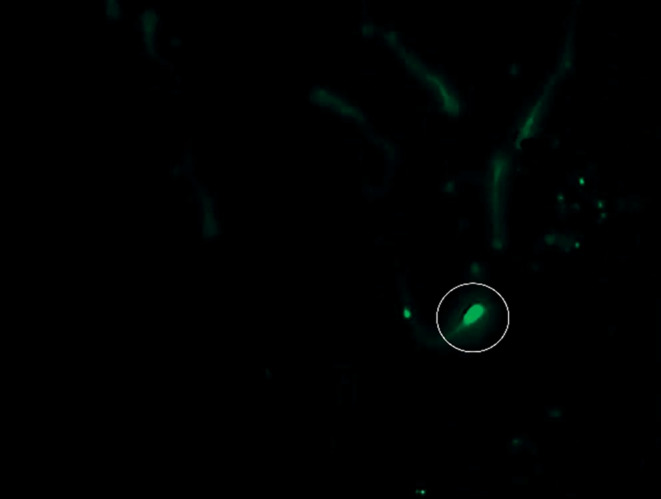 Figure 4
Peer Reviews
No public reviews on file for this paper yet. If you reviewed it on a platform where reviews are public (OpenReview, ICLR, NeurIPS, ICML), you can paste yours below so the community can read it here.
Videos
No videos yet. Explain this paper in a talk, walkthrough, or lecture? Add one.
Taxonomy
TopicsReproductive Biology and Fertility · Sperm and Testicular Function · Reproductive Physiology in Livestock