A Preliminary Study of Effect of Melatonin on Inflammation and Hypoxia‐Related Factors in a Mouse Model of Elastase‐Induced Intracranial Aneurysm
NarenYa, Yan Feng, Yongxing Su, Le Chen, Yan Liu, Zhongwu Sun, Zhengfei Ma

TL;DR
This study explores how melatonin may reduce inflammation and hypoxia in a mouse model of intracranial aneurysms, suggesting potential therapeutic benefits.
Contribution
The study is the first to investigate melatonin's effects on inflammation and hypoxia-related factors in an elastase-induced intracranial aneurysm mouse model.
Findings
Melatonin reduced inflammation markers like IL-1β, IL-6, and TNF-α in aneurysm mice.
Melatonin improved vascular wall integrity and reduced apoptosis in the aneurysm model.
Melatonin modulated hypoxia-related genes and immune cell activity in intracranial aneurysms.
Abstract
Intracranial aneurysms (IAs) are relatively common cerebrovascular anomalies. Melatonin could modulate inflammatory and offers neuroprotective effects, and its role in IA has not been fully elucidated. An elastase‐induced IA mouse model was constructed and melatonin (150 mg/kg) was administered to investigate its therapeutic effects on IA. Aneurysm formation was observed by bromophenol blue gelatin perfusion, and the pathology changes in IA mice were examined using hematoxylin‐eosin (HE) staining. The potential mechanisms of melatonin treatment of IA were explored using western blot, enzyme‐linked immunosorbent, real‐time qPCR, immunohistochemistry, and flow cytometry. An H2O2‐reduced human brain vascular smooth muscle cells (HBVSMC) injury model was also constructed. The formation of aneurysms was observed in the circle of Willis in the IA mice. Melatonin treatment alleviated the…
Genes, proteins, chemicals, diseases, species, mutations and cell lines named across the full text — each resolved to its canonical identifier and authoritative record.
Click any figure to enlarge with its caption.
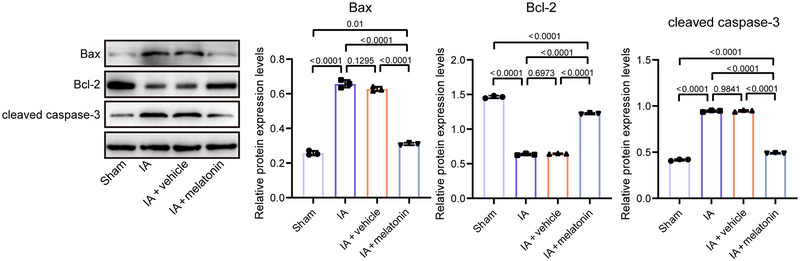 Figure 1
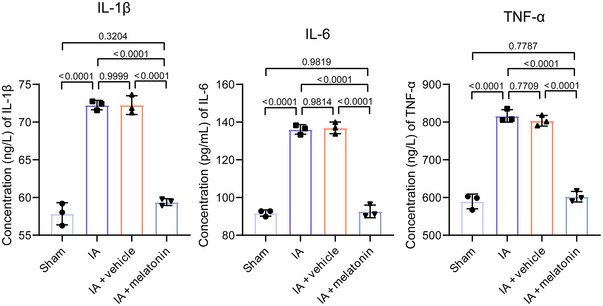 Figure 2
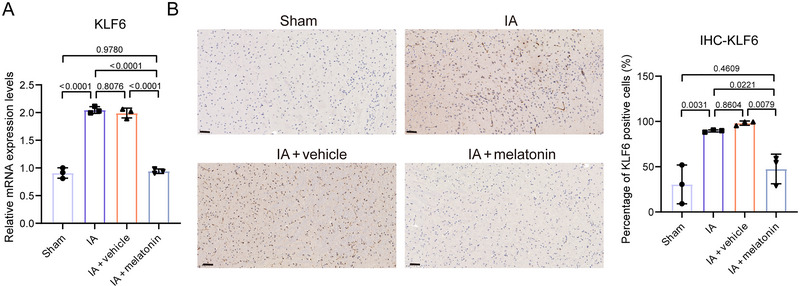 Figure 3
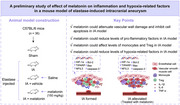 Figure 4
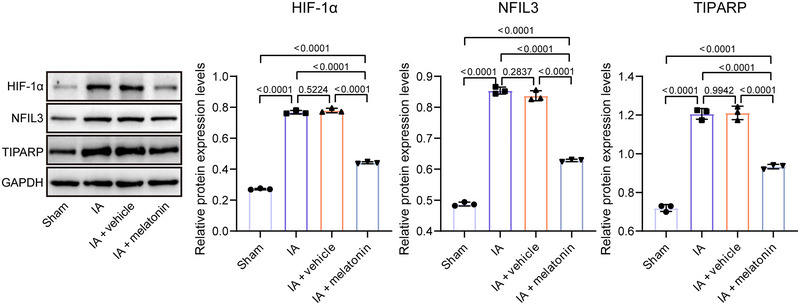 Figure 5
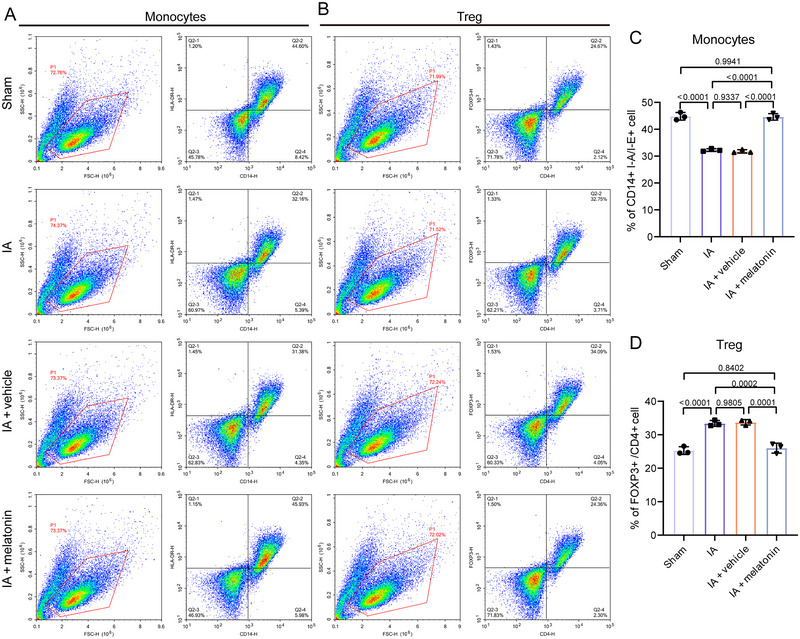 Figure 6
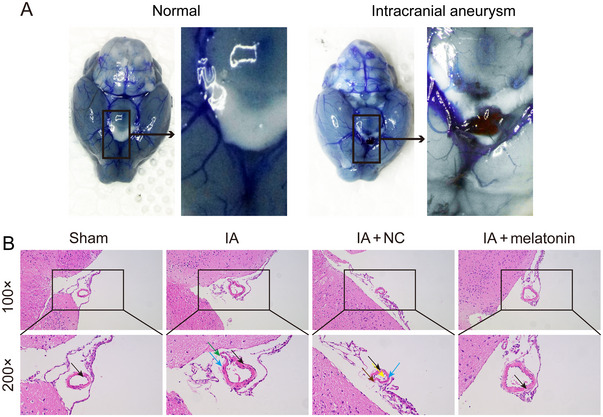 Figure 7
Peer Reviews
No public reviews on file for this paper yet. If you reviewed it on a platform where reviews are public (OpenReview, ICLR, NeurIPS, ICML), you can paste yours below so the community can read it here.
Videos
No videos yet. Explain this paper in a talk, walkthrough, or lecture? Add one.
Taxonomy
TopicsMoyamoya disease diagnosis and treatment · Neuroinflammation and Neurodegeneration Mechanisms · Neurological Disease Mechanisms and Treatments