Baseline Functional Connectivity of the Mesolimbic, Salience, and Sensorimotor Systems Predicts Responses to Psychological Therapies for Chronic Low Back Pain With Comorbid Depression: A Functional MRI Study
Sonia Medina, Carlos G. Forero, Juan P. Sanabria‐Mazo, Carla Rodríguez‐Freire, Jaime Navarrete, Owen G. O'Daly, Matthew A. Howard, Juan V. Luciano

TL;DR
Brain connectivity patterns before therapy can predict how well people with chronic back pain and depression respond to different psychological treatments.
Contribution
This study identifies brain connectivity as a potential biomarker for predicting responses to specific cognitive behavioral therapies in chronic low back pain with depression.
Findings
Baseline connectivity of the salience and sensorimotor networks correlates with higher pain intensity.
Mesolimbic pathway connectivity correlates with lower pain intensity and better response to ACT.
Sensorimotor connectivity changes predict better response to BATD.
Abstract
Chronic low back pain (CLBP) is a prevalent and debilitating condition. Cognitive behavioral therapy (CBT) can improve coping mechanisms for CLBP and pain‐related outcomes. However, the mechanisms by which they do so remain undetermined. We explored the neural correlates of CLBP symptoms and CBT action using functional magnetic resonance imaging (fMRI) in women with CLBP and comorbid depression. Forty individuals underwent fMRI followed by 8 weeks of either treatment as usual (TAU) or one of two CBT in addition to TAU: acceptance and commitment therapy (ACT) or behavioral activation treatment for depression (BATD). Pain intensity, depression, psychological inflexibility, and pain catastrophizing scores were obtained at baseline and follow‐up. Functional connectivity (FC) patterns of the salience network (SN), sensorimotor network (SMN), and the mesolimbic pathway (MLP), derived from…
Genes, proteins, chemicals, diseases, species, mutations and cell lines named across the full text — each resolved to its canonical identifier and authoritative record.
Click any figure to enlarge with its caption.
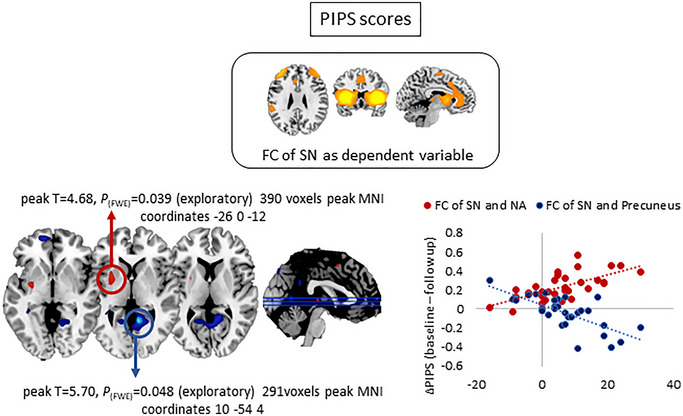 Figure 1
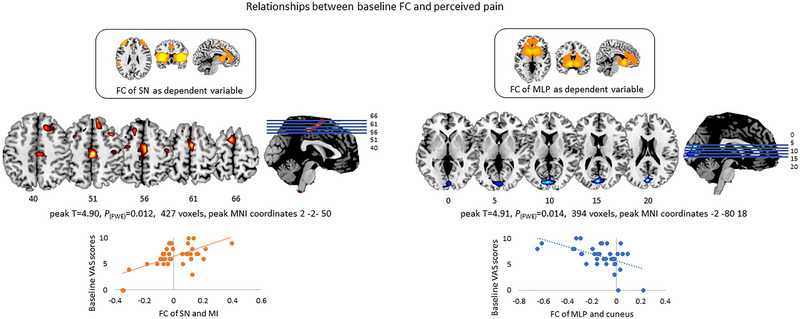 Figure 2
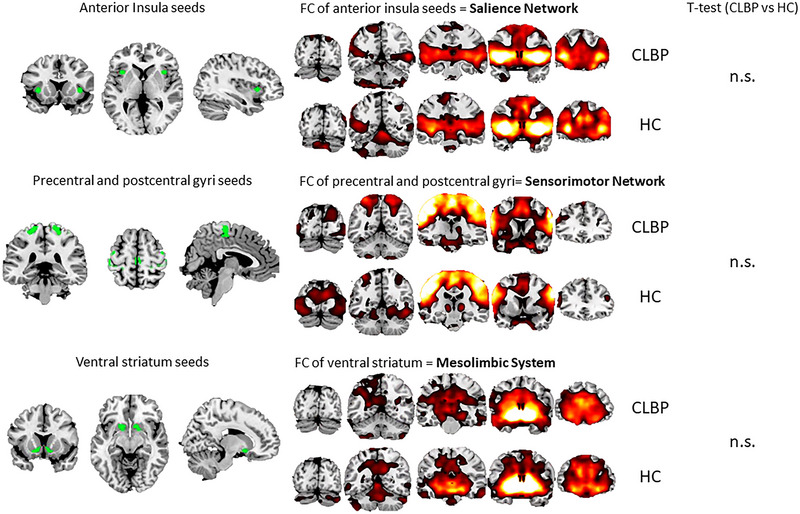 Figure 3
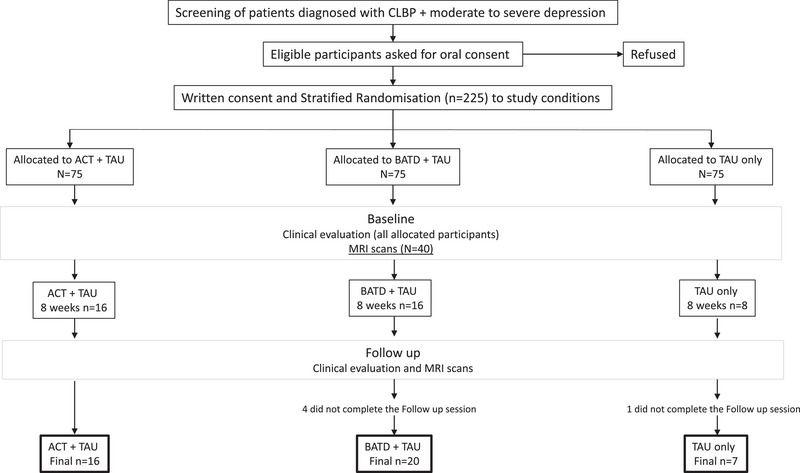 Figure 4
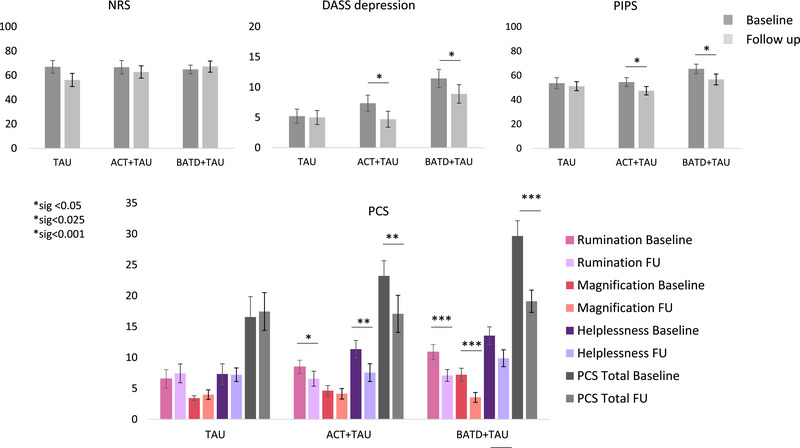 Figure 5
 Figure 6
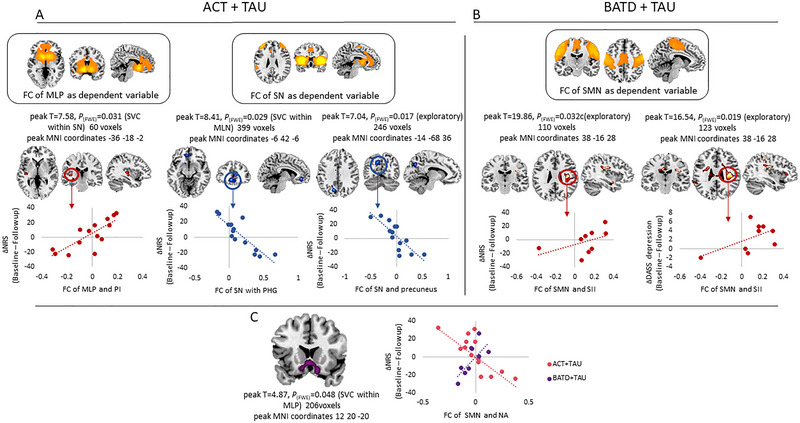 Figure 7
Peer Reviews
No public reviews on file for this paper yet. If you reviewed it on a platform where reviews are public (OpenReview, ICLR, NeurIPS, ICML), you can paste yours below so the community can read it here.
Videos
No videos yet. Explain this paper in a talk, walkthrough, or lecture? Add one.
Taxonomy
TopicsMusculoskeletal pain and rehabilitation · Fibromyalgia and Chronic Fatigue Syndrome Research · Pain Management and Placebo Effect