A Cofactor Regeneration System for 2‐Aminobutyric Acid Production Based on Combined Cross‐Linked Enzyme Aggregates: Utilizing His‐Tagged Enzymes With Low‐Concentration Calcium Ions as Precipitant
Jingran Liu, Ren Li, Jincheng Miao, Hongxu Sun, Qiwei Chen, Haiyan Song, Hui Peng, Yanhong Chang, Hui Luo

TL;DR
Researchers developed a new method to produce 2-aminobutyric acid using enzyme aggregates that are stable and reusable.
Contribution
A novel, eco-friendly method for creating enzyme aggregates using low calcium concentrations and histidine-tagged enzymes.
Findings
Combi-CLEAs showed enhanced thermal and pH tolerance compared to free enzymes.
The combi-CLEAs retained 40% of initial activity after seven reuse cycles.
Optimal reaction conditions were found to be 37°C and pH 7.5.
Abstract
Combined cross‐linked enzyme aggregates (combi‐CLEAs) represent a promising carrier‐free immobilized enzyme technology. This study describes the preparation of combi‐CLEAs comprising leucine dehydrogenase (LeuDH) and formate dehydrogenase (FDH) for the regeneration of cofactor nicotinamide adenine dinucleotide necessary for 2‐aminobutyric acid production. Different from traditional methods using ammonium sulfate or organic reagents as precipitant, this work utilized low concentrations of calcium ions to purify and precipitate the histidine‐tagged enzymes. We developed a simple and environmentally friendly protocol for combi‐CLEAs formation, involving precipitation with 10 mM calcium ions at an enzyme activity ratio of 1:2 for LeuDH and FDH, respectively, followed by cross‐linking with 0.15% (w/v) glutaraldehyde at 20°C for 2 h at pH 7.5. The optimal catalytic reaction temperature and pH…
Genes, proteins, chemicals, diseases, species, mutations and cell lines named across the full text — each resolved to its canonical identifier and authoritative record.
Click any figure to enlarge with its caption.
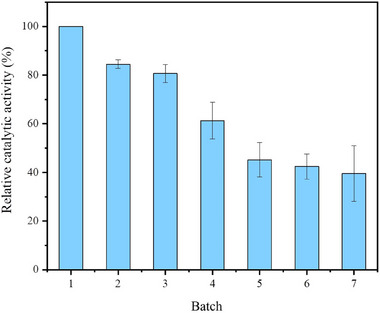 Figure 1
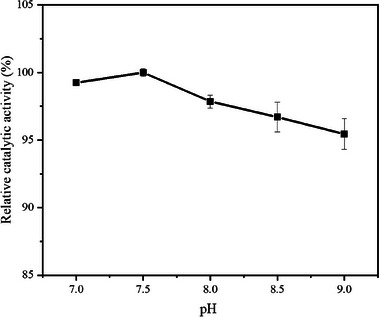 Figure 2
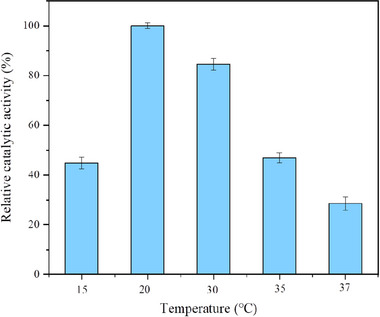 Figure 3
 Figure 4
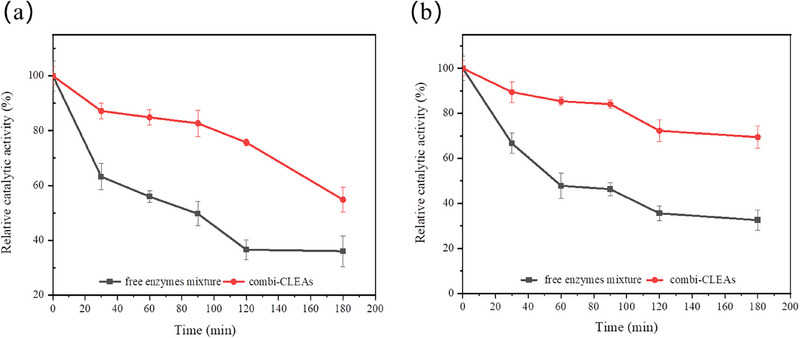 Figure 5
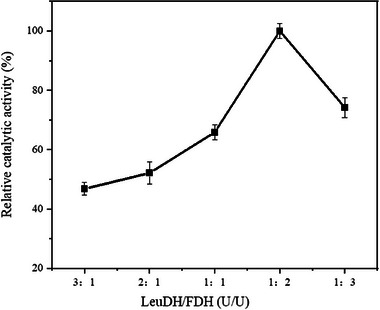 Figure 6
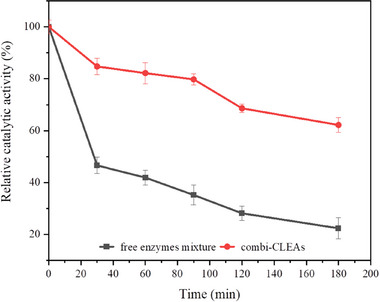 Figure 7
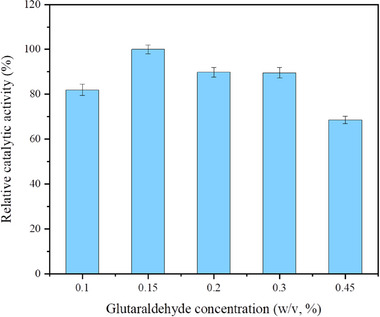 Figure 8
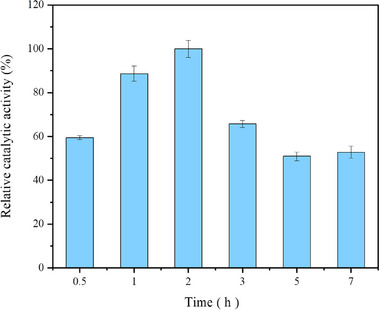 Figure 9
 Figure 10
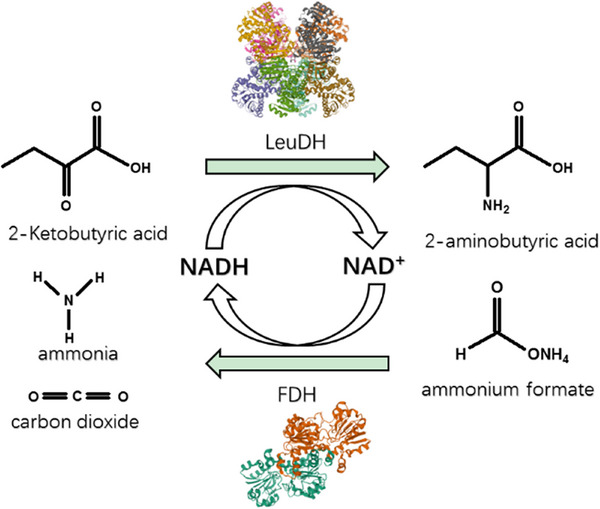 Figure 11
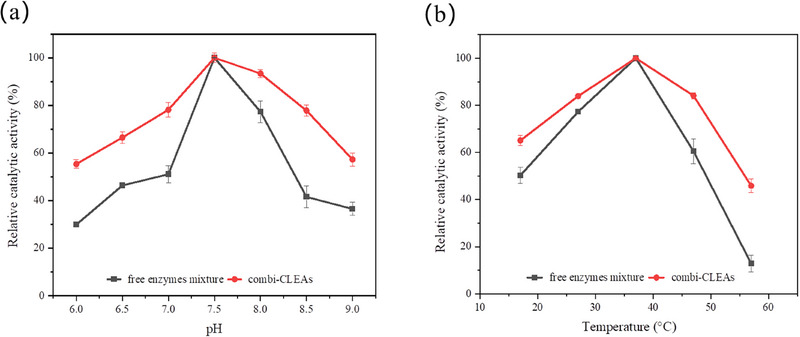 Figure 12
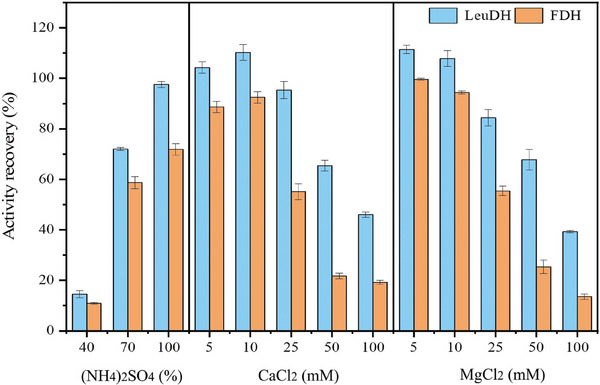 Figure 13
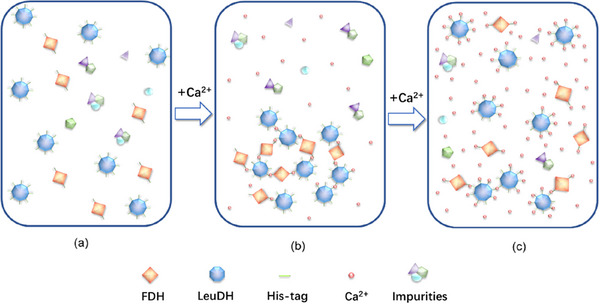 Figure 14
Peer Reviews
No public reviews on file for this paper yet. If you reviewed it on a platform where reviews are public (OpenReview, ICLR, NeurIPS, ICML), you can paste yours below so the community can read it here.
Videos
No videos yet. Explain this paper in a talk, walkthrough, or lecture? Add one.
Taxonomy
TopicsEnzyme Catalysis and Immobilization · Microbial Metabolic Engineering and Bioproduction · Biofuel production and bioconversion