Patient Burden in Dystonia Diagnosis and Botulinum Toxin Treatment: A Nationwide Survey in Turkey
Rezzak Yilmaz, Nevra Öksüz, Mustafa Ceylan, Bedia Samanci, Ahmet Acarer, Nazlı Durmaz Çelik, Hacer Erdem Tilki, Serhat Özkan, Haşmet Hanağası, Okan Dogu, M. Cenk Akbostancı

TL;DR
A survey in Turkey reveals significant delays and burdens faced by dystonia patients during diagnosis and botulinum toxin treatment, highlighting the need for improved healthcare access and treatment satisfaction.
Contribution
The study provides new insights into the real-world challenges faced by dystonia patients in Turkey, emphasizing unmet needs in diagnosis and treatment accessibility.
Findings
Approximately 15% of dystonia patients received incorrect initial diagnoses.
30.7% of patients traveled to another city for diagnosis, and 42.6% sought private clinics, causing financial and logistical burdens.
Patients with oromandibular dystonia were three times less likely to be satisfied with botulinum toxin treatment compared to those with facial dystonia.
Abstract
Understanding real‐world experiences is crucial in determining the potential gaps in patient‐centered healthcare in dystonia. We explored the challenges of people with dystonia (PwD) at the stages of diagnosis and botulinum neurotoxin (BoNT) treatment. A multicenter survey was conducted face‐to‐face across seven university hospitals in Turkey. PwD receiving BoNT treatment for at least 6 months were invited. Data on demographics, diagnostic journeys, and treatment experiences were collected and analyzed using descriptive statistics and regression models. A total of 789 PwD participated, reporting significant burdens during both diagnostic and treatment stages. Diagnosis was delayed by approximately 1 year, with 15% receiving incorrect initial diagnoses. Additionally, 30.7% of PwD traveled to another city, and 42.6% applied to private clinics for diagnosis, leading to a substantial…
Genes, proteins, chemicals, diseases, species, mutations and cell lines named across the full text — each resolved to its canonical identifier and authoritative record.
Click any figure to enlarge with its caption.
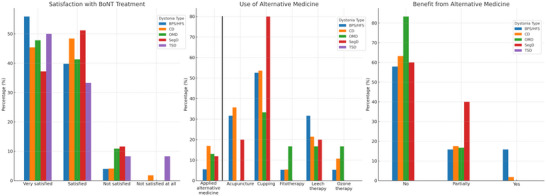 Figure 1
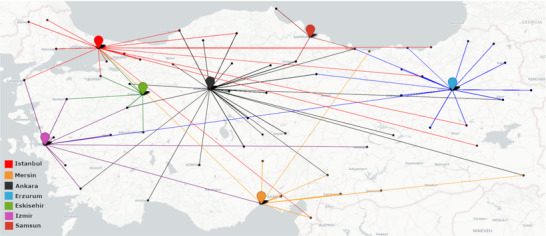 Figure 2
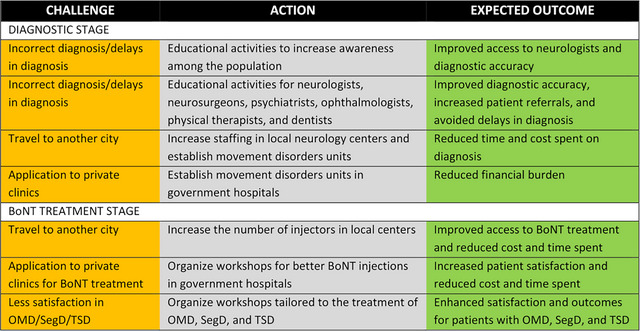 Figure 3
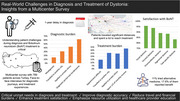 Figure 4
Peer Reviews
No public reviews on file for this paper yet. If you reviewed it on a platform where reviews are public (OpenReview, ICLR, NeurIPS, ICML), you can paste yours below so the community can read it here.
Videos
No videos yet. Explain this paper in a talk, walkthrough, or lecture? Add one.
Taxonomy
TopicsBotulinum Toxin and Related Neurological Disorders · Neurological disorders and treatments · Parkinson's Disease Mechanisms and Treatments