Iatrogenic Superior Vena Cava Syndrome With Extensive Thromboembolism Associated With Chronic Indwelling Catheterization
Xiaojin Song, Jordan Whittles, Xuan Ding

TL;DR
This paper discusses a case of a rare condition caused by a blood clot from a long-term IV catheter, leading to severe breathing issues.
Contribution
The paper presents a novel case of iatrogenic SVCS due to catheter-related thromboembolism.
Findings
SVCS can result from chronic catheterization leading to extensive thromboembolism.
The case highlights the need for monitoring intravascular devices to prevent complications.
Abstract
Superior vena cava syndrome (SVCS) results from the partial or complete obstruction of blood flow through the superior vena cava (SVC), which comprises a broad clinical spectrum ranging from asymptomatic cases to rare life-threatening emergencies with upper airway obstruction and increased intracranial pressure. Iatrogenic SVCS is not uncommon given the increasing utilization of intravascular devices in the past decades, suggesting that wider knowledge of the indications for semipermanent venous access and consistent monitoring are warranted in our clinical practice in order to avoid unfavorable outcomes. Here, we present a case of SVCS with respiratory distress due to extensive thromboembolism associated with a chronic indwelling intravenous (IV) catheter.
Genes, proteins, chemicals, diseases, species, mutations and cell lines named across the full text — each resolved to its canonical identifier and authoritative record.
Click any figure to enlarge with its caption.
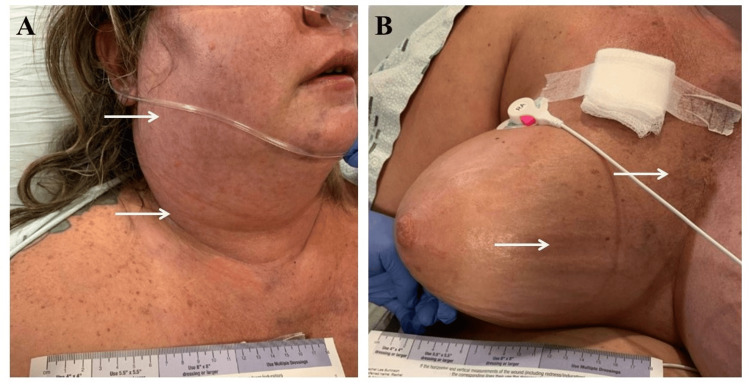 Figure 1
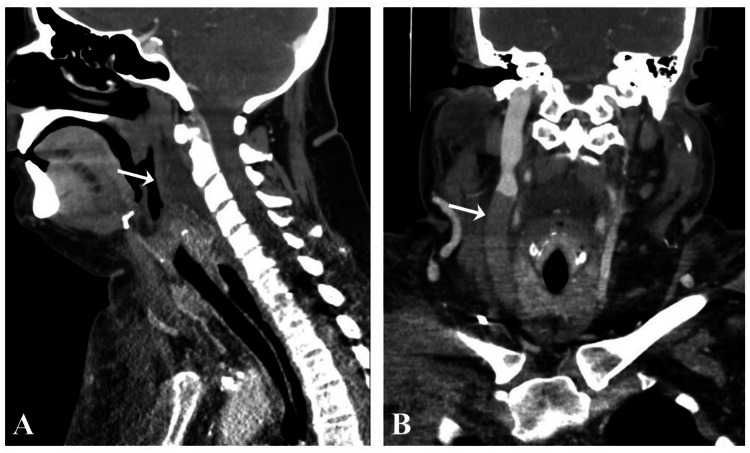 Figure 2
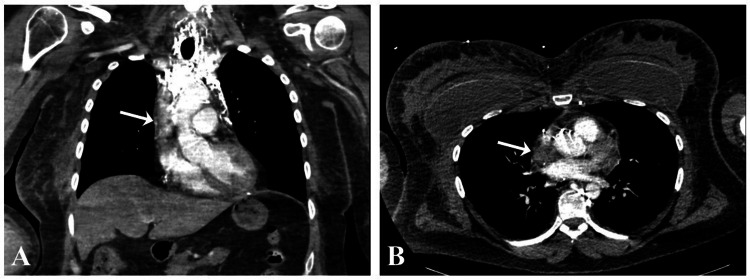 Figure 3
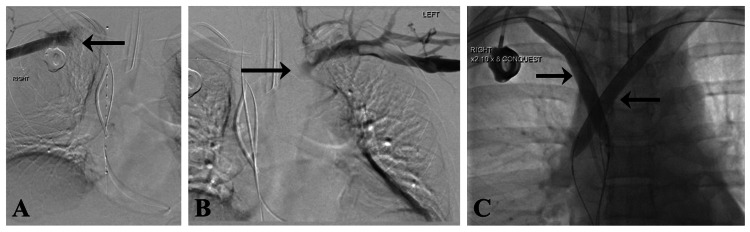 Figure 4
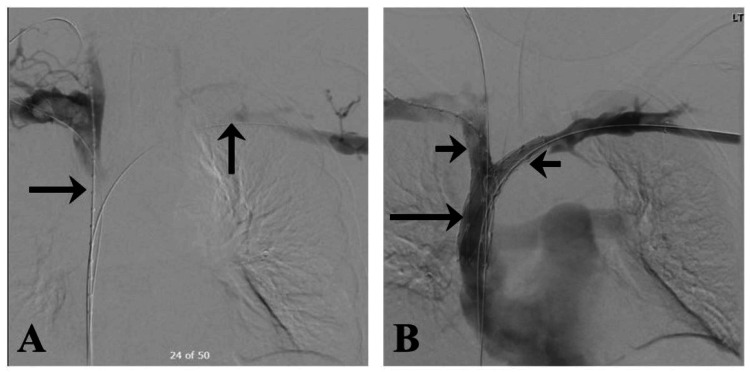 Figure 5
Peer Reviews
No public reviews on file for this paper yet. If you reviewed it on a platform where reviews are public (OpenReview, ICLR, NeurIPS, ICML), you can paste yours below so the community can read it here.
Videos
No videos yet. Explain this paper in a talk, walkthrough, or lecture? Add one.
Taxonomy
TopicsCentral Venous Catheters and Hemodialysis · Venous Thromboembolism Diagnosis and Management · Vascular Procedures and Complications