The relationship between family conflict resolution methods and depressive symptoms in patients with chronic diseases
Min Jeong Joo, Jisu Ko, Jae Hyeok Lim, Dan Bi Kim, Eun-Cheol Park, Asres Bedaso Tilahune, Ali A. Weinstein, Ali A. Weinstein, Ali Weinstein

TL;DR
This study shows that negative family conflict resolution methods worsen depressive symptoms in people with chronic diseases, even after switching to positive methods.
Contribution
The study reveals that prior negative conflict resolution methods have lasting effects on depressive symptoms in chronic disease patients.
Findings
Participants who shifted from positive to negative conflict resolution had higher odds of depressive symptoms (OR = 1.34).
Those maintaining negative methods had even higher odds of depression (OR = 1.48).
Uncollaborative discussions and domestic violence in conflict resolution were linked to depressive symptoms.
Abstract
Individuals with chronic diseases are more sensitive to depressive symptoms and stress compared to the general population. The complexity and unpredictability of these diseases necessitate family involvement in their management. However, long-term disease can exhaust both patients and their families, leading to conflicts and increased stress, thus exacerbating depressive symptoms. This longitudinal study investigated the impact of family conflict resolution methods on depressive symptoms among chronic disease patients in Korea. We used data from the Korean Welfare Panel Study, collected from 2012 to 2022, analyzing 10,969 chronically ill cohabiting or married individuals. Chi-square tests were used to compare group characteristics, and generalized estimating equation models were used for regression analysis, focusing on Center for Epidemiologic Studies Depression Scale-11 scores,…
Genes, proteins, chemicals, diseases, species, mutations and cell lines named across the full text — each resolved to its canonical identifier and authoritative record.
Click any figure to enlarge with its caption.
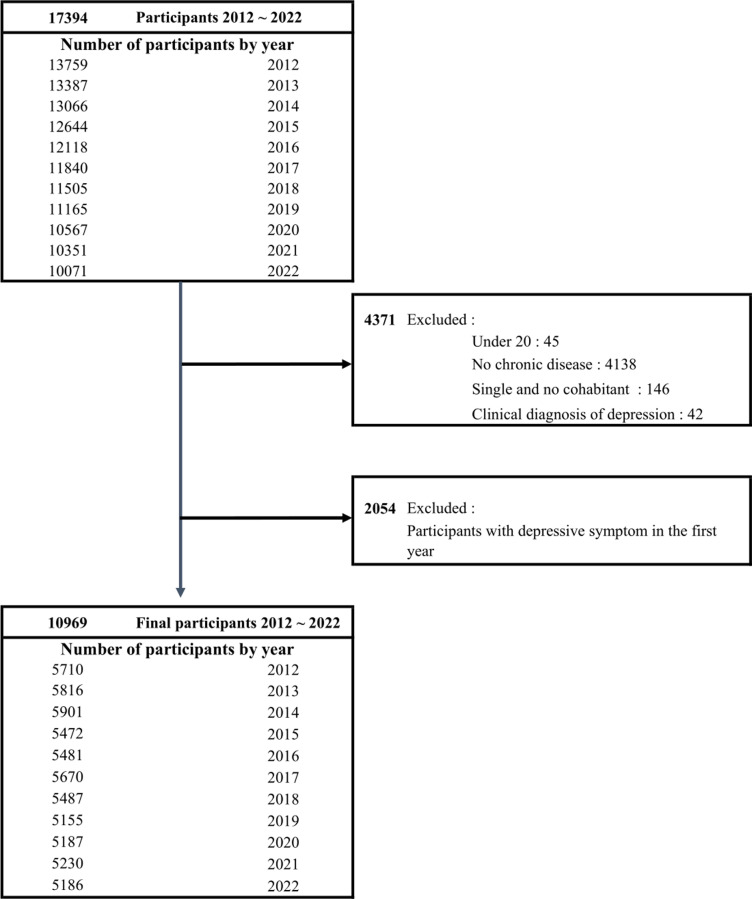 Figure 1
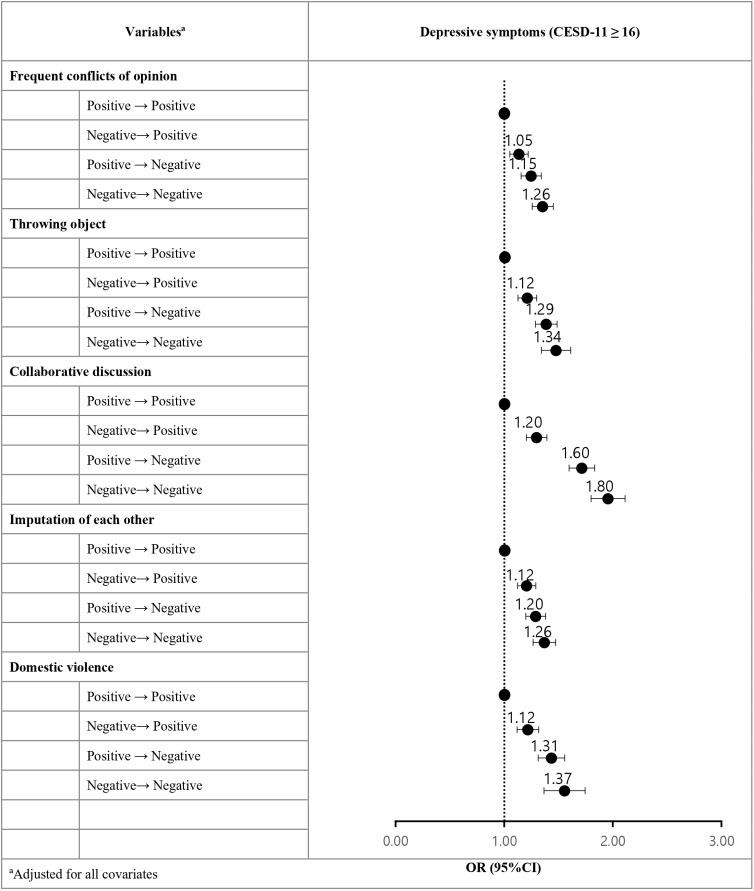 Figure 2
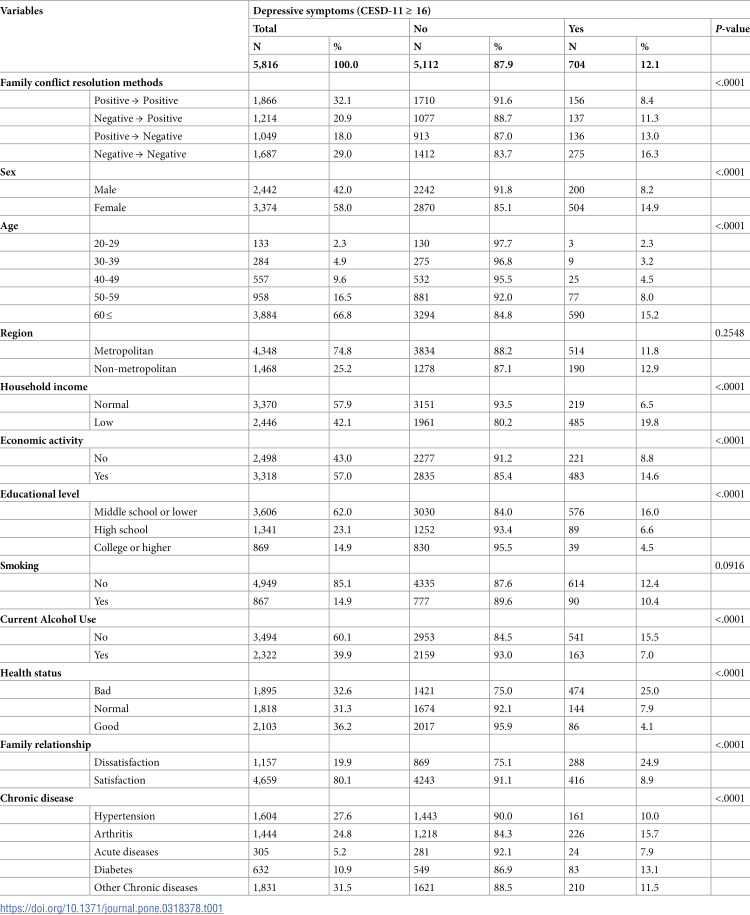 Figure 3
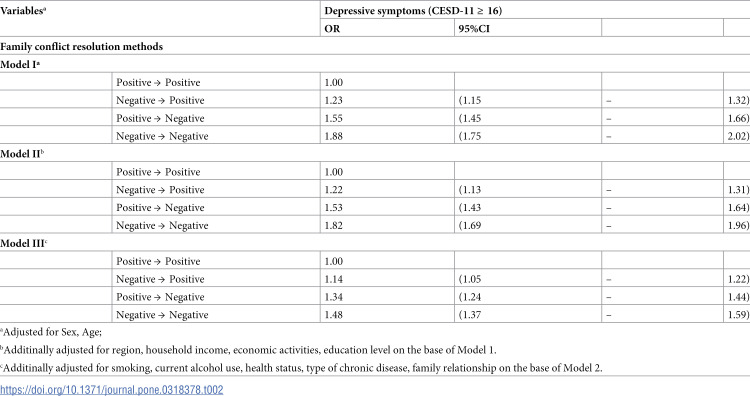 Figure 4
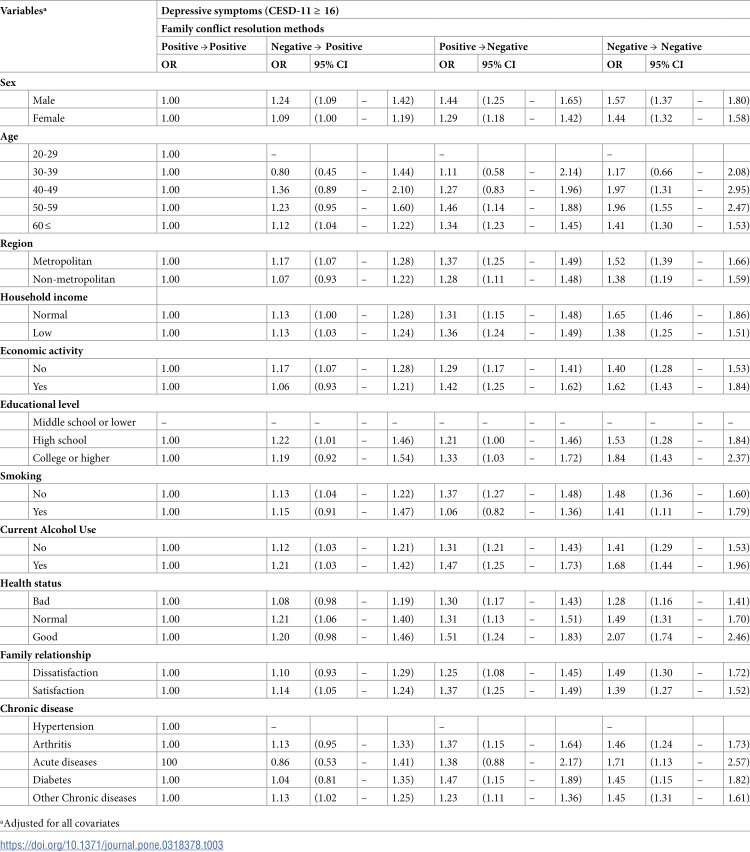 Figure 5
Peer Reviews
No public reviews on file for this paper yet. If you reviewed it on a platform where reviews are public (OpenReview, ICLR, NeurIPS, ICML), you can paste yours below so the community can read it here.
Videos
No videos yet. Explain this paper in a talk, walkthrough, or lecture? Add one.
Taxonomy
TopicsIntimate Partner and Family Violence · Attachment and Relationship Dynamics · Intergenerational Family Dynamics and Caregiving