A two-factor scale of perceived power
Myojoong Kim, Frank May

TL;DR
This paper introduces a new two-factor scale to measure perceived power, distinguishing between social and personal power, and shows how they lead to different behaviors.
Contribution
The paper presents a validated two-factor scale that separately captures social and personal power, addressing limitations in existing measures.
Findings
Personal power increases proactive advice-seeking, while social power reduces it.
Social power amplifies negative reactions to service failures, but personal power does not.
The two dimensions of power are theoretically and behaviorally distinct.
Abstract
Power-the capacity to influence outcomes-manifests in two distinct forms: social power, defined as the perceived ability to control others’ behaviors and decisions, and personal power, characterized by the capacity to resist unwanted external influence and maintain autonomy. Theoretically, these dimensions are rooted in different needs, and thus are likely to differentially predict certain behaviors. However, existing measures often conflate these dimensions, limiting insights into their unique behavioral effects. To address this issue, the present research has developed and validated a two-factor scale of perceived power to completely capture both facets of power across twelve studies (N = 2,878). Exploratory and confirmatory factor analyses support the scale’s structure, while reliability and validity tests demonstrate its robustness. Following assessments of the structure of the…
Genes, proteins, chemicals, diseases, species, mutations and cell lines named across the full text — each resolved to its canonical identifier and authoritative record.
Click any figure to enlarge with its caption.
 Figure 1
 Figure 2
 Figure 3
 Figure 4
 Figure 5
 Figure 6
 Figure 7
 Figure 8
 Figure 9
 Figure 10
 Figure 11
 Figure 12
 Figure 13
 Figure 14
 Figure 15
 Figure 16
 Figure 17
 Figure 18
 Figure 19
 Figure 20
 Figure 21
 Figure 22
 Figure 23
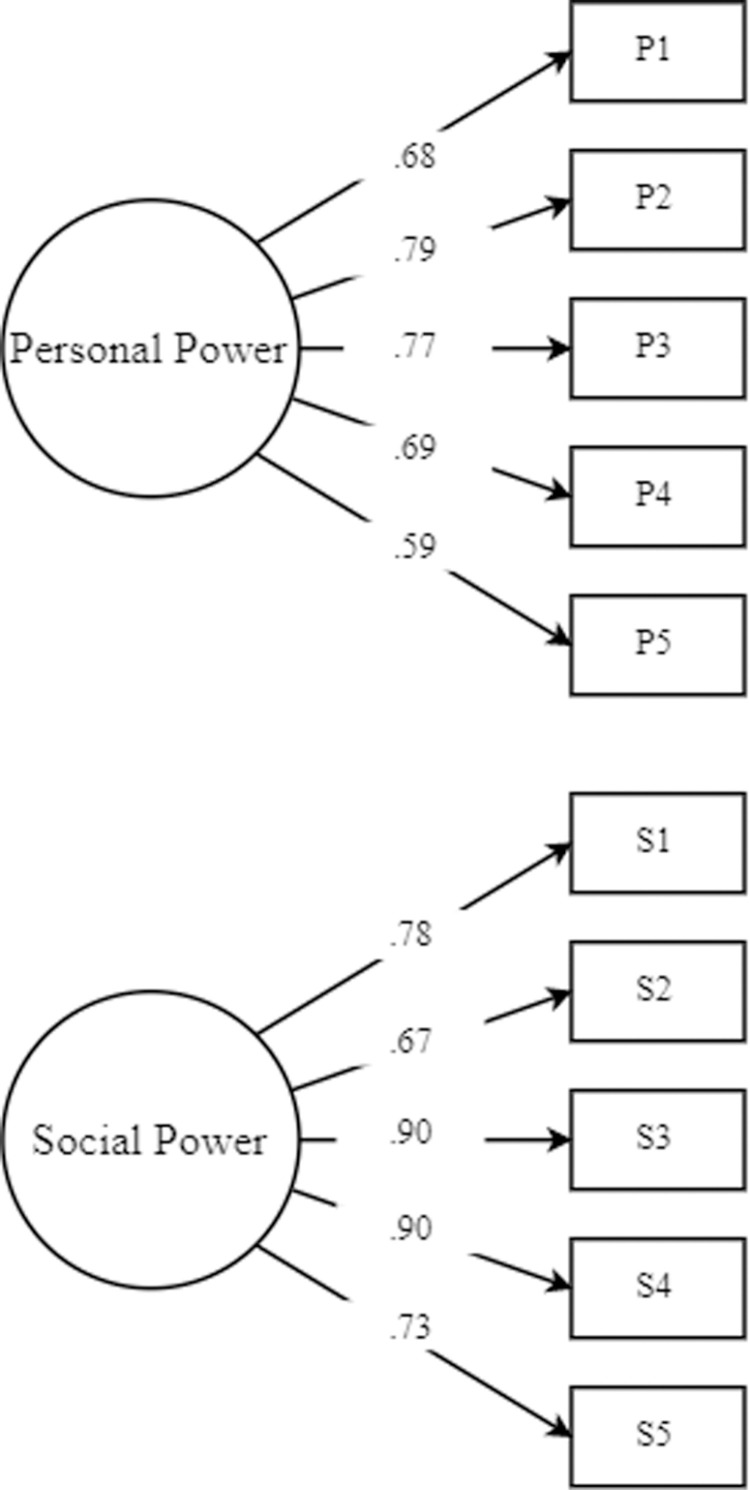 Figure 24
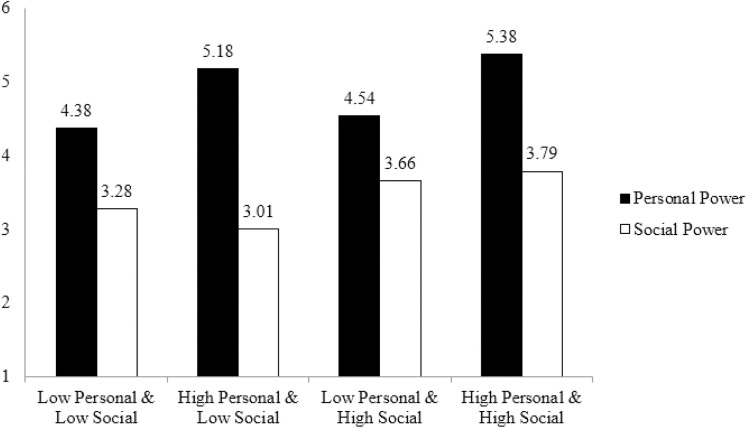 Figure 25
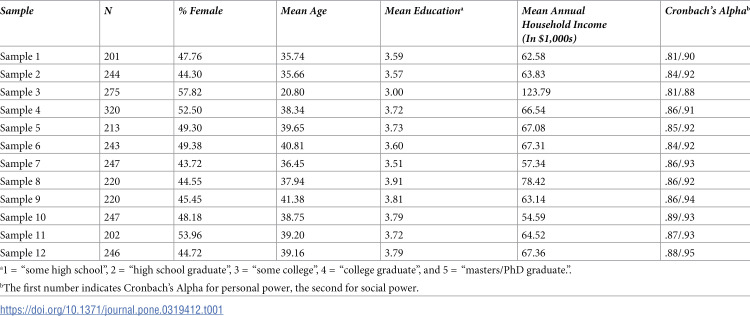 Figure 26
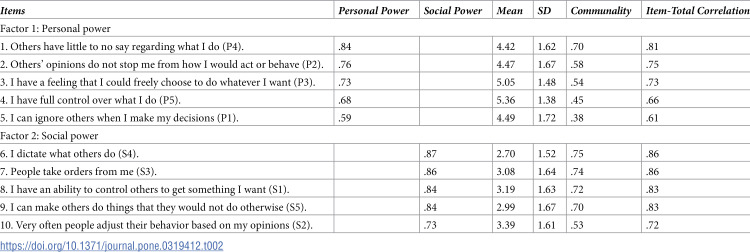 Figure 27
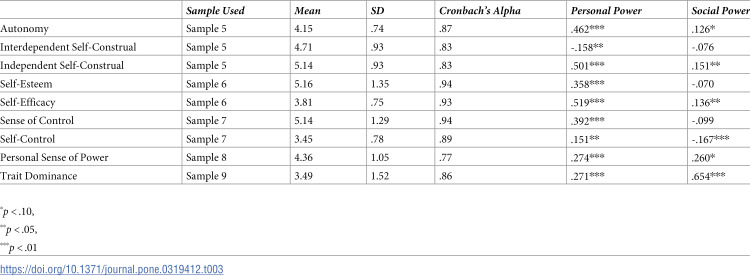 Figure 28
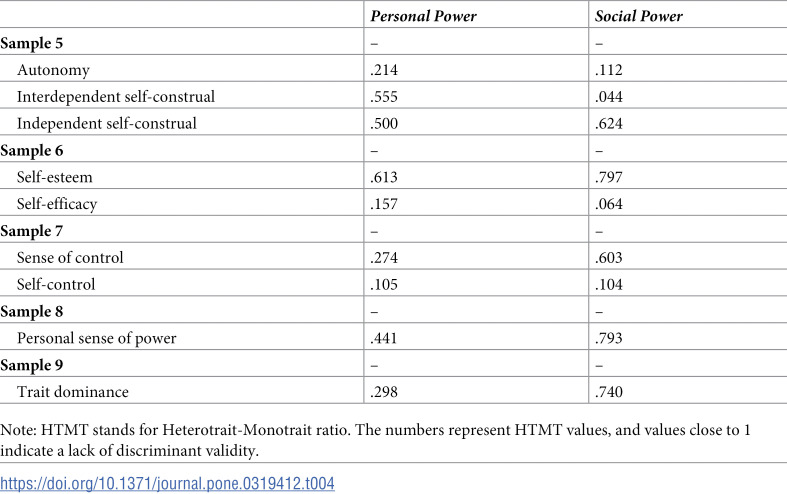 Figure 29
Peer Reviews
No public reviews on file for this paper yet. If you reviewed it on a platform where reviews are public (OpenReview, ICLR, NeurIPS, ICML), you can paste yours below so the community can read it here.
Videos
No videos yet. Explain this paper in a talk, walkthrough, or lecture? Add one.
Taxonomy
TopicsSocial and Intergroup Psychology · Job Satisfaction and Organizational Behavior · Cultural Differences and Values