A mechanistic modeling approach to assessing the sensitivity of outcomes of water, sanitation, and hygiene interventions to local contexts and intervention factors
Andrew F. Brouwer, Alicia N.M. Kraay, Mondal H. Zahid, Marisa C. Eisenberg, Matthew C. Freeman, Joseph N.S. Eisenberg

TL;DR
This paper uses a disease transmission model to show how the effectiveness of water, sanitation, and hygiene interventions depends on local conditions and intervention parameters.
Contribution
The study introduces a mechanistic modeling approach to assess how WASH interventions' outcomes vary with local contexts and intervention factors.
Findings
Intervention effectiveness is highly sensitive to baseline disease prevalence and contextual factors.
Community coverage interacts strongly with compliance and efficacy to determine health outcomes.
Low coverage can be effective in low-prevalence settings, but high coverage is needed in high-prevalence areas.
Abstract
Diarrheal disease is a leading cause of morbidity and mortality in young children. Water, sanitation, and hygiene (WASH) improvements have historically been responsible for major public health gains, but many individual interventions have failed to consistently reduce diarrheal disease burden. Analytical tools that can estimate the potential impacts of individual WASH improvements in specific contexts would support program managers and policymakers to set targets that would yield health gains. We developed a disease transmission model to simulate an intervention trial with a single intervention. We accounted for contextual factors, including preexisting WASH conditions and baseline disease prevalence, as well as intervention WASH factors, including community coverage, compliance, efficacy, and the intervenable fraction of transmission. We illustrated the sensitivity of intervention…
Genes, proteins, chemicals, diseases, species, mutations and cell lines named across the full text — each resolved to its canonical identifier and authoritative record.
Click any figure to enlarge with its caption.
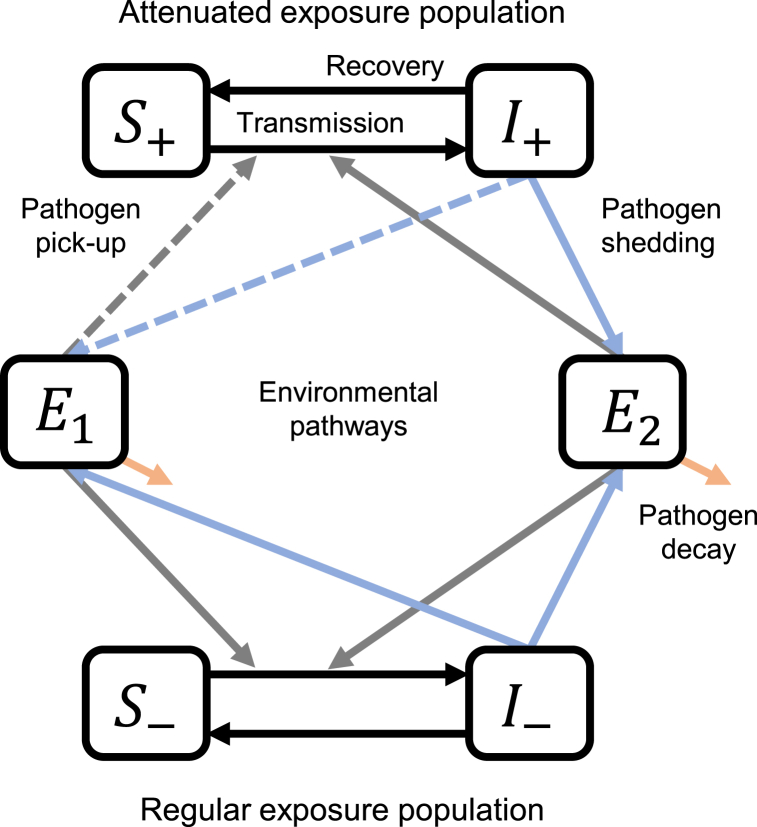 Figure 1
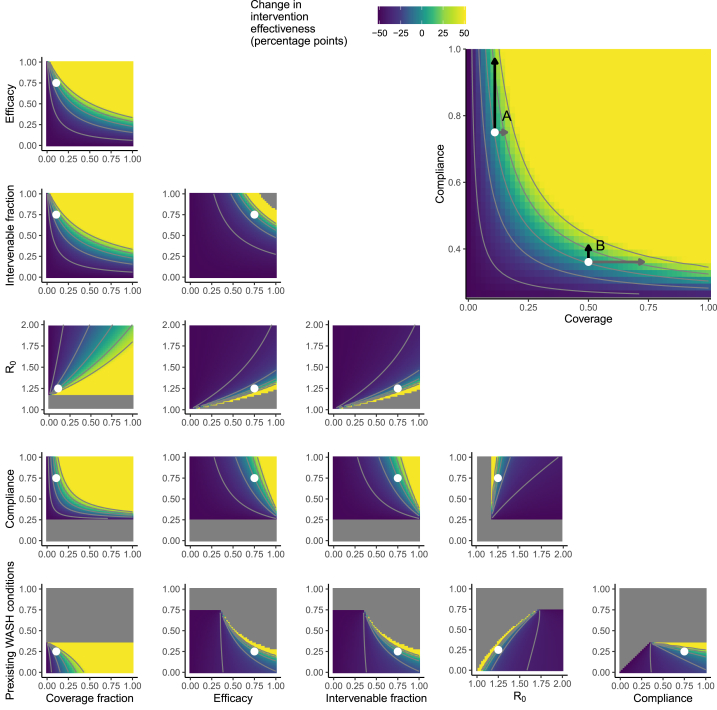 Figure 2
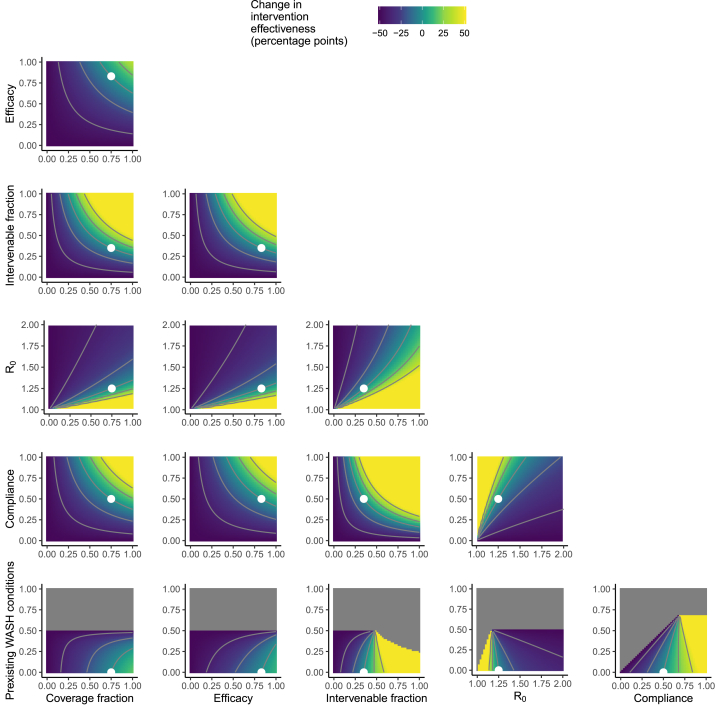 Figure 3
Peer Reviews
No public reviews on file for this paper yet. If you reviewed it on a platform where reviews are public (OpenReview, ICLR, NeurIPS, ICML), you can paste yours below so the community can read it here.
Videos
No videos yet. Explain this paper in a talk, walkthrough, or lecture? Add one.
Taxonomy
TopicsChild Nutrition and Water Access · Global Maternal and Child Health · Food Security and Health in Diverse Populations