A long-lived pool of PINK1 imparts a molecular memory of depolarization-induced activity
Liam Pollock, Ioanna Ch. Georgiou, Emma V. Rusilowicz-Jones, Michael J. Clague, Sylvie Urbé

TL;DR
The study shows that PINK1, a protein linked to Parkinson's disease, forms a long-lasting active pool after mitochondrial stress, which can later help activate new PINK1.
Contribution
The discovery of a long-lived, active PINK1 pool that persists after mitochondrial recovery is novel.
Findings
PINK1 accumulates on mitochondria under depolarizing conditions and remains active after recovery.
A residual pool of active PINK1 can seed new PINK1 activation after a 16-hour recovery period.
Free phospho-ubiquitin levels serve as a proxy for PINK1 activity in the presence of TAK-243.
Abstract
The Parkinson’s disease–linked kinase, PINK1, is a short-lived protein that undergoes cleavage upon mitochondrial import leading to its proteasomal degradation. Under depolarizing conditions, it accumulates on mitochondria where it becomes activated, phosphorylating both ubiquitin and the ubiquitin E3 ligase Parkin, at Ser65. Our experiments reveal that in retinal pigment epithelial cells, only a fraction of PINK1 becomes stabilized after depolarization by electron transport chain inhibitors. Furthermore, the observed accrual of PINK1 cannot be completely accounted for without an accompanying increase in biosynthesis. We have used a ubiquitylation inhibitor TAK-243 to accumulate cleaved PINK1. Under these conditions, generation of unconjugated “free” phospho-ubiquitin serves as a proxy readout for PINK1 activity. This has enabled us to find a preconditioning phenomenon, whereby an…
Genes, proteins, chemicals, diseases, species, mutations and cell lines named across the full text — each resolved to its canonical identifier and authoritative record.
Click any figure to enlarge with its caption.
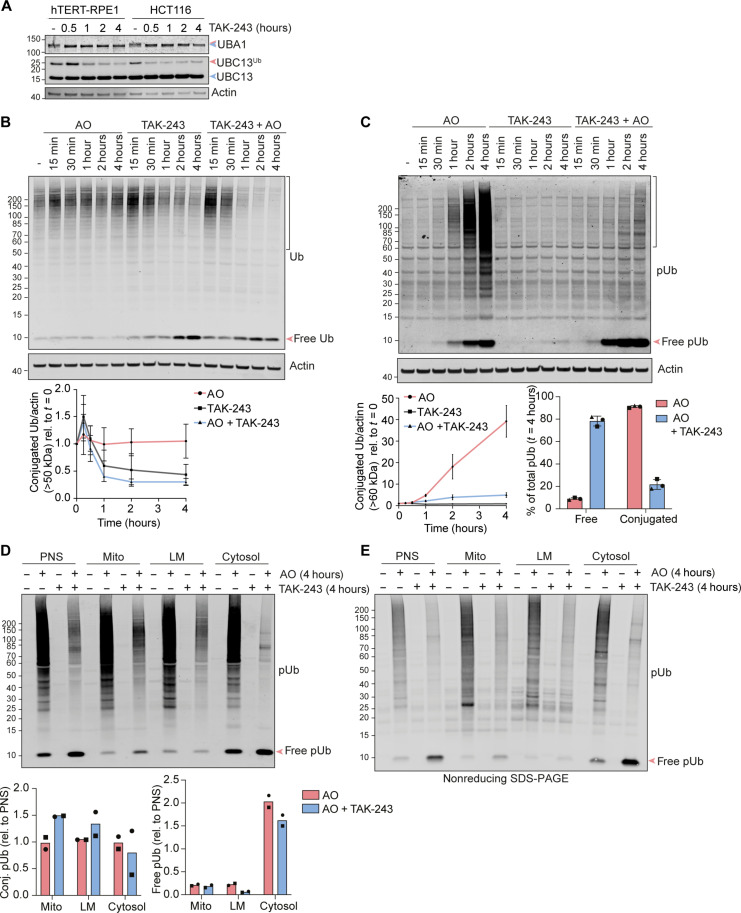 Figure 1
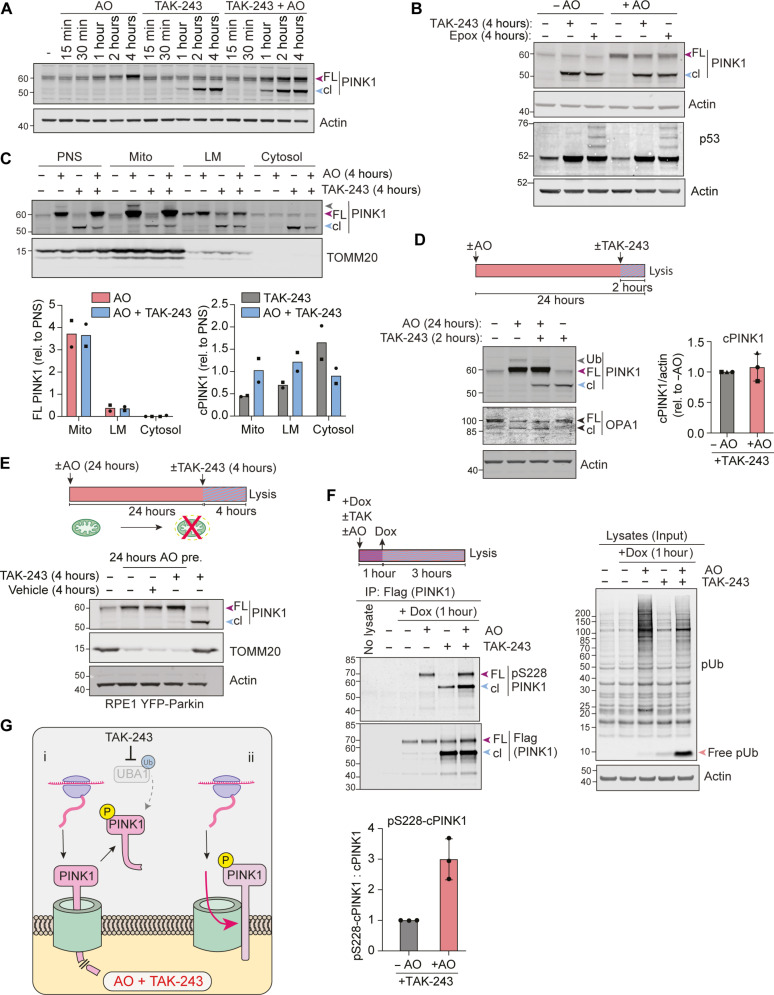 Figure 2
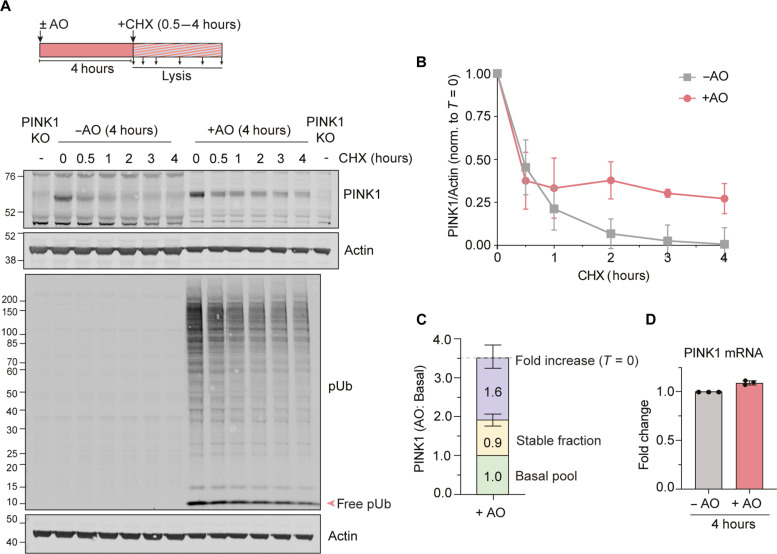 Figure 3
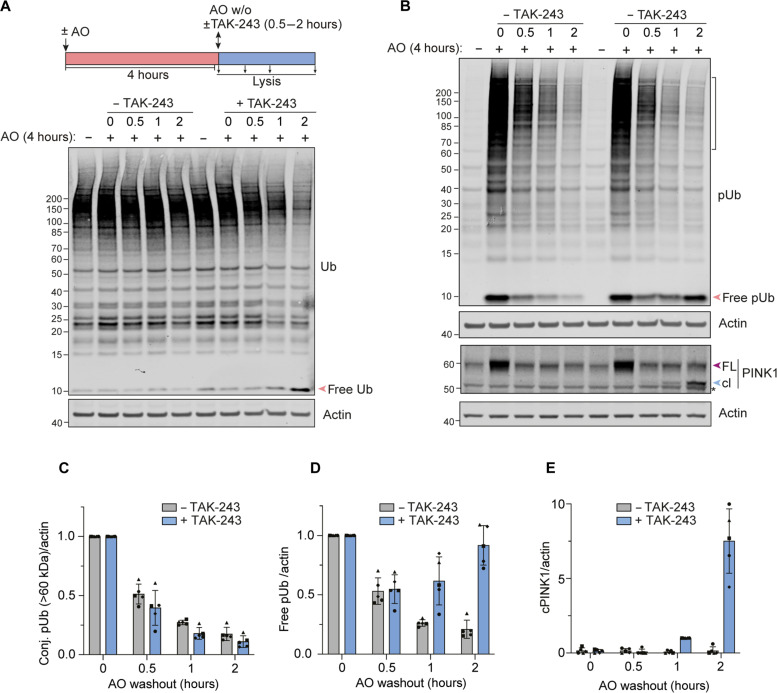 Figure 4
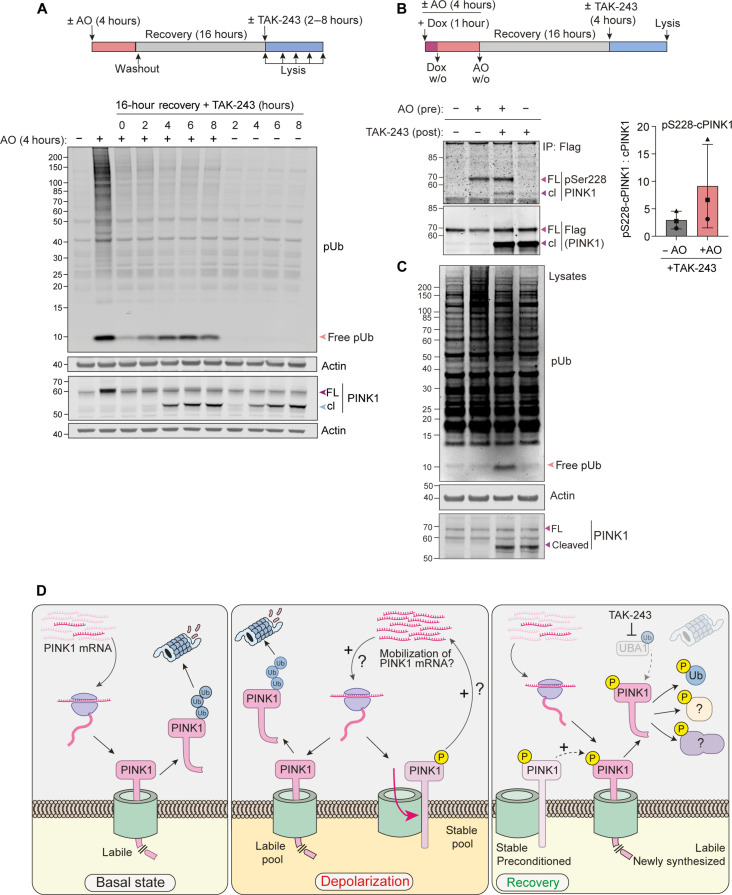 Figure 5
Peer Reviews
No public reviews on file for this paper yet. If you reviewed it on a platform where reviews are public (OpenReview, ICLR, NeurIPS, ICML), you can paste yours below so the community can read it here.
Videos
No videos yet. Explain this paper in a talk, walkthrough, or lecture? Add one.
Taxonomy
TopicsAutophagy in Disease and Therapy · Retinal Development and Disorders · Parkinson's Disease Mechanisms and Treatments