T‐Cadherin in Biliary Tract Cancer Stroma, a Potent Pharmacological Target for Biliary Tract Carcinogenesis
Yuki Hanamatsu, Chiemi Saigo, Tamotsu Takeuchi

Abstract
Genes, proteins, chemicals, diseases, species, mutations and cell lines named across the full text — each resolved to its canonical identifier and authoritative record.
Click any figure to enlarge with its caption.
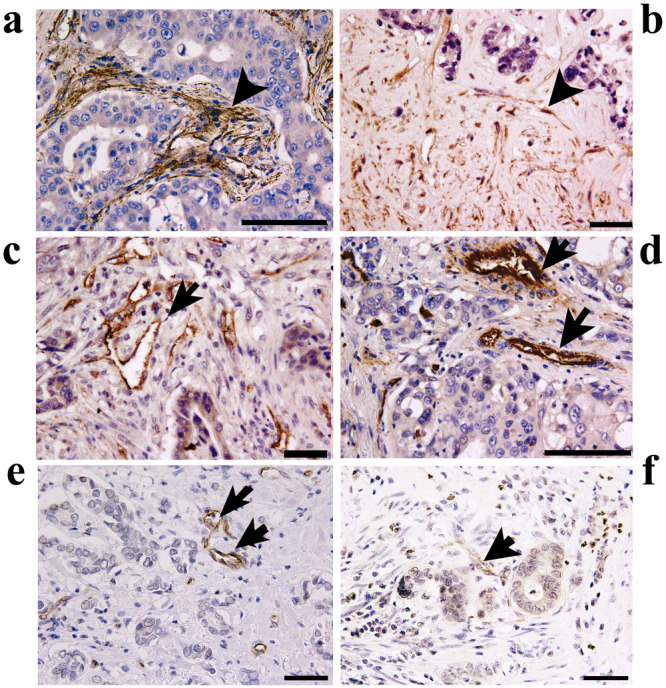 Figure 1
- —This study was supported by grants from the Ministry of Education of Japan (grant numbers 23K06423 and 24K18396).
Peer Reviews
No public reviews on file for this paper yet. If you reviewed it on a platform where reviews are public (OpenReview, ICLR, NeurIPS, ICML), you can paste yours below so the community can read it here.
Videos
No videos yet. Explain this paper in a talk, walkthrough, or lecture? Add one.
Taxonomy
TopicsPancreatic and Hepatic Oncology Research · Wnt/β-catenin signaling in development and cancer · Cholangiocarcinoma and Gallbladder Cancer Studies
Based on the empirical data, we propose that T‐cadherin could be a molecular target for disrupting the stroma of patients with biliary tract cancer (BTC).
BTC comprises carcinomas originating in the bile ducts, including cholangiocarcinomas (cancers arising in the intrahepatic or extrahepatic bile ducts) and gallbladder carcinomas [1]. BTC often exhibits an aggressive clinicopathological course [1]. Surgical resection remains the most curative treatment option for patients with BTC; however, it may be limited to the early stages of cancer [1]. Owing to their poor sensitivity to chemotherapeutic agents, new therapeutic approaches are required for patients with advanced BTC.
One of the remarkable pathological features of BTC is the dense fibrous stroma harboring cancer cell nests. It is well established that stromal cells play a crucial role in the tumor microenvironment. Therefore, several targeting therapies are attempted against cancer stroma. For example, lysyl oxidases (LOXs) are a family of five secreted copper‐dependent amine oxidases (LOX and LOXL1–4) that promote carcinogenesis by generating cancer stroma. Very recently, Burchard et al. [2] demonstrated that PXS‐5505, which is a small molecule inhibitor of all LOX isoforms, improved chemotherapeutic penetration and reduced the inflammatory reaction of intrahepatic cholangiocarcinoma, thereby enhancing antitumor immunity in autochthonous and orthotopic murine models. Unfortunately, efforts to target individual LOX isoforms have failed to achieve clinical impact, likely due to the compensatory action of other LOX family members. Combination therapies targeting multiple stromal components are warranted.
T‐cadherin is an atypical cadherin attached to the plasma membrane by a glycosylphosphatidylinositol anchor without a cytosolic domain [2]. Notably, it is overexpressed in endothelial cells of tumor‐penetrating vessels in several malignant tumors [3, 4].
In this study, we investigated whether T‐cadherin was also expressed in the tumor endothelial cells of BTC. Immunohistochemical staining using a tissue microarray, with a core diameter of 1.5 mm, demonstrated T‐cadherin immunoreactivity in cancer stromal niches in BTC, especially in the cancer invasion microenvironment with a desmoplastic reaction (Figure 1a–d). Furthermore, T‐cadherin expression was detected in the endothelial cells of tumor vessels and stromal mesenchymal cells of all 27 intrahepatic cholangiocarcinomas and 32 of 43 extrahepatic biliary duct adenocarcinomas. Consistent with previous research [3], T‐cadherin immunoreactivity was also observed in the endothelial cells of tumor‐penetrating vessels in breast and colorectal cancers. However, little T‐cadherin immunoreactivity was observed in the stromal mesenchymal cells of these cancers (Figure 1e,f).
Here, we could not unravel whether stromal T‐cadherin expression was related to clinicopathological features, including prognosis, resistance to therapy, or metastasis. Moreover, due to the intratumoral heterogeneity, subsequent studies exploring the pathobiological property of stromal expression of T‐cadherin using whole tissue specimens implementing various clinicopathological parameters are warranted.
Robust fibrous stroma, a characteristic feature of BTC, impedes immune cell penetration [5]. Strikingly, recent research has revealed that exosomal PD‐L1 confers immune evasion to cancer cells [6]. Consequently, immune checkpoint inhibitor therapy faces challenges such as a low response rate in BTC [7]. Several preclinical approaches apply an exosome inhibitor, GW4869, against cancer progression [8]. Notably, the adiponectin–T‐cadherin pathway also mediates exosome biogenesis [9]. We hypothesize that targeting T‐cadherin could be a novel therapeutic strategy that might reduce exosomal PD‐L1 and increase the effect of immune checkpoint inhibitors in BTC.
T‐cadherin null mice are viable and fertile [10], suggesting that other molecules could complement the physiological properties of T‐cadherin. We propose that targeting T‐cadherin could enhance the efficacy of immunotherapy in patients with BTC. Furthermore, combination therapies targeting multiple stromal components with PXS‐5505, GW4869, or more might be more effective.
Author Contributions
Yuki Hanamatsu: funding acquisition (equal), investigation (equal), writing – original draft (equal). Chiemi Saigo: data curation (equal), investigation (supporting), writing – original draft (lead). Tamotsu Takeuchi: conceptualization (equal), data curation (equal), funding acquisition (equal), writing – review and editing (lead).
Ethics Statement
The authors have nothing to report.
Consent
The authors have nothing to report.
Conflicts of Interest
The authors declare no conflicts of interest.
The reference list from the paper itself. Each links out to its DOI / PubMed record.
- 1J. W. Valle , R. K. Kelley , B. Nervi , D. Y. Oh , and A. X. Zhu , “Biliary Tract Cancer,” Lancet 397, no. 10272 (2021): 428–444, 10.1016/S 0140-6736(21)00153-7.33516341 · doi ↗ · pubmed ↗
- 2P. R. Burchard , L. I. Ruffolo , N. A. Ullman , et al., “Pan‐Lysyl Oxidase Inhibition Disrupts Fibroinflammatory Tumor Stroma, Rendering Cholangiocarcinoma Susceptible to Chemotherapy,” Hepatology Communications 8 (2024): e 0502, 10.1097/HC 9.0000000000000502.39101793 PMC 11299993 · doi ↗ · pubmed ↗
- 3T. Takeuchi and Y. Ohtsuki , “Recent Progress in T‐Cadherin (CDH 13, H‐Cadherin) Research,” Histology and Histopathology 16, no. 4 (2001): 1287–1293, 10.14670/HH-16.1287.11642747 · doi ↗ · pubmed ↗
- 4L. Wyder , A. Vitaliti , H. Schneider , et al., “Increased Expression of H/T‐Cadherin in Tumor‐Penetrating Blood Vessels,” Cancer Research 60, no. 17 (2000): 4682–4688.10987267 · pubmed ↗
- 5Y. Adachi , T. Takeuchi , H. Sonobe , and Y. Ohtsuki , “An Adiponectin Receptor, T‐Cadherin, Was Selectively Expressed in Intratumoral Capillary Endothelial Cells in Hepatocellular Carcinoma: Possible Cross Talk Between T‐Cadherin and FGF‐2 Pathways,” Virchows Archiv: European Journal of Pathology 448, no. 3 (2006): 311–318, 10.1007/s 00428-005-0098-9.16273386 · doi ↗ · pubmed ↗
- 6A. E. Sirica and G. J. Gores , “Desmoplastic Stroma and Cholangiocarcinoma: Clinical Implications and Therapeutic Targeting,” Hepatology 59, no. 6 (2014): 2397–2402, 10.1002/hep.26762.24123296 PMC 3975806 · doi ↗ · pubmed ↗
- 7G. Chen , A. C. Huang , W. Zhang , et al., “Exosomal PD‐L 1 Contributes to Immunosuppression and Is Associated With Anti‐PD‐1 Response,” Nature 560, no. 7718 (2018): 382–386, 10.1038/s 41586-018-0392-8.30089911 PMC 6095740 · doi ↗ · pubmed ↗
- 8P. Dobosz , M. Stępień , A. Golke , and T. Dzieciątkowski , “Challenges of the Immunotherapy: Perspectives and Limitations of the Immune Checkpoint Inhibitor Treatment,” International Journal of Molecular Sciences 23, no. 5 (2022): 2847, 10.3390/ijms 23052847.35269988 PMC 8910928 · doi ↗ · pubmed ↗