Evaluation of long-term outcomes with intrathecal opioid treatment: a comparison utilizing data derived from pain clinic populations in Australia and New Zealand
Elouise Rose Comber, Jenny Strong, Orla Moore, Asaduzzaman Khan, James O’Callaghan, Benjamin Manion, Brendan Joseph Moore, Maree Therese Smith

TL;DR
This study compares long-term outcomes of intrathecal opioid treatment for chronic pain in patients from Australia and New Zealand, showing significant improvements in pain and mental health.
Contribution
The study demonstrates favorable pain management outcomes using long-term intrathecal opioids in a select group, leveraging a large-data initiative.
Findings
Patients receiving intrathecal opioids reported significantly lower pain severity and interference compared to a baseline group.
Participants showed reduced depression, anxiety, stress, and catastrophizing scores, with higher self-efficacy in pain management.
Improvements are attributed to comprehensive pain management rather than opioids alone.
Abstract
An obstacle to analysis of the long-term effectiveness of intrathecal (IT) opioids is absence of historical patient baseline data. The electronic Persistent Pain Outcomes Collaboration (ePPOC) is an initiative of the Faculty of Pain Medicine of the Australian and New Zealand College of Anaesthetists. Recently published ePPOC data has provided justifiable surrogate baseline data allowing opportunities for pain outcomes research into select patient treatment groups. Our aim was to compare long-term outcomes of IT opioid therapy with a surrogate baseline utilizing a large ePPOC data set for patients at the time of initial presentation to 36 pain clinics in Australia and New Zealand. Study participants were 49 consenting patients receiving IT opioids as part of a long-term pain management regime for treating chronic non-cancer pain. Their data were compared with the large ePPOC data set (n…
Genes, proteins, chemicals, diseases, species, mutations and cell lines named across the full text — each resolved to its canonical identifier and authoritative record.
Click any figure to enlarge with its caption.
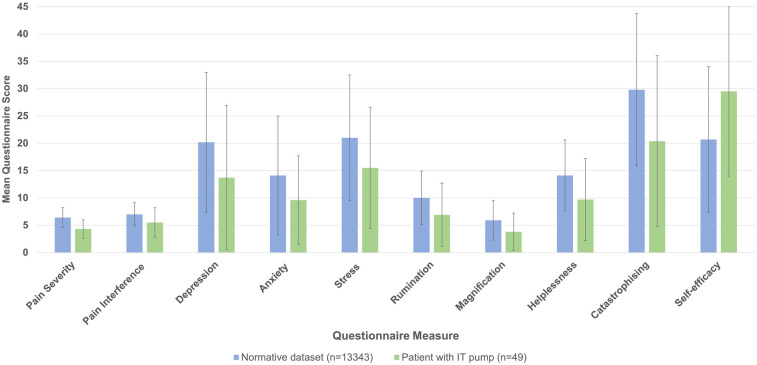 Figure 1
Peer Reviews
No public reviews on file for this paper yet. If you reviewed it on a platform where reviews are public (OpenReview, ICLR, NeurIPS, ICML), you can paste yours below so the community can read it here.
Videos
No videos yet. Explain this paper in a talk, walkthrough, or lecture? Add one.
Taxonomy
TopicsPain Management and Opioid Use · Opioid Use Disorder Treatment · Pain Mechanisms and Treatments