Association of preoperative cerebral oxygenation with concurrent neurobehavioral scores in term neonates with congenital heart disease compared to healthy controls
Nhu N. Tran, Anna Miner, Eniola Adeleke, Rene Phan, Ken M. Brady, Mary-Lynn Brecht, Philippe Friedlich, Geena Zhou, Vidya Rajagopalan, Bradley S. Peterson, Jodie K. Votava-Smith

TL;DR
The study found that brain oxygen levels in newborns with heart defects and healthy babies are linked differently to their neurodevelopmental outcomes.
Contribution
The study reveals distinct associations between cerebral oxygenation and neurobehavioral scores in neonates with CHD versus healthy controls.
Findings
Neonates with CHD had lower cerebral oxygenation and higher oxygen extraction compared to healthy controls.
Higher cerebral oxygenation was linked to better outcomes in CHD neonates but worse outcomes in healthy neonates.
Both high and low oxygenation levels may negatively affect neurodevelopmental outcomes in neonates.
Abstract
1st: To determine the association of cerebral oxygenation (rcSO2) and concurrent neurodevelopmental outcomes between neonates with congenital heart disease (CHD) and healthy controls. 2nd: To examine the association of cerebral fractional tissue oxygen extraction (FTOE) with concurrent neurodevelopmental outcomes in the two groups. 3rd: To evaluate how type and severity of CHD influenced the associations in our primary and secondary objectives. Our secondary analysis included 137 neonates (74 with CHD and 63 healthy controls). We used linear regression models to examine the association of the predictors (i.e., cerebral oxygenation, FTOE, type and severity of CHD) with the percentage of abnormal neurobehavioral scores (outcome). The models included the main effects of group, rcSO2, and a rcSO2-by-group interaction (examined differences between groups) with covariates of postconceptional…
Genes, proteins, chemicals, diseases, species, mutations and cell lines named across the full text — each resolved to its canonical identifier and authoritative record.
Click any figure to enlarge with its caption.
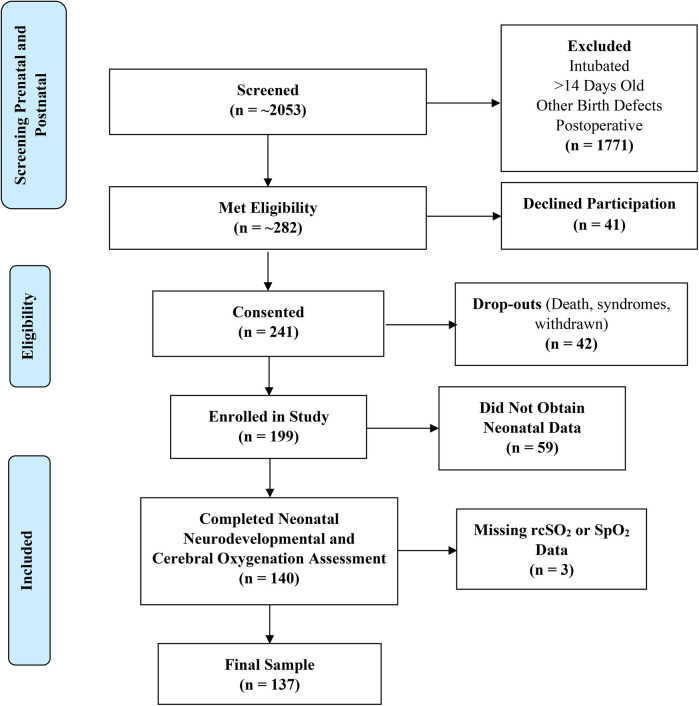 Figure 1
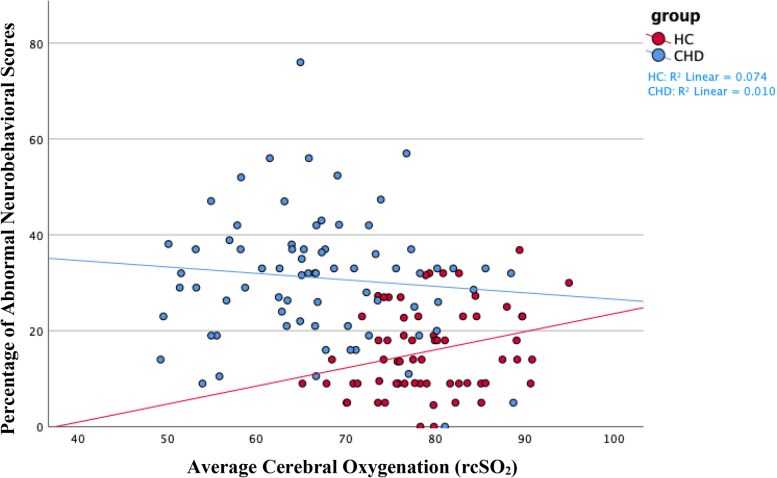 Figure 2
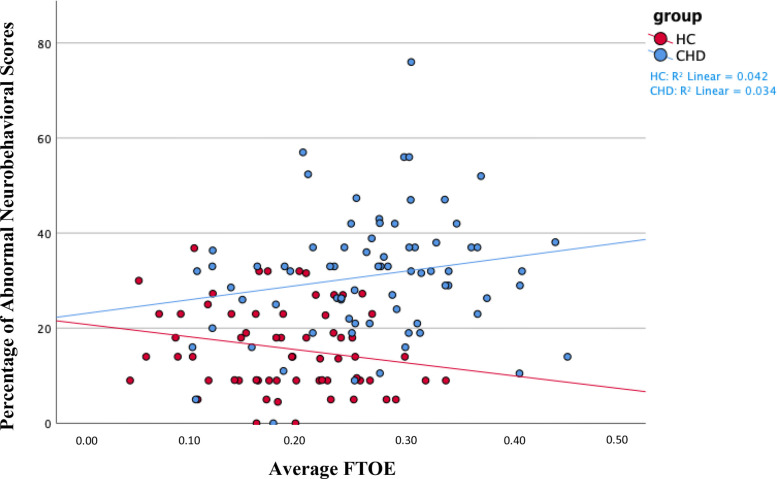 Figure 3
Peer Reviews
No public reviews on file for this paper yet. If you reviewed it on a platform where reviews are public (OpenReview, ICLR, NeurIPS, ICML), you can paste yours below so the community can read it here.
Videos
No videos yet. Explain this paper in a talk, walkthrough, or lecture? Add one.
Taxonomy
TopicsCongenital Heart Disease Studies · Aortic Disease and Treatment Approaches · Cardiovascular Conditions and Treatments