Multimodal Treatment of a Spontaneously Ruptured Echinococcus Cyst of the Spleen and Its Complications
Sévérine De Bruijn, Annick De Weerdt, Glenn Broeckx, Maarten Spinhoven, Rudi De Paep, Dominique Robert, Niels Komen, Philippe G. Jorens

TL;DR
A patient with a ruptured hydatid cyst in the spleen was successfully treated with surgery and careful management of a dangerous side effect.
Contribution
This paper presents a rare case of splenic echinococcosis rupture and its treatment, emphasizing surgical and hypernatremia management.
Findings
Splenectomy and peritoneal lavage with hypertonic salt solution were used to treat a ruptured splenic hydatid cyst.
Hypernatremia following treatment was successfully managed with continuous venovenous hemofiltration.
Prompt surgical intervention is critical for survival in ruptured splenic echinococcosis.
Abstract
Introduction: Cystic echinococcosis, also known as hydatid cyst, is a parasitic infection of mammals that can affect any organ. Although the diagnosis of primary splenic echinococcosis is challenging, especially in nonendemic areas, it can be life-saving because an anaphylactic shock may occur when the cyst ruptures. Recommendations regarding optimal treatment options after rupture are scarce, and the overall prognosis remains poor. Case Presentation: A patient with a spontaneous rupture of an isolated splenic hydatid cyst was treated with splenectomy and peritoneal lavage with a hypertonic salt solution. The patient survived despite rapidly progressive hypernatremia, which was treated with conventional therapy along with continuous venovenous hemofiltration with gradient sodium replacement. Discussion: When the decision is made to treat a patient with a spontaneously ruptured splenic…
Genes, proteins, chemicals, diseases, species, mutations and cell lines named across the full text — each resolved to its canonical identifier and authoritative record.
Click any figure to enlarge with its caption.
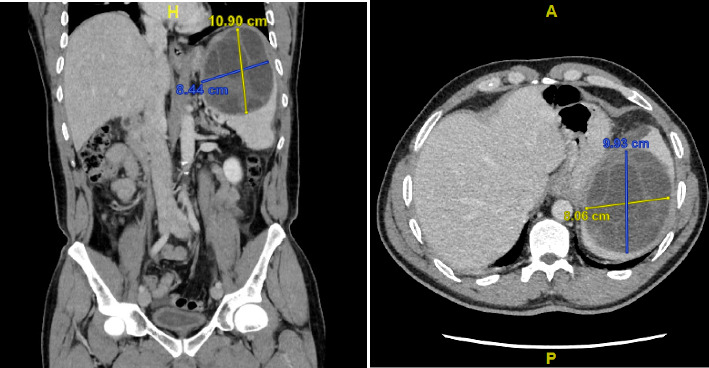 Figure 1
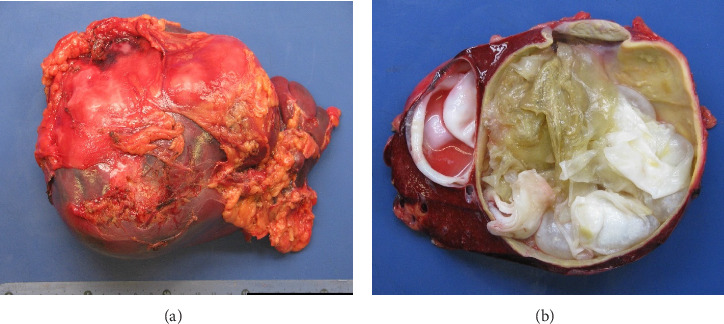 Figure 2
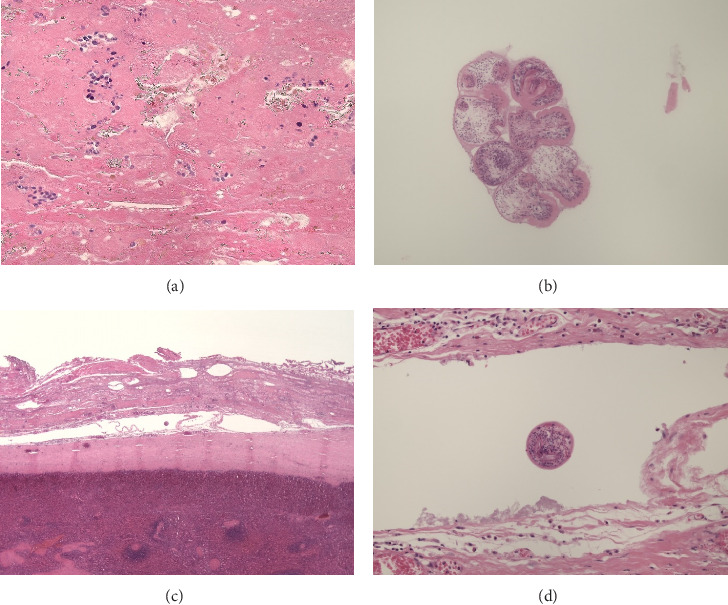 Figure 3
Peer Reviews
No public reviews on file for this paper yet. If you reviewed it on a platform where reviews are public (OpenReview, ICLR, NeurIPS, ICML), you can paste yours below so the community can read it here.
Videos
No videos yet. Explain this paper in a talk, walkthrough, or lecture? Add one.
Taxonomy
TopicsParasitic infections in humans and animals · Congenital Anomalies and Fetal Surgery · Amoebic Infections and Treatments