The Bezold–Jarisch Reflex Following an Endoscopic Endonasal Resection of an Intraosseous Clival Myxoma: A Case Report
Abigail Peterson, Omar Hussain, Nathan Zwagerman, Harvey Woehlck

TL;DR
A 17-year-old patient experienced asystole due to the Bezold–Jarisch reflex after surgery, highlighting the reflex's potential impact on intracranial arteries and ECG readings.
Contribution
This case report provides evidence that the Bezold–Jarisch reflex can occur post-surgery and questions ECG reliability during such events.
Findings
The patient experienced asystole while conscious after surgery, indicating the Bezold–Jarisch reflex.
Epinephrine and positioning resolved the reflex-induced cardiac arrest.
The case suggests intracranial arteries may have mechanical sensitivity similar to the carotid sinus.
Abstract
In certain contexts, young and healthy patients with a strong heart and a history of vasovagal syncope are at increased risk of cardiac arrest. An increase in vagal tone results in the normal maintenance of arterial pressure shifting into parasympathetic activation and sympathetic suppression, amplifying afferent mechanoreceptors and, in rare instances, inducing asystole. We report the case of a 17-year-old patient with a past medical history of syncope who went into asystole while maintaining consciousness and protecting his airway when recovering from anesthesia in the postanesthesia care unit (PACU) following endoscopic endonasal resection of an intraosseous clival myxoma. Chest compressions were initiated and epinephrine was administered, allowing for return of spontaneous circulation to be quickly achieved. While being transferred to the intensive care unit, the patient's heart…
Genes, proteins, chemicals, diseases, species, mutations and cell lines named across the full text — each resolved to its canonical identifier and authoritative record.
Click any figure to enlarge with its caption.
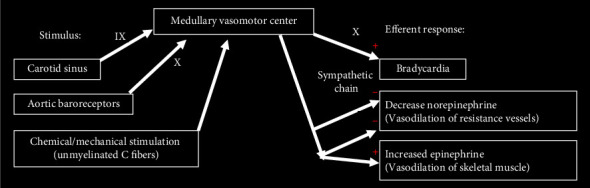 Figure 1
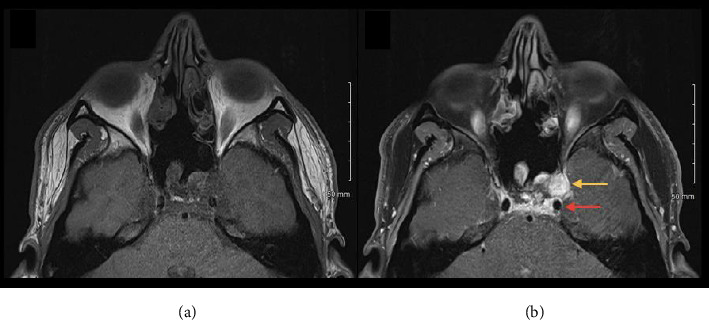 Figure 2
Peer Reviews
No public reviews on file for this paper yet. If you reviewed it on a platform where reviews are public (OpenReview, ICLR, NeurIPS, ICML), you can paste yours below so the community can read it here.
Videos
No videos yet. Explain this paper in a talk, walkthrough, or lecture? Add one.
Taxonomy
TopicsTrigeminal Neuralgia and Treatments · Meningioma and schwannoma management · Deception detection and forensic psychology