Subependymal Giant Cell Astrocytoma in an Adult without Tuberous Sclerosis: Systematic Review and Illustrative Case Example
Brandon M. Holler, Alexander R. Evans, Abigail York, Christopher S. Graffeo

TL;DR
A rare brain tumor called SEGA was found in an adult without a genetic condition called TSC, and the paper reviews similar cases and treatment outcomes.
Contribution
The paper presents the tenth documented case of sporadic SEGA in adults without TSC and provides a systematic review of such cases.
Findings
A 59-year-old woman with sporadic SEGA had successful microsurgical resection and remained disease-free after one year.
Systematic review identified nine adult cases of SEGA without TSC, with symptom-free survival rates of at least 80%.
Headache, papilledema, and visual disturbances were the most common symptoms in sporadic adult SEGA cases.
Abstract
Background Subependymal giant cell astrocytoma (SEGA) is a rare neoplasm arising from subependymal tissue. Predominantly associated with the tuberous sclerosis complex (TSC), SEGA may present with a range of diverse symptoms, most commonly seizures or neurocutaneous features of TSC. We present a novel case of sporadic SEGA in a 59-year-old woman who presented with acute intraparenchymal hemorrhage (IPH). Methods Systematic literature review and illustrative case example. Results A 59-year-old woman presented with a headache decreased level of consciousness, and acute IPH involving the anterior septum pellucidum and right medial caudate head. MRI was concerning for an underlying neoplasm, which grew slowly on follow-up imaging, prompting microsurgical resection. A gross total resection was achieved, and postoperative pathology confirmed SEGA (WHO grade I) without TSC1/2 mutation.…
Genes, proteins, chemicals, diseases, species, mutations and cell lines named across the full text — each resolved to its canonical identifier and authoritative record.
Click any figure to enlarge with its caption.
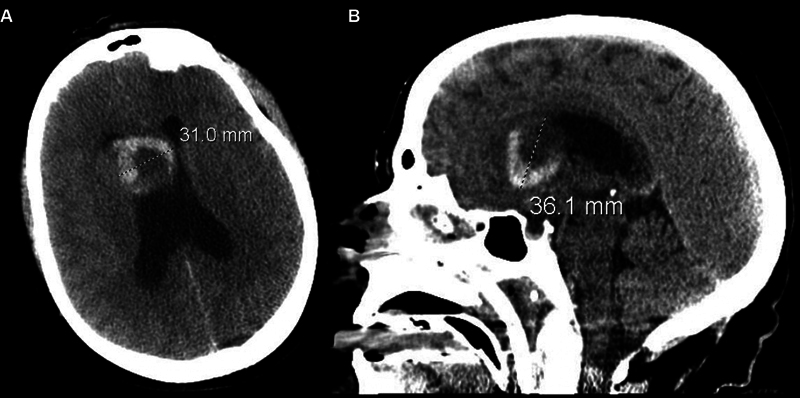 Figure 1
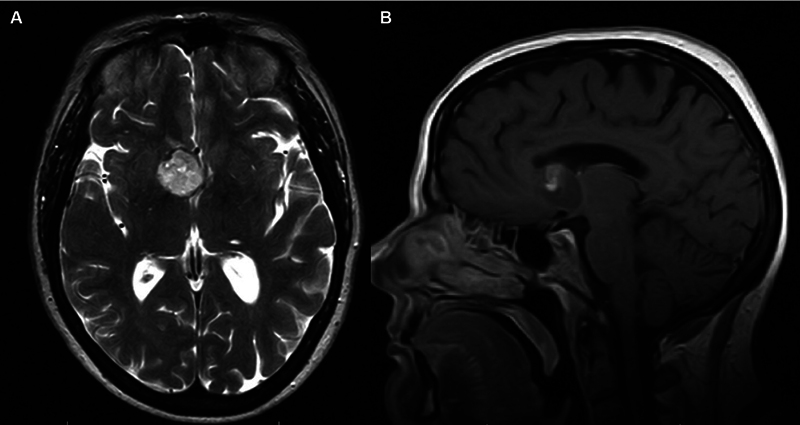 Figure 2
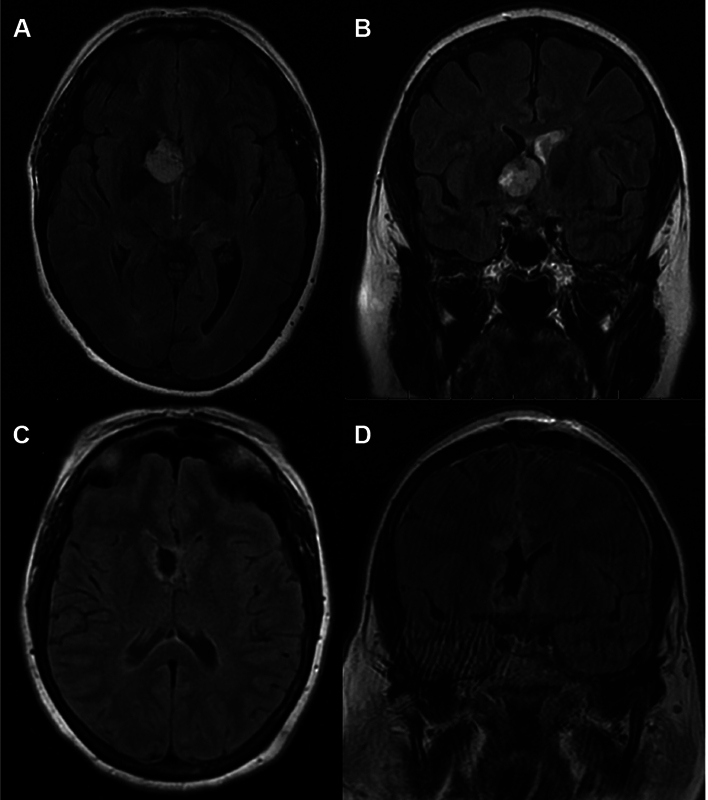 Figure 3
Peer Reviews
No public reviews on file for this paper yet. If you reviewed it on a platform where reviews are public (OpenReview, ICLR, NeurIPS, ICML), you can paste yours below so the community can read it here.
Videos
No videos yet. Explain this paper in a talk, walkthrough, or lecture? Add one.
Taxonomy
TopicsTuberous Sclerosis Complex Research · Neurofibromatosis and Schwannoma Cases · Soft tissue tumor case studies