A Cadaveric Study of the Martin-Gruber Anastomosis Morphology
Paul Tran, Dallas Bennett, Mathew Mendoza, Albert Sarpong, Madeline Ayala, Chakravarthy Sadacharan, Samantha P Tippen

TL;DR
This study examines the Martin-Gruber anastomosis in cadavers to better understand its prevalence and structure, which can improve nerve surgery outcomes.
Contribution
The study provides a detailed classification and prevalence data of the Martin-Gruber anastomosis morphology in cadavers.
Findings
The Martin-Gruber anastomosis was found in 37.6% of the 101 cadaveric forearms studied.
Type I was the most common anastomosis pattern, followed by type III and type II.
Most anastomoses were embedded in the flexor digitorum profundus muscle with fiber lengths ranging from 3 to 10 cm.
Abstract
Introduction and aim: The Martin-Gruber anastomosis (MGA) is a neural communication between the median nerve (MN) and ulnar nerve (UN), typically located in the proximal forearm. Despite its clinical significance in diagnosing and treating nerve pathologies such as carpal and cubital tunnel syndromes, anatomical variations of MGA remain underexplored. This cadaveric study aimed to determine MGA prevalence, characterize its morphological patterns, and evaluate implications for peripheral nerve surgeries such as ulnar nerve transplantation and upper extremity neuropathies. Methods: Cadaveric dissections of 101 forearms were conducted at Tilman J. Fertitta Family College of Medicine and Baylor College of Medicine. Only intact MGA specimens were included. Nerves were exposed by reflecting fascia and muscle layers, and MGA pathways were traced retrogradely. Measurements included the…
Genes, proteins, chemicals, diseases, species, mutations and cell lines named across the full text — each resolved to its canonical identifier and authoritative record.
Click any figure to enlarge with its caption.
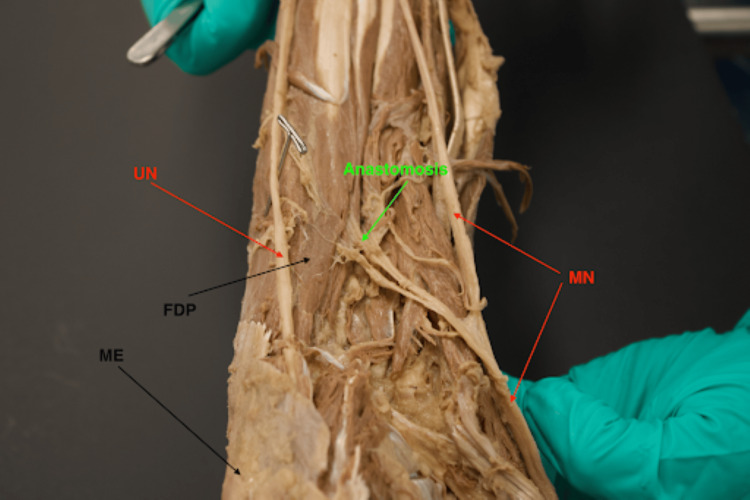 Figure 1
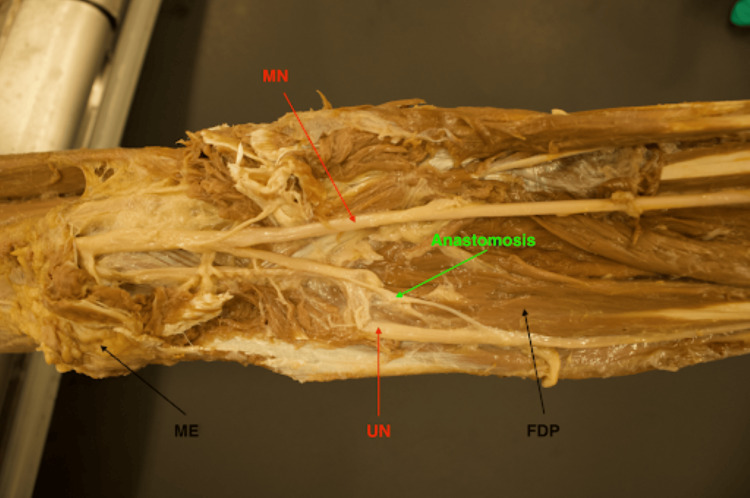 Figure 2
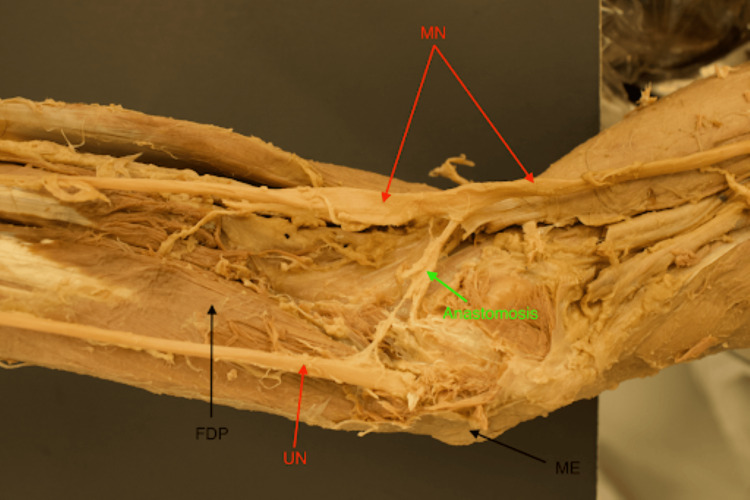 Figure 3
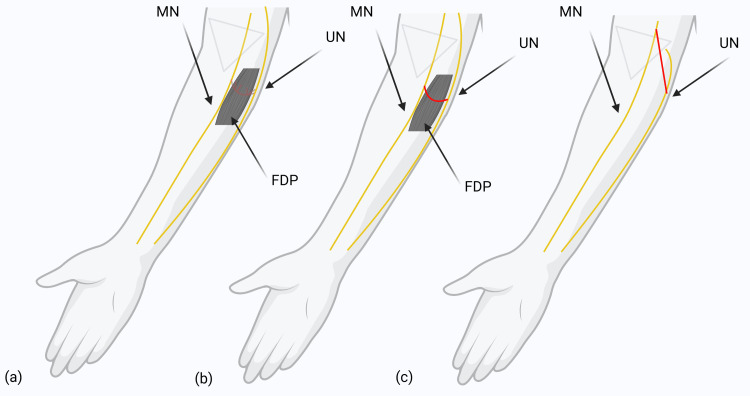 Figure 4
Peer Reviews
No public reviews on file for this paper yet. If you reviewed it on a platform where reviews are public (OpenReview, ICLR, NeurIPS, ICML), you can paste yours below so the community can read it here.
Videos
No videos yet. Explain this paper in a talk, walkthrough, or lecture? Add one.
Taxonomy
TopicsSoft tissue tumor case studies · Bone Tumor Diagnosis and Treatments · Vascular Malformations and Hemangiomas