The use of a woman’s own eggs in her first IVF treatment at the age of 48 years and 10 months with successful live birth after PGT-A: a case report
Claudia Gomes, Mariana Nicolielo Barreto, Anaíde Silva Sousa, Dayane Guerino Reis, Priscila Beirigo, Izadora Reis, Caroline Fauth, Andrea Belo, Hanna Park, Ana Luiza Tavares, Livia Munhoz, José Roberto Alegretti, Dóris S. Chéles, Aline R. Lorenzon

TL;DR
A 48-year-old woman successfully had a baby using her own eggs and IVF with a normal embryo, showing it's possible in rare cases.
Contribution
This case report highlights a rare successful IVF outcome using a woman's own eggs at an advanced maternal age.
Findings
A 48-year-old woman achieved a clinical pregnancy and live birth using her own eggs and IVF.
The pregnancy resulted from a euploid embryo selected through PGT-A.
The case suggests limited IVF attempts with a woman's own eggs may be viable in specific situations.
Abstract
Natural conception in women after the age of 45 years is rare. The probability of successful pregnancy in this specific group of women after IVF and embryo transfer with autologous oocytes is also reduced. In addition, advanced maternal age is associated with an increased risk of aneuploidies and other associated complications during pregnancy. Generally, women who are over 44 years old are advised to receive IVF treatment with donated oocytes due to poor oocyte quality and low ovarian reserve. Although IVF outcomes in women of advanced age can be associated with the best prognosis when donated oocytes are used, IVF is not always well accepted by infertile couples. This is a case report of a woman who achieved a clinical pregnancy and live birth in her first attempt at IVF treatment with her own eggs and a euploid embryo at 48 years and 10 months, respectively, at the time of oocyte…
Genes, proteins, chemicals, diseases, species, mutations and cell lines named across the full text — each resolved to its canonical identifier and authoritative record.
Click any figure to enlarge with its caption.
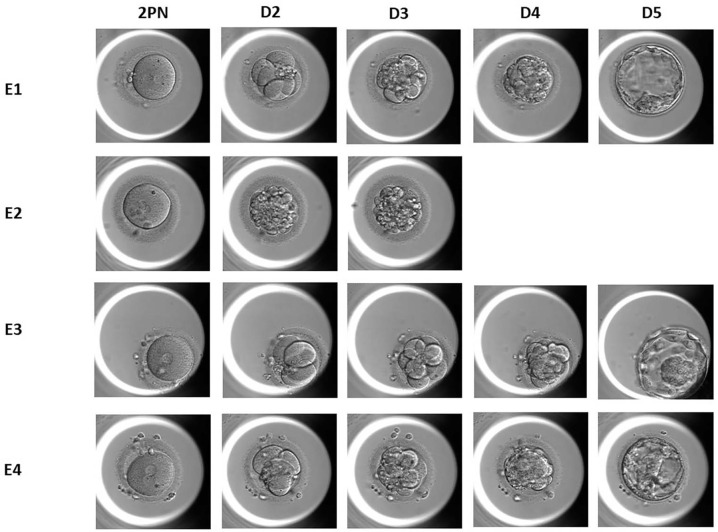 Figure 1
Peer Reviews
No public reviews on file for this paper yet. If you reviewed it on a platform where reviews are public (OpenReview, ICLR, NeurIPS, ICML), you can paste yours below so the community can read it here.
Videos
No videos yet. Explain this paper in a talk, walkthrough, or lecture? Add one.
Taxonomy
TopicsReproductive Health and Technologies · Assisted Reproductive Technology and Twin Pregnancy · Sexual Differentiation and Disorders