Demographic compensation occurs in populations of Quercus oleoides Schltdl & Cham in fragments across an altitudinal gradient
Carlos Flores-Romero, Lázaro Rafael Sánchez-Velásquez, Miguel Equihua, María del Rosario Pineda López, Enrique Alarcón Gutiérrez, Yareni Perroni

TL;DR
This study explores how populations of a tree species adapt to environmental changes through demographic compensation in fragmented habitats.
Contribution
The study identifies how Quercus oleoides populations achieve demographic balance through different strategies in fragmented environments.
Findings
The λs of the three populations were greater than 1.0, indicating growth.
Differences in elasticity matrices and LTRE variation analyses were observed.
Populations achieved demographic balance through varying vital rate strategies.
Abstract
Demographic compensation is a complex process by which populations can compensate for the effects of anthropogenic disturbance and other environmental changes and restore growth-rate stability (λ » 1). Dynamic equilibrium is achieved when the growth rate [λ] is close to one. This enables a population to persist under changing environmental conditions. The demographics of fragmented populations provides an ideal model to explore the processes by which populations adapt through demographic compensation responses. To characterize the demographic of Quercus oleoides populations and detect the various processes that result from demographic compensation responses. We established permanent plots in three Q. oleoides populations at which three annual transition stages were registered. These were survival probability, transition probability, and average reproduction (that is, the number of…
Genes, proteins, chemicals, diseases, species, mutations and cell lines named across the full text — each resolved to its canonical identifier and authoritative record.
Click any figure to enlarge with its caption.
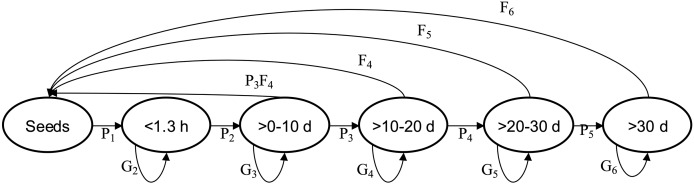 Figure 1
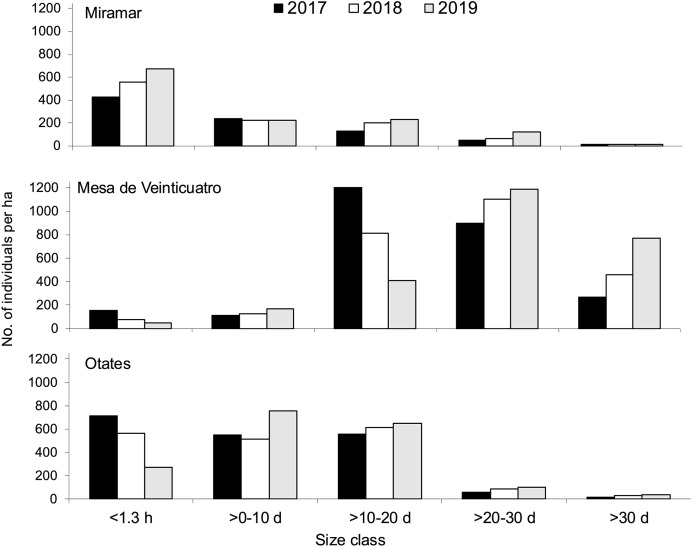 Figure 2
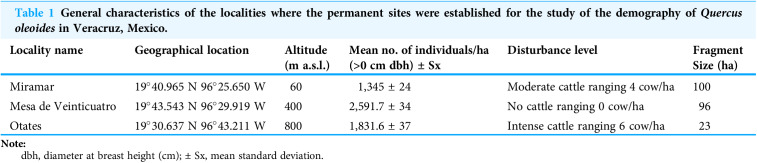 Figure 3
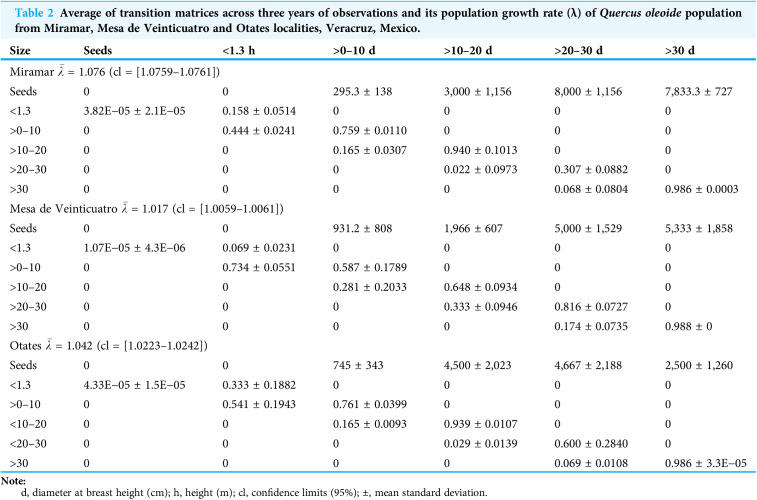 Figure 4
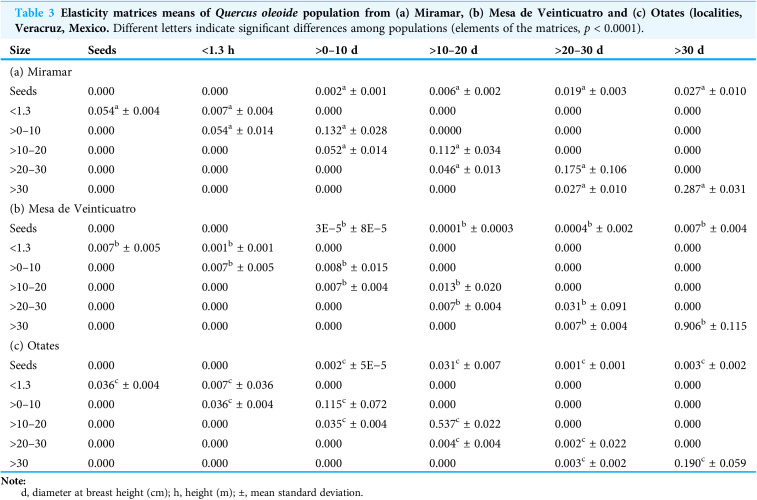 Figure 5
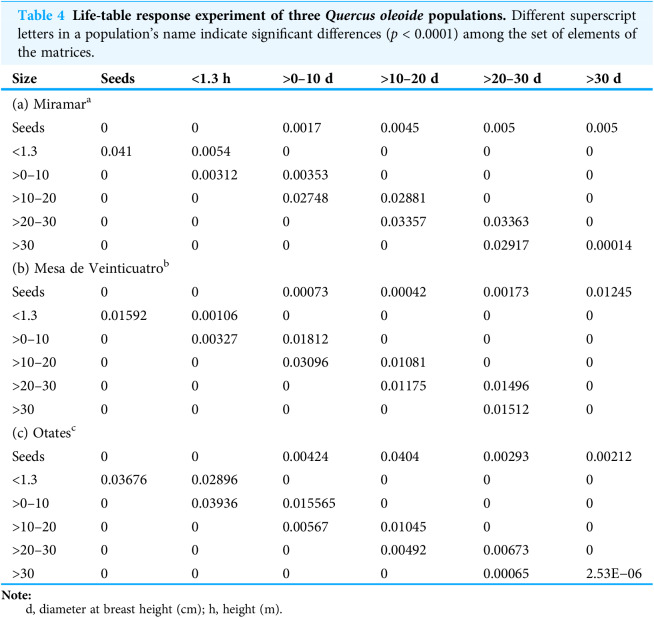 Figure 6
 Figure 7
 Figure 8
 Figure 9
 Figure 10
 Figure 11
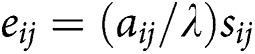 Figure 12
 Figure 13
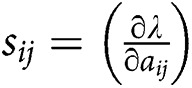 Figure 14
 Figure 15
 Figure 16
 Figure 17
 Figure 18
 Figure 19
 Figure 20
 Figure 21
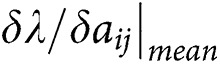 Figure 22
 Figure 23
 Figure 24
 Figure 25
 Figure 26
Peer Reviews
No public reviews on file for this paper yet. If you reviewed it on a platform where reviews are public (OpenReview, ICLR, NeurIPS, ICML), you can paste yours below so the community can read it here.
Videos
No videos yet. Explain this paper in a talk, walkthrough, or lecture? Add one.
Taxonomy
TopicsEcology and Vegetation Dynamics Studies · Forest Management and Policy · Economic and Environmental Valuation