Assessing non-inferiority for binary matched-pairs data with missing values: a powerful and flexible GEE approach based on the risk difference
Johannes Hengelbrock, Frank Konietschke, Juliane Herm, Heinrich Audebert, Annette Aigner

TL;DR
This paper introduces a new GEE method for analyzing non-inferiority in clinical studies with missing data, offering higher power and flexibility.
Contribution
A novel GEE approach for non-inferiority testing with binary matched-pairs data that handles missing values and improves statistical power.
Findings
The proposed GEE method performs similarly to existing methods for complete data in moderate to large samples.
It provides higher power and narrower confidence intervals when data are missing at random.
The method reduces required sample size compared to alternatives in observational studies.
Abstract
Clinical studies often aim to test the non-inferiority of a treatment compared to an alternative intervention with binary matched-pairs data. These studies are often planned with methods for completely observed pairs only. However, if missingness is more frequent than expected or is anticipated in the planning phase, methods are needed that allow the inclusion of partially observed pairs to improve statistical power. We propose a flexible generalized estimating equations (GEE) approach to estimate confidence intervals for the risk difference, which accommodates partially observed pairs. Using simulated data, we compare this approach to alternative methods for completely observed pairs only and to those that also include pairs with missing observations. Additionally, we reconsider the study sample size calculation by applying these methods to a study with binary matched-pairs setting.…
Genes, proteins, chemicals, diseases, species, mutations and cell lines named across the full text — each resolved to its canonical identifier and authoritative record.
Click any figure to enlarge with its caption.
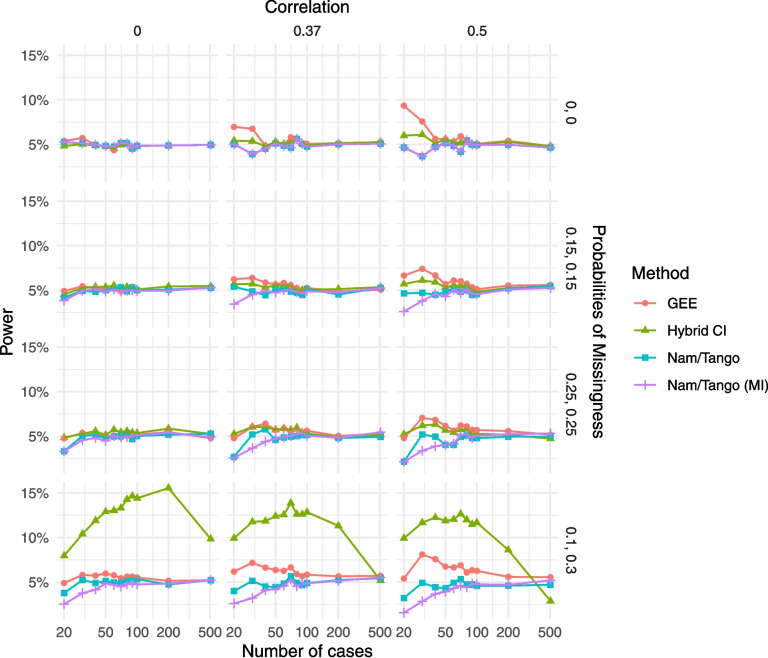 Figure 1
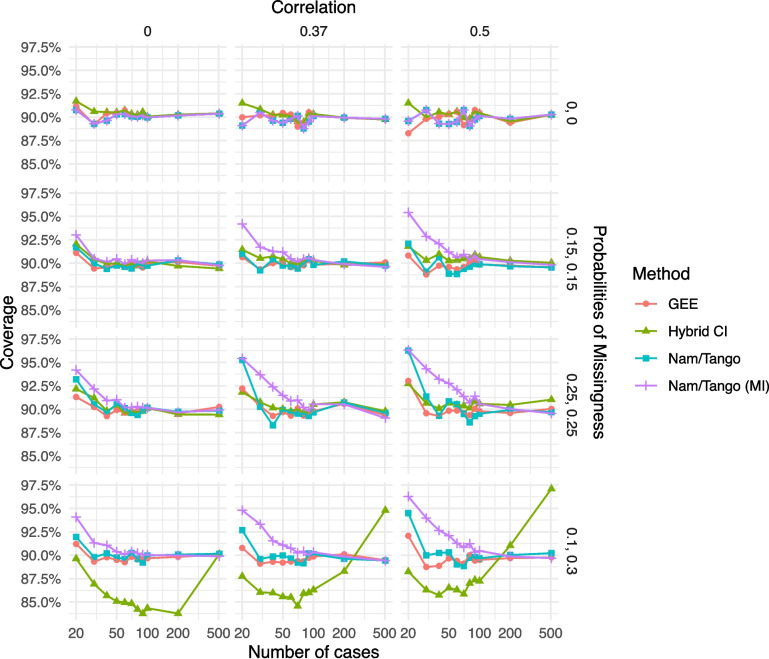 Figure 2
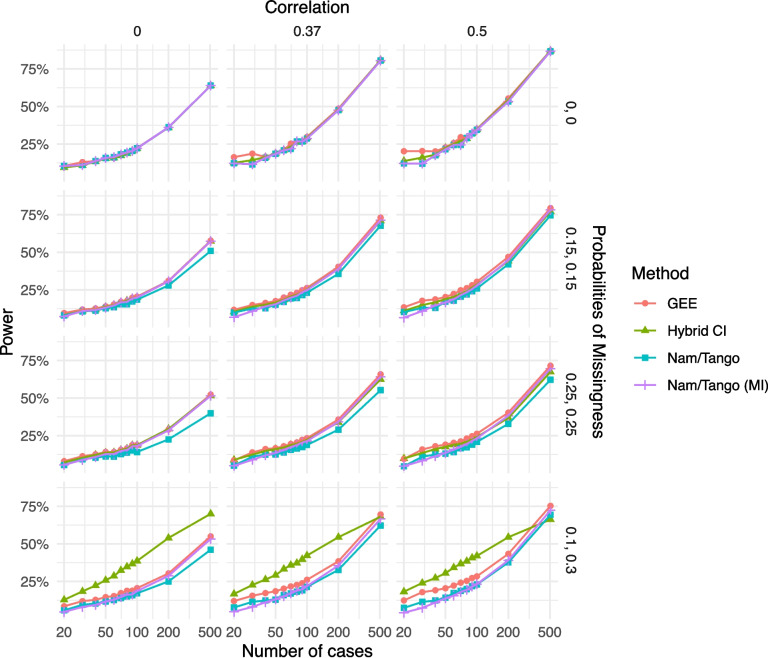 Figure 3
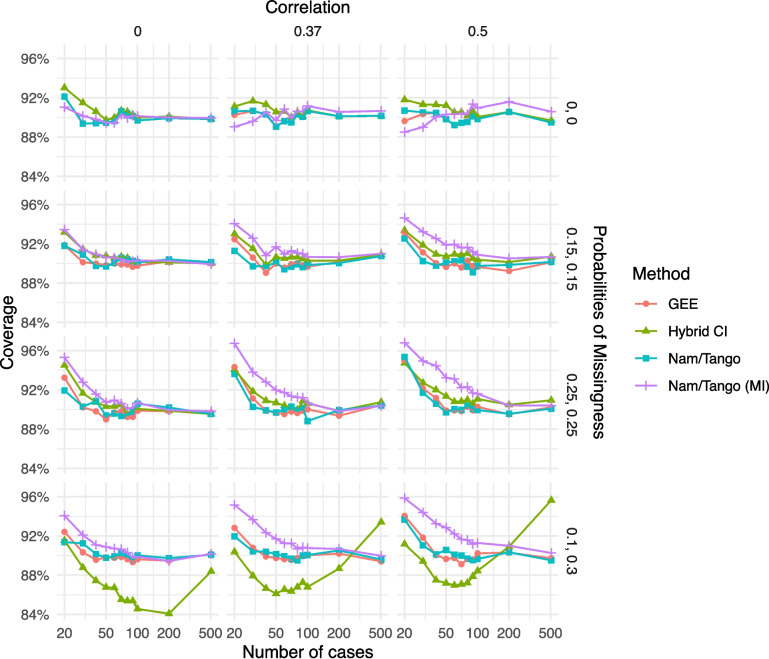 Figure 4
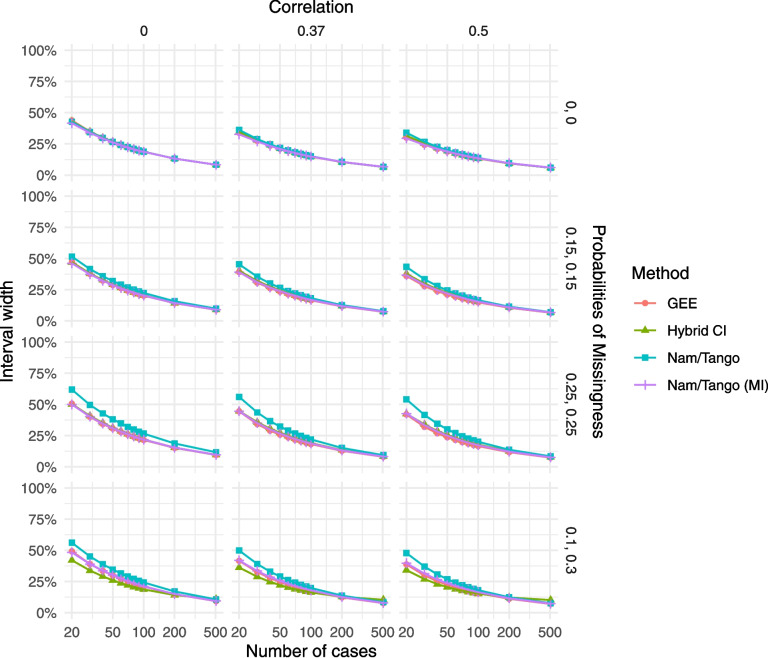 Figure 5
Peer Reviews
No public reviews on file for this paper yet. If you reviewed it on a platform where reviews are public (OpenReview, ICLR, NeurIPS, ICML), you can paste yours below so the community can read it here.
Videos
No videos yet. Explain this paper in a talk, walkthrough, or lecture? Add one.
Taxonomy
TopicsStatistical Methods and Bayesian Inference · Statistical Methods in Clinical Trials · Advanced Causal Inference Techniques