The utility of fragmented QRS in association with strain echocardiography in predicting significant coronary artery stenosis
Seyed Abdolhossein Tabatabaei, Elham Omrani, Atoosa Mostafavi, Hakimeh Sadeghian, Ali Abbasi

TL;DR
This study shows that combining fragmented QRS on ECG with reduced heart muscle strain can help identify significant coronary artery blockages.
Contribution
The study introduces a new method combining ECG and echocardiography to predict and locate significant coronary artery stenosis.
Findings
Patients with fQRS and significant CAD had significantly reduced myocardial strain compared to controls.
Combining fQRS and reduced strain improves prediction of coronary artery stenosis location and presence.
The method is effective in identifying arteries with more than 70% stenosis.
Abstract
Fragmented QRS (fQRS) on a 12-lead ECG indicates electrical conduction disruption due to various cardiac issues, including coronary artery disease (CAD). This study investigated whether combining fQRS and reduced myocardial strain could predict significant CAD. We conducted a cross-sectional study on patients with fQRS on surface ECG who underwent coronary angiography. The left ventricular strain was assessed using 2D speckle-tracking echocardiography. We enrolled 55 patients with fQRS and significant CAD (≥70% coronary artery stenosis) and 55 control patients (≤30% stenosis). The strain was significantly reduced in segments with fQRS and significant CAD compared with the control group. In patients with CAD, the combination of fQRS in any ECG lead and reduced strain can predict the presence and location of a coronary artery with greater than 70% stenosis.
Genes, proteins, chemicals, diseases, species, mutations and cell lines named across the full text — each resolved to its canonical identifier and authoritative record.
Click any figure to enlarge with its caption.
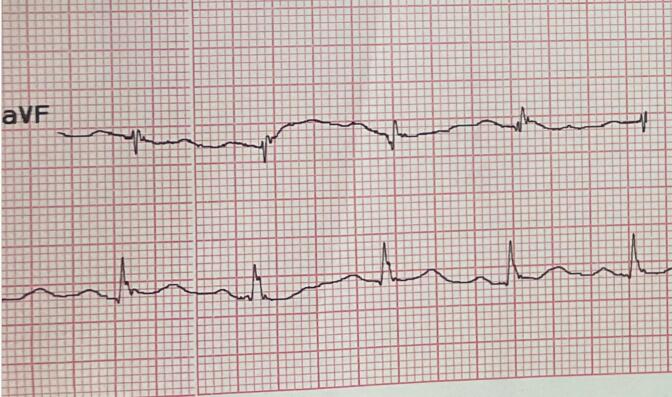 Figure 1
Peer Reviews
No public reviews on file for this paper yet. If you reviewed it on a platform where reviews are public (OpenReview, ICLR, NeurIPS, ICML), you can paste yours below so the community can read it here.
Videos
No videos yet. Explain this paper in a talk, walkthrough, or lecture? Add one.
Taxonomy
TopicsCardiac electrophysiology and arrhythmias · ECG Monitoring and Analysis · Cardiac Imaging and Diagnostics