Prioritisation of head, neck, and respiratory outcomes in mucopolysaccharidosis type II: lessons from a rare disease consensus exercise and comparison of parental and clinical priorities
James Dempsey, Jessica Daniels, Roulla Katiri, Sophie Thomas, Aleksandra Metryka, Mira de Kruijf, Stuart Wilkinson, Simon A. Jones, Iain A. Bruce

TL;DR
This study identifies key health outcomes to measure in MPS II patients across different ages, aiming to improve consistency in clinical research and care.
Contribution
A novel methodology for determining core outcome sets in rare diseases, specifically for MPS II, was developed and applied.
Findings
Survival, airway obstruction, and quality of life were identified as essential outcomes for all MPS II patients.
Age-specific outcomes like swallowing difficulties in children and sleep apnoea in adults were highlighted.
The study recommends adopting these core outcomes to enable better comparison in clinical trials and practice.
Abstract
The mucopolysaccharidoses are a group of rare, inherited metabolic disorders. MPS II is a X-linked recessive disease, also known as Hunter syndrome. Clinical manifestations include upper and lower respiratory tract, and head and neck pathologies influencing quality of life, morbidity, and mortality. Medical and surgical intervention outcomes for MPS are reported inconsistently, creating a challenge when synthesising and contrasting evidence. This study set out to address the inconsistency in outcome measurement in this field. International recommendations for developing a core outcome set were adopted. Available data from qualitative studies and outcomes from a modified e-Delphi surveys were used to develop a list of candidate outcomes for consideration. Three consensus meetings with patients diagnosed with MPS II alongside their parents/carers were ran to help finalise a list of…
Genes, proteins, chemicals, diseases, species, mutations and cell lines named across the full text — each resolved to its canonical identifier and authoritative record.
Click any figure to enlarge with its caption.
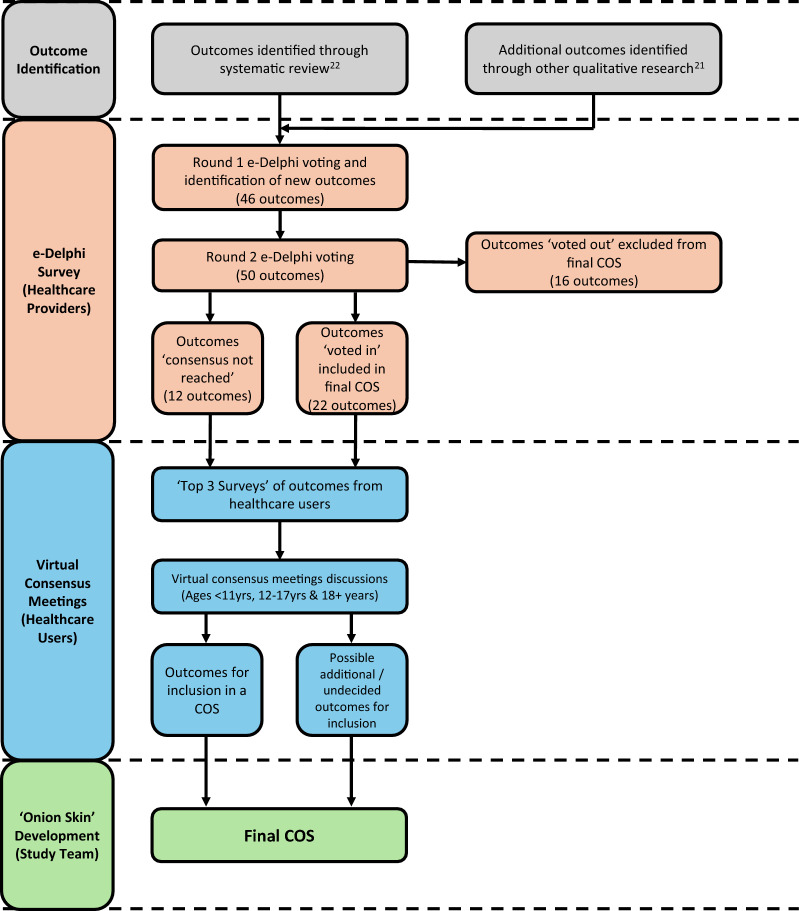 Figure 1
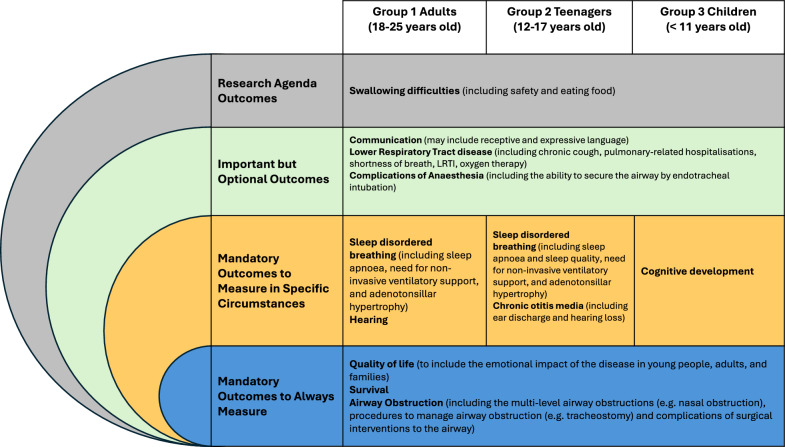 Figure 2
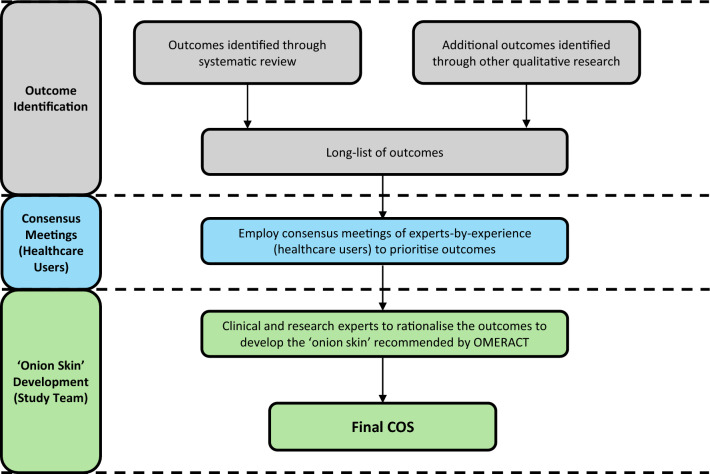 Figure 3
Peer Reviews
No public reviews on file for this paper yet. If you reviewed it on a platform where reviews are public (OpenReview, ICLR, NeurIPS, ICML), you can paste yours below so the community can read it here.
Videos
No videos yet. Explain this paper in a talk, walkthrough, or lecture? Add one.
Taxonomy
TopicsDelphi Technique in Research · Family and Disability Support Research · Neurogenetic and Muscular Disorders Research