An aerobe exercise intervention for optimizing metabolic, cardiovascular and immune status: protocol of an intervention study with a multi-systemic approach for women with unexplained recurrent pregnancy loss
Denise Habets, Aysel Gurbanova, Amber Lombardi, Salwan Al-Nasiry, Marc Spaanderman, Renate van der Molen, Lotte Wieten, Tess Meuleman

TL;DR
This study explores how aerobic exercise might improve metabolic, cardiovascular, and immune health in women with unexplained recurrent pregnancy loss.
Contribution
The study introduces a multi-systemic approach using aerobic exercise to simultaneously address metabolic, cardiovascular, and immune factors in unexplained recurrent pregnancy loss.
Findings
Aerobic exercise may optimize multiple systems relevant to pregnancy outcomes in women with unexplained RPL.
The study will assess changes in immune cells like CD56bright NK cells, cardiovascular function, and metabolic markers before and after exercise intervention.
The intervention could support shared decision-making between clinicians and patients regarding non-invasive treatment strategies.
Abstract
Women confronted with recurrent pregnancy loss (RPL) are often desperately searching for a possible explanation and hoping they will someday fulfill a healthy pregnancy. Unfortunately, in more than 50% of these women no cause for their losses can be identified after clinical investigations and therefore clinicians have no treatment options to help these women. Although adaptations in several systems such as the metabolic, the cardiovascular, and the immune system are highly important to support early pregnancy, especially the contribution of a specific subset of immune cells in the uterus known as CD56bright Natural Killer (NK) cells has gained a lot of interest, investigating separate RPL associated factors might not be the way forward. Moreover, a readily available and non-invasive exercise intervention might optimize all systems simultaneously, reducing metabolic, cardiovascular and…
Genes, proteins, chemicals, diseases, species, mutations and cell lines named across the full text — each resolved to its canonical identifier and authoritative record.
Click any figure to enlarge with its caption.
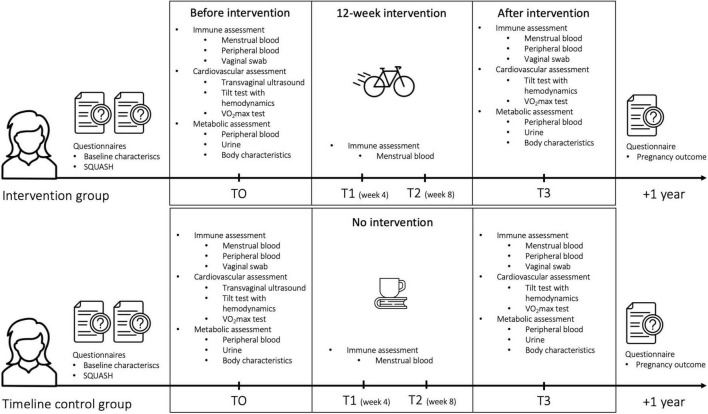 Figure 1
Peer Reviews
No public reviews on file for this paper yet. If you reviewed it on a platform where reviews are public (OpenReview, ICLR, NeurIPS, ICML), you can paste yours below so the community can read it here.
Videos
No videos yet. Explain this paper in a talk, walkthrough, or lecture? Add one.
Taxonomy
TopicsReproductive System and Pregnancy · Endometriosis Research and Treatment · Pregnancy-related medical research