Single-Photon DNA Photocleavage up to 905 nm by a Benzylated 4-Quinolinium Carbocyanine Dye
Effibe O. Ahoulou, Aikohi Ugboya, Victor Ogbonna, Kanchan Basnet, Maged Henary, Kathryn B. Grant

TL;DR
A new dye can cut DNA using near-infrared light up to 905 nm, with potential for phototherapy.
Contribution
First example of DNA photocleavage using single-photon excitation beyond 830 nm.
Findings
Brominated dye 4 achieves higher DNA cleavage efficiency than its hydrogen counterpart.
Dye 4 induces DNA strand breakage via photosensitized hydroxyl radical production.
Dye 4 is nontoxic in the dark but reduces E. coli survival under 830 nm light.
Abstract
This paper describes the DNA interactions of near-infrared (NIR) benzylated 4-quinolinium dicarbocyanine dyes containing a pentamethine bridge meso-substituted either with a bromine (4) or hydrogen (5) atom. In pH 7.0 buffered aqueous solutions, the 4-quinolinium dyes absorb light that extends into the near-infrared range up to ∼950 nm. The unique direct strand breakage of pUC19 DNA that is sensitized by irradiating either dicarbocyanine with an 850 nm LED laser constitutes the first published example of DNA photocleavage upon single-photon chromophore excitation at a wavelength greater than 830 nm. Brominated dye 4, which is more stable than and achieves DNA strand scission in higher yield than its hydrogen-bearing counterpart 5, cleaves plasmid DNA under 830 and 905 nm laser illumination. The addition of increasing amounts of DNA to aqueous pH 7.0 solutions converted an aggregated…
Genes, proteins, chemicals, diseases, species, mutations and cell lines named across the full text — each resolved to its canonical identifier and authoritative record.
Click any figure to enlarge with its caption.
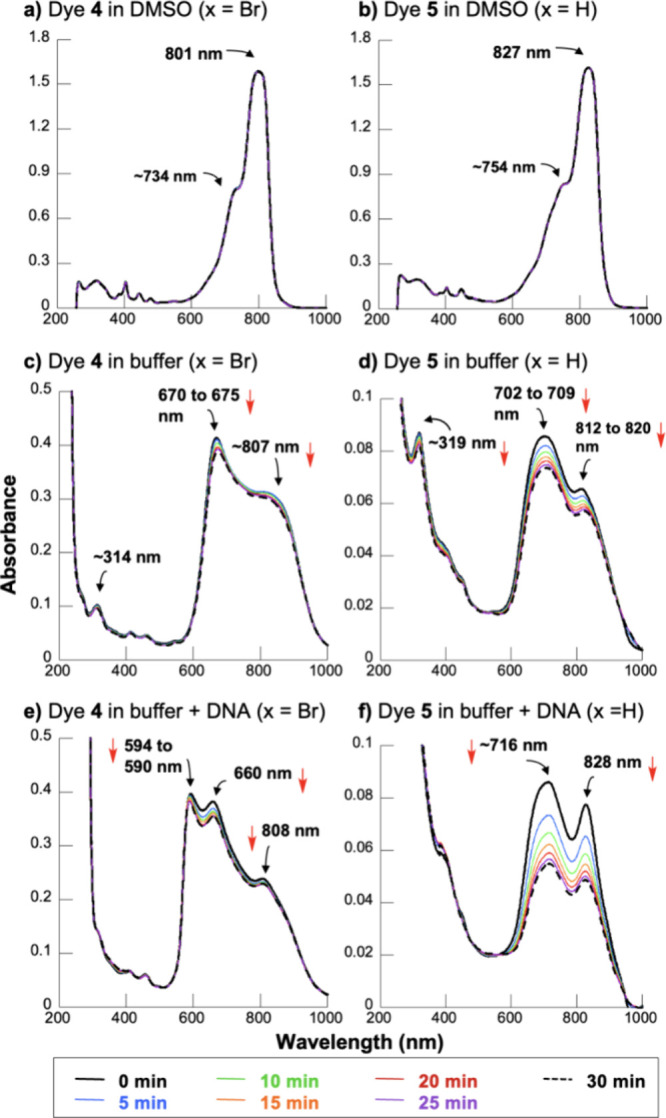 Figure 1
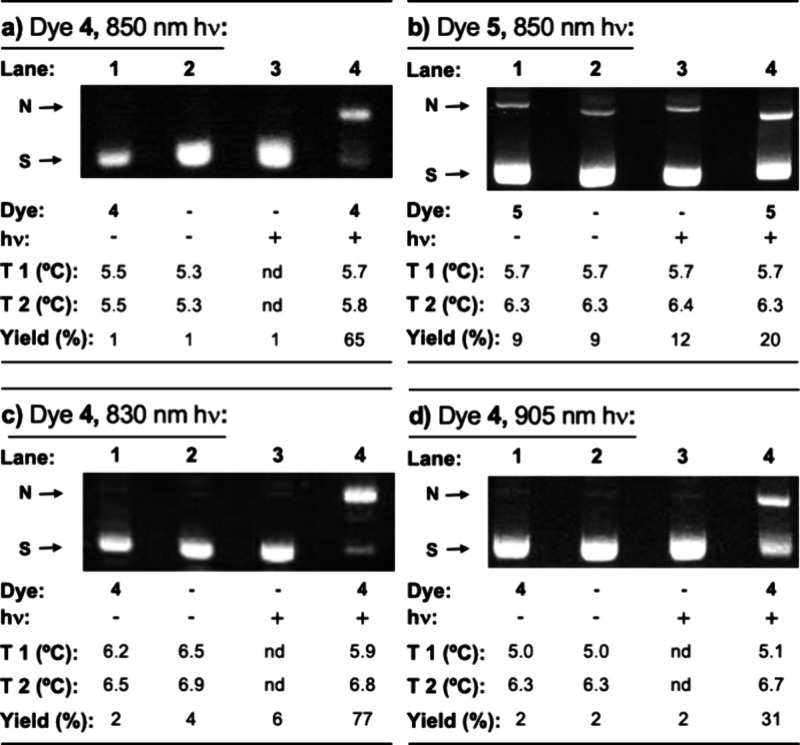 Figure 2
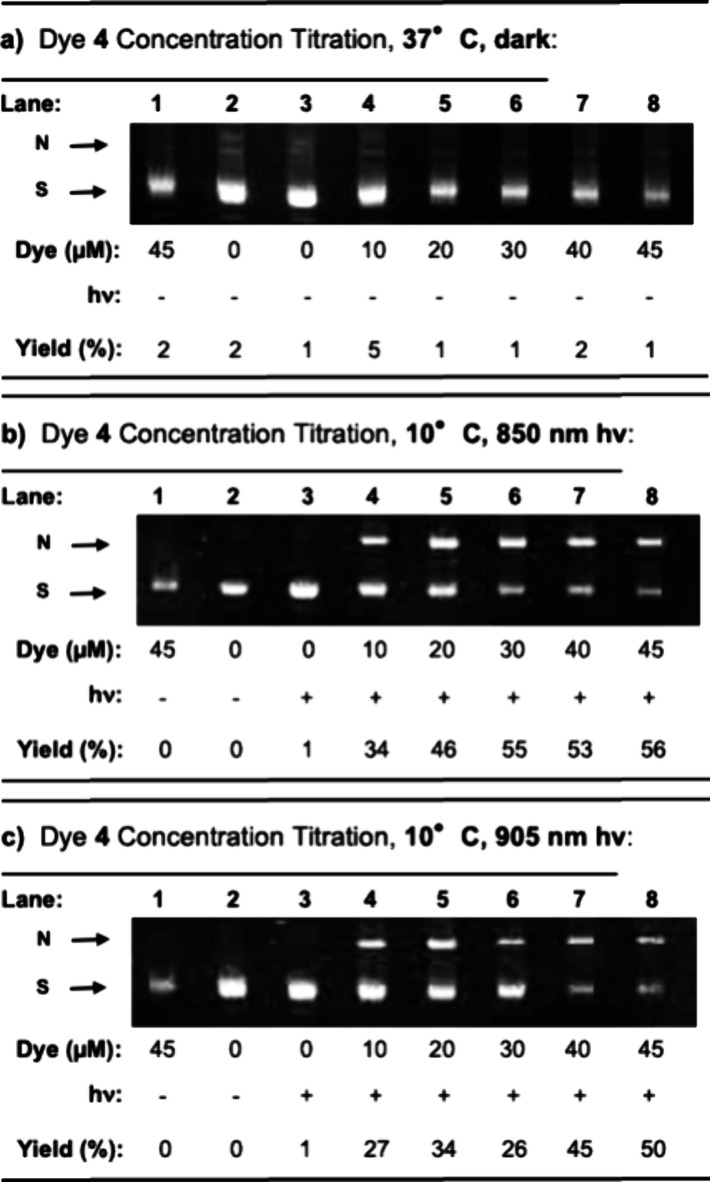 Figure 3
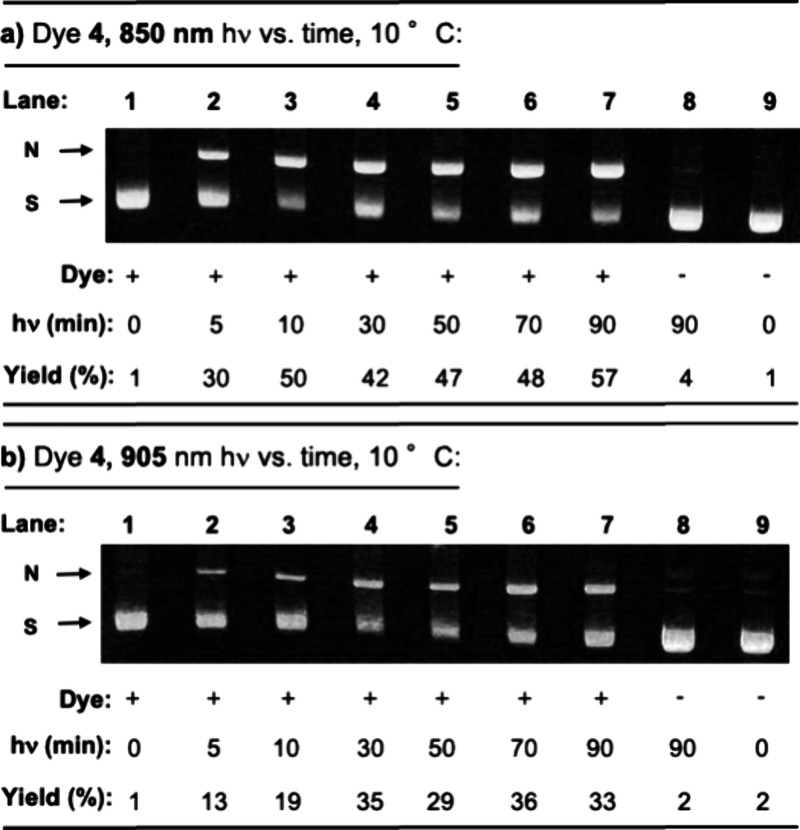 Figure 4
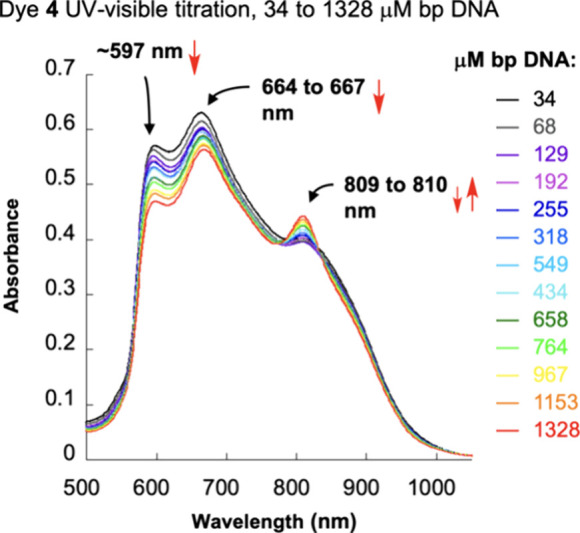 Figure 5
 Figure 6
 Figure 7
 Figure 8
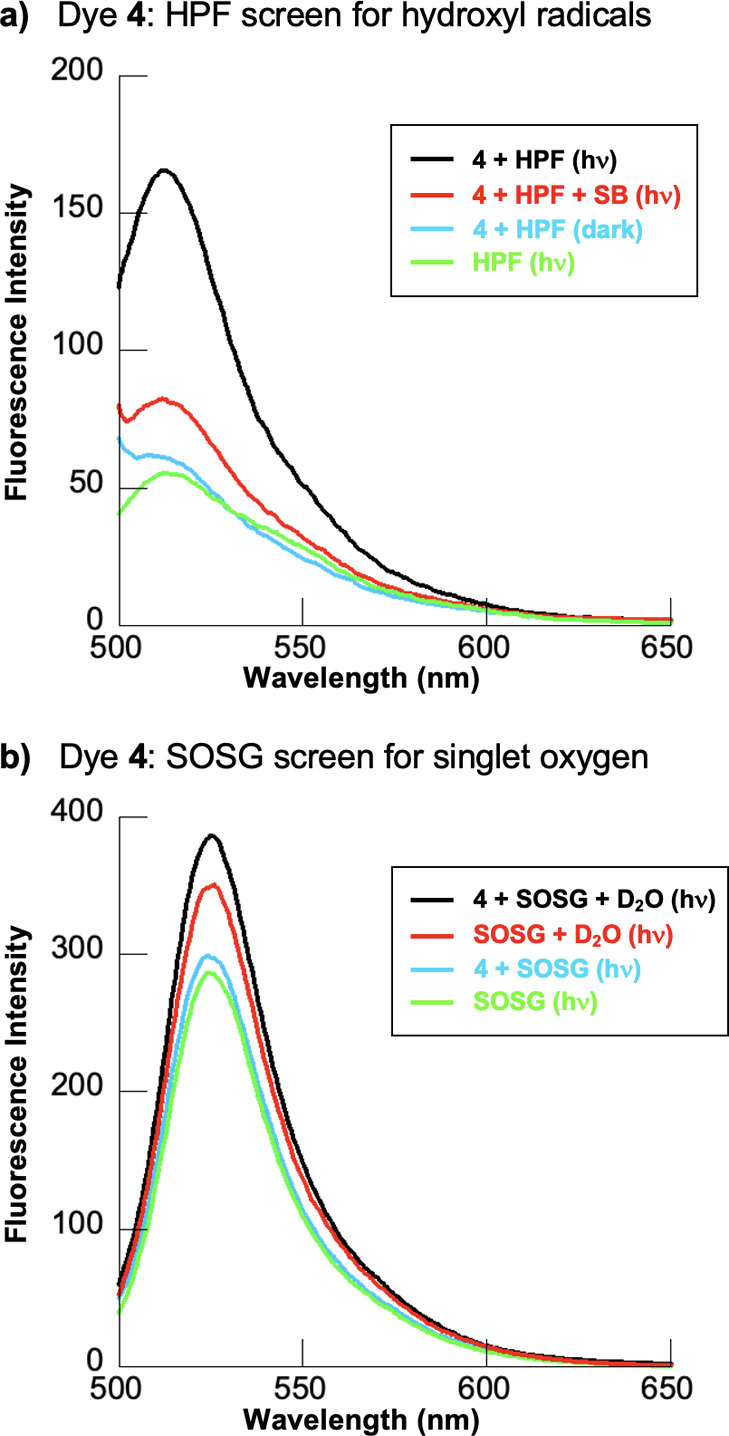 Figure 9
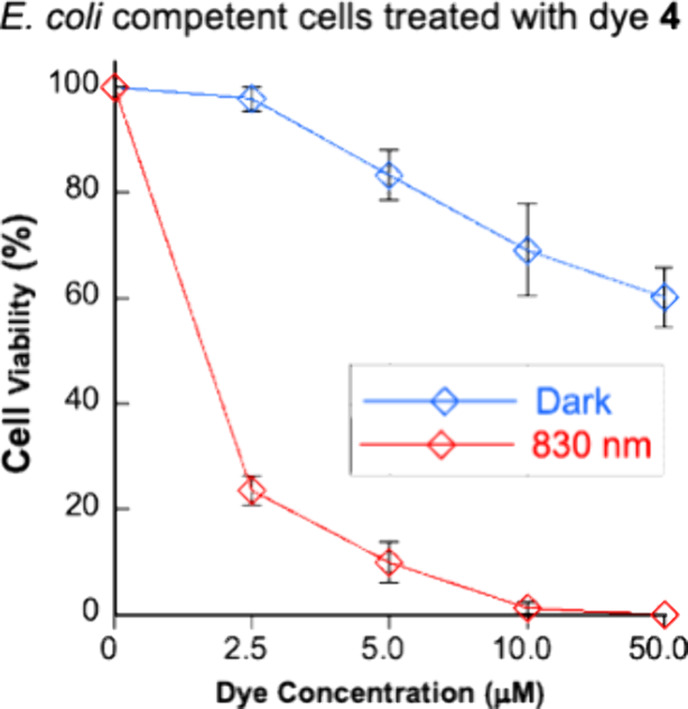 Figure 10
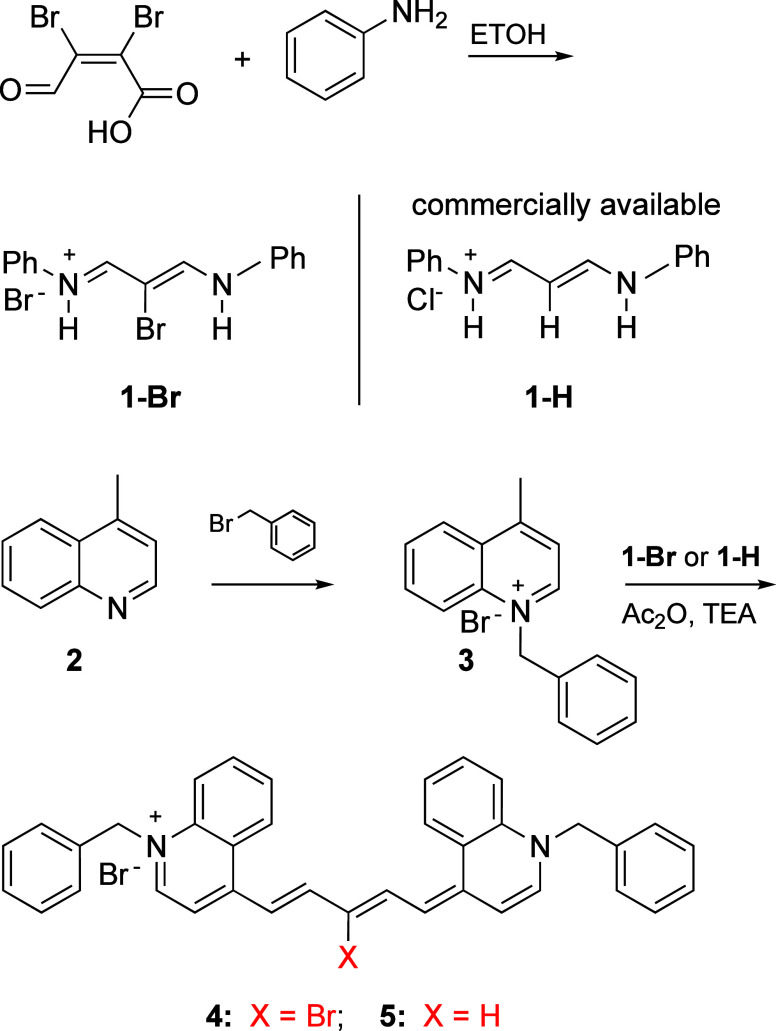 Figure 11
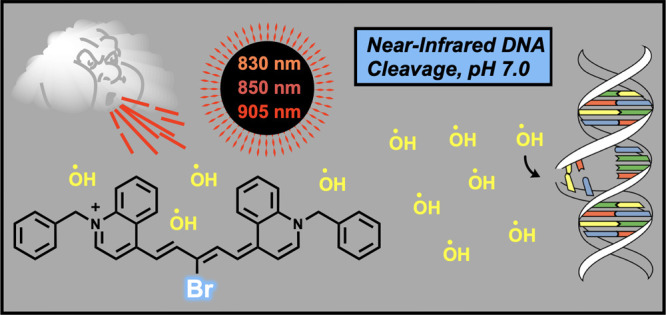 Figure 12
Peer Reviews
No public reviews on file for this paper yet. If you reviewed it on a platform where reviews are public (OpenReview, ICLR, NeurIPS, ICML), you can paste yours below so the community can read it here.
Videos
No videos yet. Explain this paper in a talk, walkthrough, or lecture? Add one.
Taxonomy
TopicsPhotodynamic Therapy Research Studies · Porphyrin and Phthalocyanine Chemistry · Luminescence and Fluorescent Materials