Ultrasensitive Assays Detect Different Conformations of Plasma β Amyloids
Chia-Yu Li, Ling-Yun Fan, Chin-Hsien Lin, Chaur-Jong Hu, Ming-Jang Chiu

TL;DR
This study shows that different blood tests detect different forms of a protein linked to Alzheimer's disease, which may explain conflicting results in measuring its levels.
Contribution
The study reveals that IMR and SIMOA assays detect different Aβ1–42 conformations, explaining inconsistent plasma Aβ1–42 measurements in Alzheimer's.
Findings
IMR detects both monomers and oligomers of Aβ1–42, while SIMOA primarily detects monomers.
Differences in plasma Aβ1–42 levels between Alzheimer's and healthy individuals using IMR are due to oligomer formation.
The choice of assay depends on whether monomers or all Aβ1–42 conformations are the target.
Abstract
With the developments of ultrasensitive technologies such as immunomagnetic reduction (IMR) assay, single molecule array (SIMOA) assay, electrochemiluminescence immunoassay (ECLIA), the assay of blood-based amyloid 1–42 (Aβ1–42) becomes possible. However, the changes in measured plasma Aβ1–42 concentrations in Alzheimer’s disease (AD) compared to cognitively unimpaired subjects (CU) are inconsistent. A possible reason for the inconsistency regarding various conformations of Aβ1–42 in plasma is explored in this study. Three samples with equal amounts of Aβ1–42 but different proportions of monomers and oligomers of Aβ1–42 were prepared. The Aβ1–42 composition of monomers and oligomers in samples was analyzed with Western blot. Identically diluted versions of these three samples were assayed with IMR and SIMOA for Aβ1–42 concentrations. The three diluted samples showed similar levels of…
Genes, proteins, chemicals, diseases, species, mutations and cell lines named across the full text — each resolved to its canonical identifier and authoritative record.
Click any figure to enlarge with its caption.
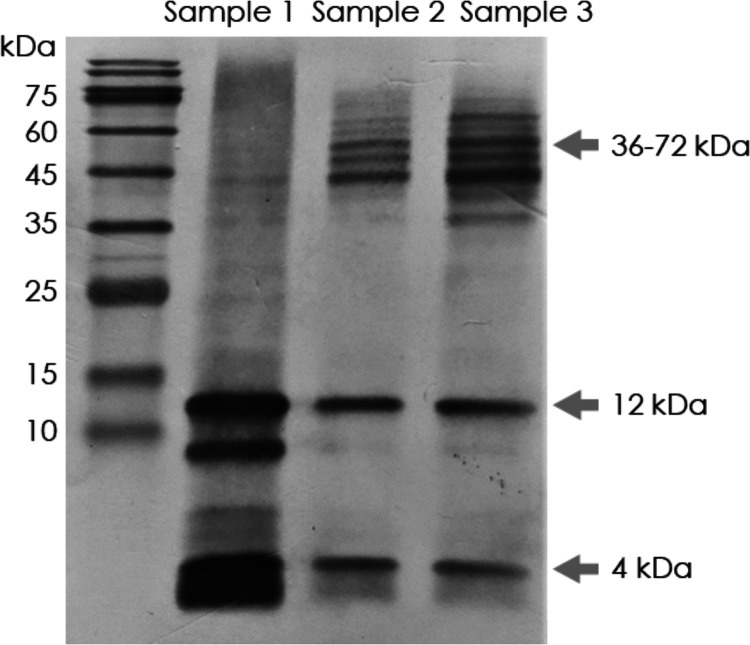 Figure 1
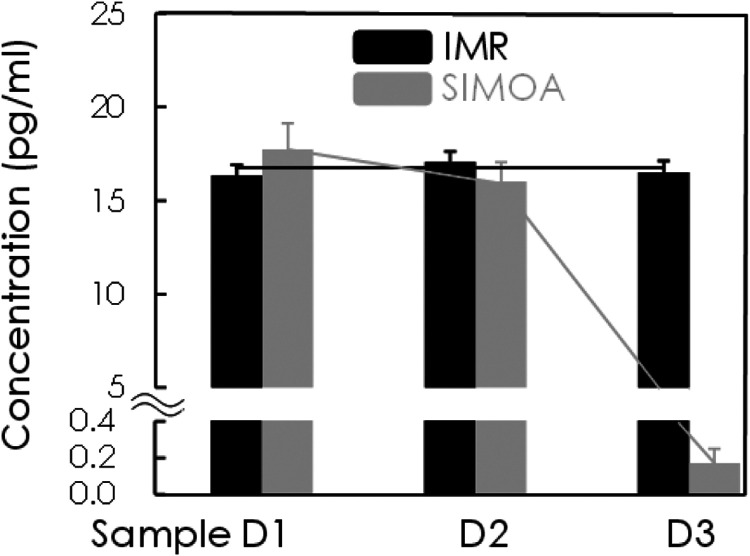 Figure 2
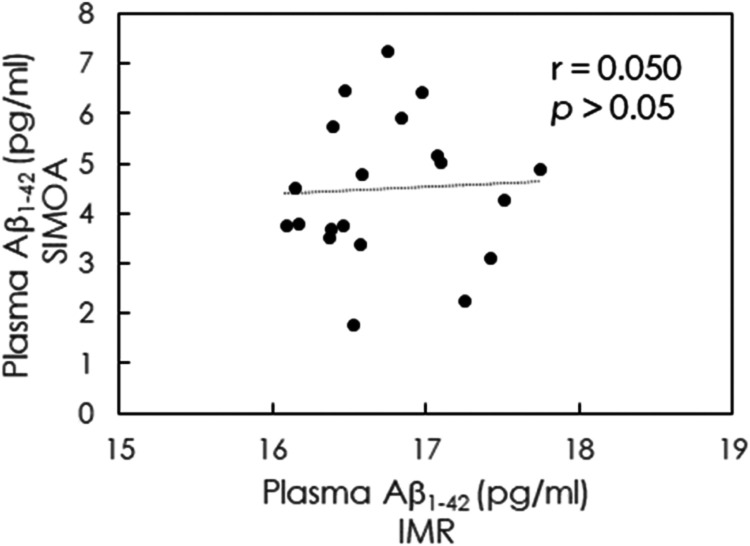 Figure 3
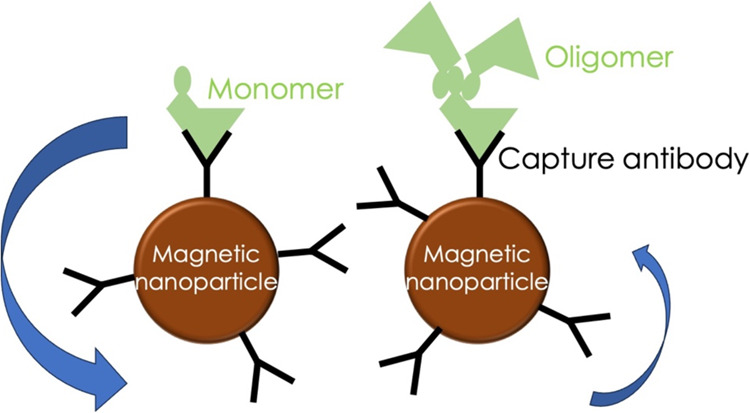 Figure 4
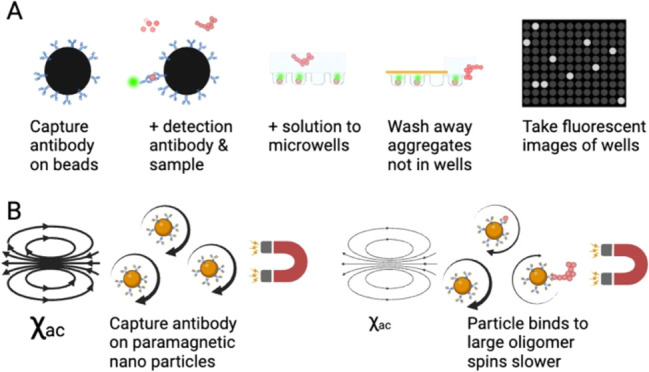 Figure 5
Peer Reviews
No public reviews on file for this paper yet. If you reviewed it on a platform where reviews are public (OpenReview, ICLR, NeurIPS, ICML), you can paste yours below so the community can read it here.
Videos
No videos yet. Explain this paper in a talk, walkthrough, or lecture? Add one.
Taxonomy
TopicsAlzheimer's disease research and treatments · Dementia and Cognitive Impairment Research · Nanocluster Synthesis and Applications