Evaluation of candidate reference genes for gene expression research in Vespula vulgaris
Gemma M. McLaughlin

TL;DR
This study identifies suitable reference genes for gene expression research in the invasive wasp Vespula vulgaris under different developmental stages and sexes.
Contribution
The study evaluates and recommends specific reference genes for Vespula vulgaris under varying biological conditions.
Findings
TBP, EF1A, RPL18X3, and CAPZB are suitable for developmental stage research.
KTB, EF1A, and CAPZB are recommended for sex-based gene expression studies.
Reference gene stability varies by experimental condition, emphasizing the need for tailored selection.
Abstract
Vespula vulgaris is an invasive wasp that causes considerable detriment to native birds and invertebrates in New Zealand. Reducing at least 80% of invasive wasp densities is necessary to manage the problems this species presents to its invaded range. To explore the function of target genes for the genetic management of V. vulgaris, screening of appropriate reference genes is crucial for conducting the reverse transcriptase-quantitative real-time PCR (RT-qPCR). The selection of appropriate reference genes is an important but often overlooked consideration when delving into RNA research. Many studies rely on one of two tried and trusted reference genes widely used in the literature, which may not be suitable for the normalization of data under particular variables. Here, I selected six reference genes of V. vulgaris and evaluated their stability across two conditions: developmental stage…
Genes, proteins, chemicals, diseases, species, mutations and cell lines named across the full text — each resolved to its canonical identifier and authoritative record.
Click any figure to enlarge with its caption.
 Figure 1
 Figure 2
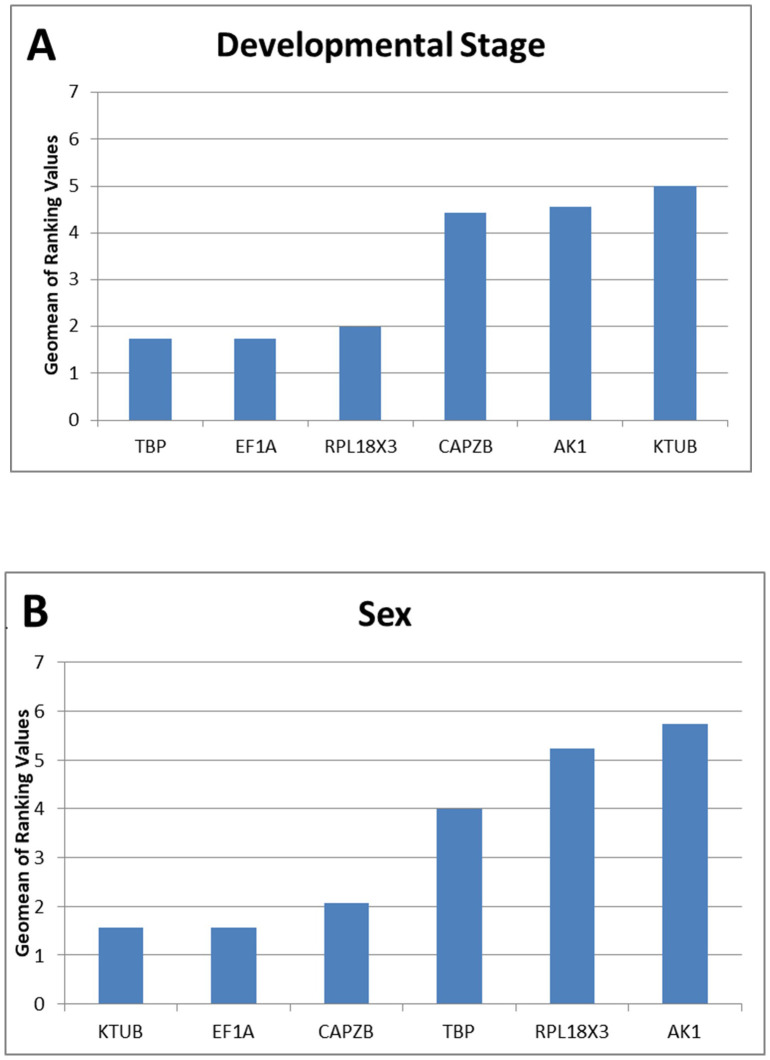 Figure 3
 Figure 4
Peer Reviews
No public reviews on file for this paper yet. If you reviewed it on a platform where reviews are public (OpenReview, ICLR, NeurIPS, ICML), you can paste yours below so the community can read it here.
Videos
No videos yet. Explain this paper in a talk, walkthrough, or lecture? Add one.
Taxonomy
TopicsMolecular Biology Techniques and Applications · Plant and Fungal Interactions Research · RNA Research and Splicing