Avoidance of Negative Emotional Contrasts as a Diagnostic Feature of OCD: A Receiver-Operator Characteristic Curve Analysis of the Contrast Avoidance Questionnaires
V. Swisher, M. G. Newman

TL;DR
This study explores whether avoiding emotional contrasts can help diagnose obsessive-compulsive disorder (OCD) using specialized questionnaires.
Contribution
The study is the first to examine contrast avoidance as a diagnostic feature of OCD, expanding its relevance beyond anxiety and mood disorders.
Findings
The CAQ-W and CAQ-GE questionnaires showed excellent to outstanding accuracy in predicting probable OCD.
Cut-off scores for the CAQ-W and CAQ-GE achieved high sensitivity and specificity in detecting OCD.
Contrast avoidance is suggested as a relevant maintenance factor for OCD symptoms.
Abstract
The Contrast Avoidance Model (CAM) was developed to explain pathological worry in generalized anxiety disorder (GAD). The CAM posits that those with GAD are sensitive to sharp increases in emotions, and use worry to maintain heightened states of negative arousal to avoid these emotional shifts. Research has widely supported the CAM in the conceptualization of GAD, and has extended these findings to other disorders, including major depressive disorder (MDD) and social anxiety disorder (SAD). Despite the utility of the CAM model in informing the etiology of these conditions, research has yet to expand these findings beyond GAD, MDD, and SAD. Specifically, obsessive-compulsive disorder (OCD), which co-occurs with GAD, MDD, and SAD in adults at a rate of 15.0%, 40.7%, and 14.7%, respectively, and shares many of their etiological features, has yet to examined in the context of the CAM. Thus,…
Genes, proteins, chemicals, diseases, species, mutations and cell lines named across the full text — each resolved to its canonical identifier and authoritative record.
Click any figure to enlarge with its caption.
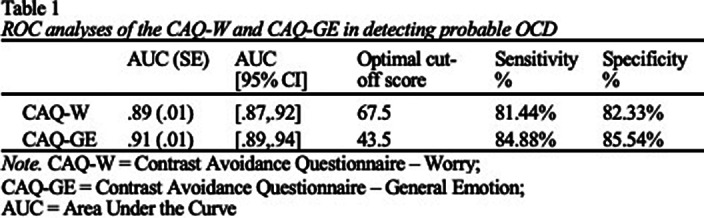 Figure 90
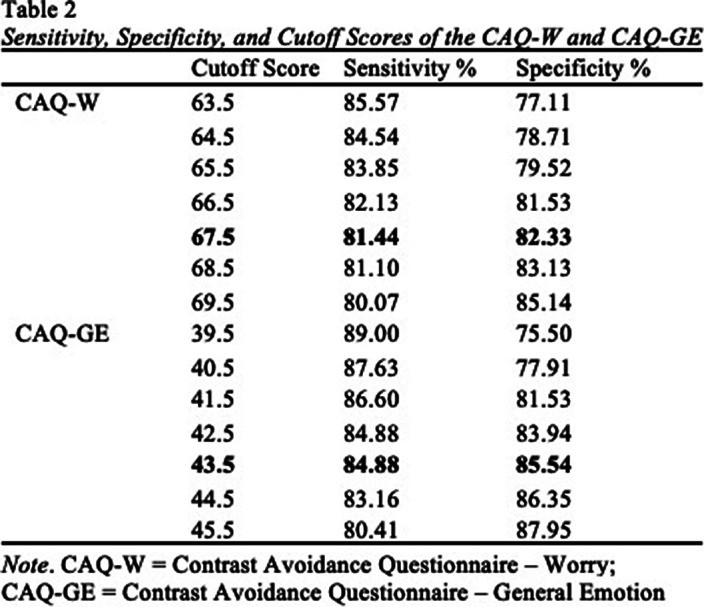 Figure 91
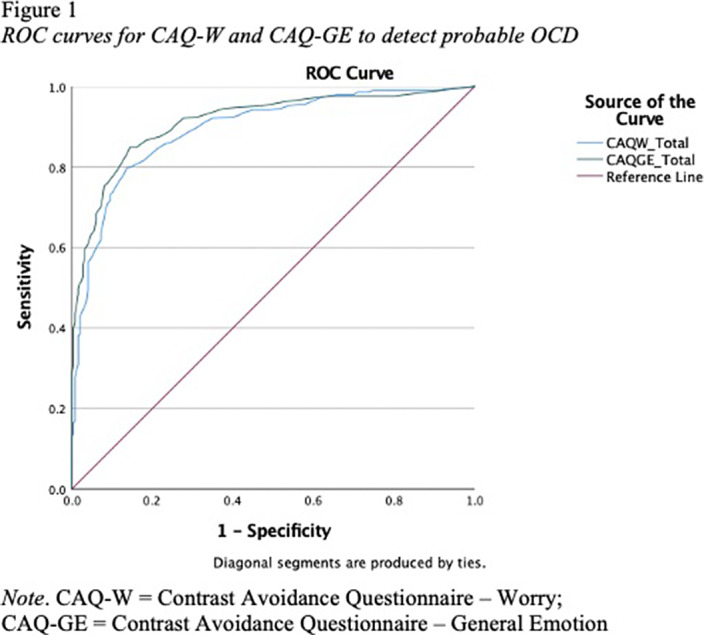 Figure 92
Peer Reviews
No public reviews on file for this paper yet. If you reviewed it on a platform where reviews are public (OpenReview, ICLR, NeurIPS, ICML), you can paste yours below so the community can read it here.
Videos
No videos yet. Explain this paper in a talk, walkthrough, or lecture? Add one.
Taxonomy
TopicsObsessive-Compulsive Spectrum Disorders · Sexuality, Behavior, and Technology · Sexual function and dysfunction studies