Association of anti-thyroid autoantibodies with neuropsychiatric features in patients with affective and schizophrenia spectrum disorders
R. S. Ilhan, K. C. Can, S. N. Lalic, E. Halaman, O. Aktay, F. Özdemir, B. Çolak, B. Duman, S. Yazıcı, M. C. Saka

TL;DR
This study explores the link between anti-thyroid antibodies and specific neuropsychiatric symptoms in women with schizophrenia or mood disorders.
Contribution
The study identifies neuropsychiatric features associated with anti-thyroid antibodies in women with mental disorders.
Findings
30.3% of antibody-positive patients showed manic syndrome, and 57.6% showed psychotic syndrome.
Common neuropsychiatric features included delusions, agitation, irritability, and sleep disorders in antibody-positive patients.
Catatonia was more prevalent in patients with positive anti-thyroid antibodies.
Abstract
A growing body of evidence has shown the association between autoimmune thyroiditis and mental illness (Rege et al. AUS N J S Psychiatry 2013; 300 141-154). Identifying the neuropsychiatric features associated with thyroid antibody positivity could have significant implications for diagnostic and therapeutic strategies. However, the link between anti-thyroid antibodies and precise underlying pathophysiology requires future research. The aim of the present study was to conduct a retrospective evolution in patients diagnosed with schizophrenia spectrum disorder and affective disorder who were screened for anti-thyroid antibodies at the time of their hospitalization and to investigate neuropsychiatric features of anti-thyroid antibody-positive patients. A total of 143 inpatients diagnosed with schizophrenia spectrum disorders and affective disorders between 2021 and 2023 were screened…
Genes, proteins, chemicals, diseases, species, mutations and cell lines named across the full text — each resolved to its canonical identifier and authoritative record.
Click any figure to enlarge with its caption.
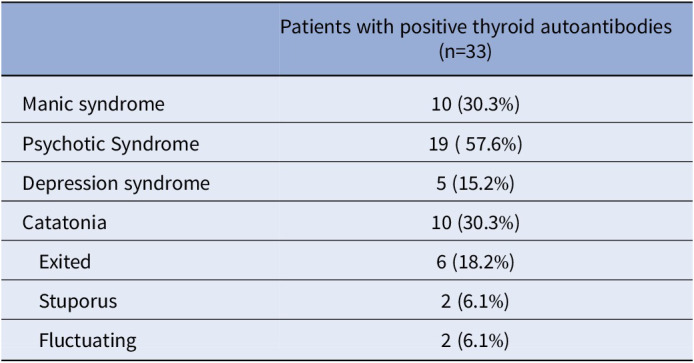 Figure 1
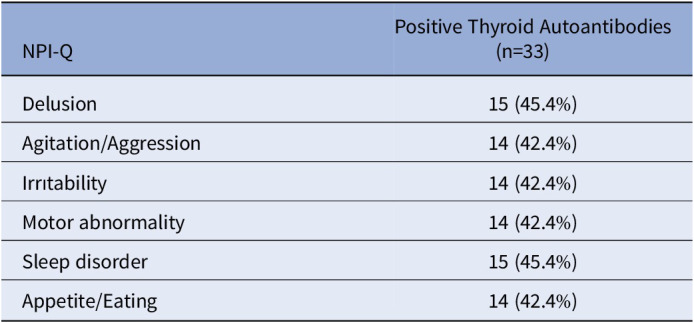 Figure 2
Peer Reviews
No public reviews on file for this paper yet. If you reviewed it on a platform where reviews are public (OpenReview, ICLR, NeurIPS, ICML), you can paste yours below so the community can read it here.
Videos
No videos yet. Explain this paper in a talk, walkthrough, or lecture? Add one.
Taxonomy
TopicsTryptophan and brain disorders