Emotion dysregulation in adolescents: the associations with clinical symptoms, risky-behaviors, and environmental factors
L. Pedrini, S. Meloni

TL;DR
The study shows that adolescents with poor emotion regulation have higher depression, anxiety, risky behaviors, and worse family and social relationships.
Contribution
The study demonstrates that emotion dysregulation is linked to clinical symptoms and risky behaviors in non-clinical adolescents.
Findings
High emotion dysregulation correlates with increased depression, anxiety, and impulsivity.
Adolescents with high emotion dysregulation report more risky behaviors like self-harm and binge eating.
Emotion dysregulation is associated with childhood trauma and poor family and social functioning.
Abstract
Emotion dysregulation (ED) is transdiagnostic domain that plays a pivotal role in the emergence and persistence of numerous mental disorders. Examining the extent of ED within non-clinical populations may shed light on whether ED is indeed linked to symptoms as observed in clinical settings. This investigation constitutes a crucial milestone toward the development of preventive strategies. To investigate the correlations between ED, psychopathological symptoms, risky behaviors, and environmental factors in adolescent students. A total of N=610 students (16 years; 72% females) completed self-report standardized questionnaires measuring depression, anxiety, impulsivity, childhood trauma, relations with classmates, and family functioning. Lifetime risky-behaviours were recorded using an ad-hoc checklist, and ED through Difficulties in Emotion Regulation Scale (DERS). The sample was then…
Click any figure to enlarge with its caption.
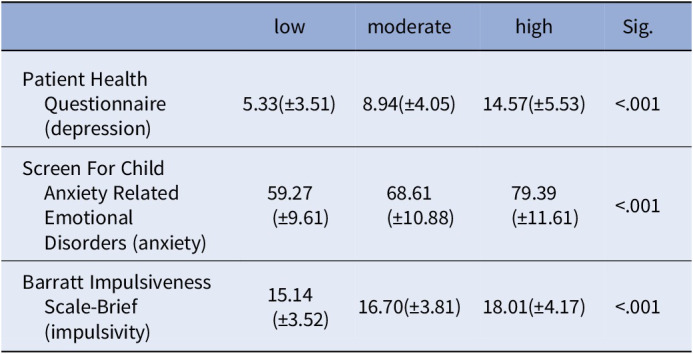 Figure 1
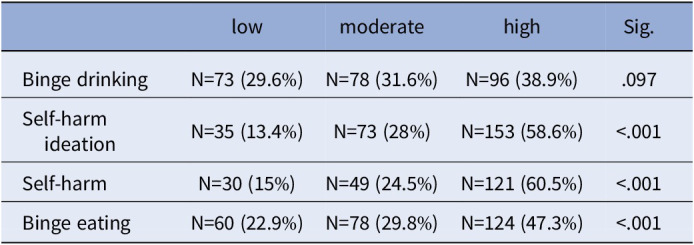 Figure 2
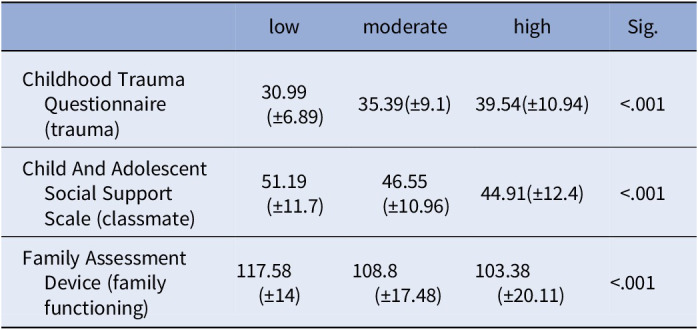 Figure 3
Peer Reviews
No public reviews on file for this paper yet. If you reviewed it on a platform where reviews are public (OpenReview, ICLR, NeurIPS, ICML), you can paste yours below so the community can read it here.
Videos
No videos yet. Explain this paper in a talk, walkthrough, or lecture? Add one.
Taxonomy
TopicsPsychosocial Factors Impacting Youth · Child and Adolescent Psychosocial and Emotional Development