Sex differences in diagnostic stability in first episode psychosis after 1-year follow-up
B. Jiménez-Fernández, A. Toll-Privat, D. Bergé-Baquero, N. V. Motta-Rojas, M. Delgado-Marí, T. Legido-Gil, L. Martínez-Sarduní, T. Legido-Gil, J. Cuevas-Esteban, A. Mané-Santacana

TL;DR
This study found that sex influences diagnostic stability in first episode psychosis after one year, with women more likely to switch from non-affective to affective psychosis.
Contribution
The study identifies sex as a novel predictor of diagnosis switch in first episode psychosis after 1-year follow-up.
Findings
Sex was the only variable predicting diagnosis switch after 1-year follow-up in first episode psychosis.
Women showed significant differences in diagnosis at 1-year follow-up compared to men.
Baseline characteristics did not differ significantly between completers and non-completers.
Abstract
Diagnostic stability is a controversial issue in first episode psychosis (FEP) due to heterogenous symptoms and unclear affective symptoms. Differencing affective and non-affective psychoses is important as treatment strategies are different. Initial affective symptomatology has low specificity for predicting the subsequent diagnosis of affective psychosis. Sex has proven to be relevant for clinical and functional outcomes but it remains unclear how sex may contribute to diagnosis switch of FEP. To determine the role of sex in diagnostic stability in a sample of FEP after 1-year follow-up. Diagnoses of FEP patients from Hospital del Mar of Barcelona were assessed at baseline and 1 year after. Univariate analyses was perfomed for all diagnoses and dichotomic variable (affective/non-affective). Logistic regression model was perfomed to know which variables predict diagnosis switch. 256…
Genes, proteins, chemicals, diseases, species, mutations and cell lines named across the full text — each resolved to its canonical identifier and authoritative record.
Click any figure to enlarge with its caption.
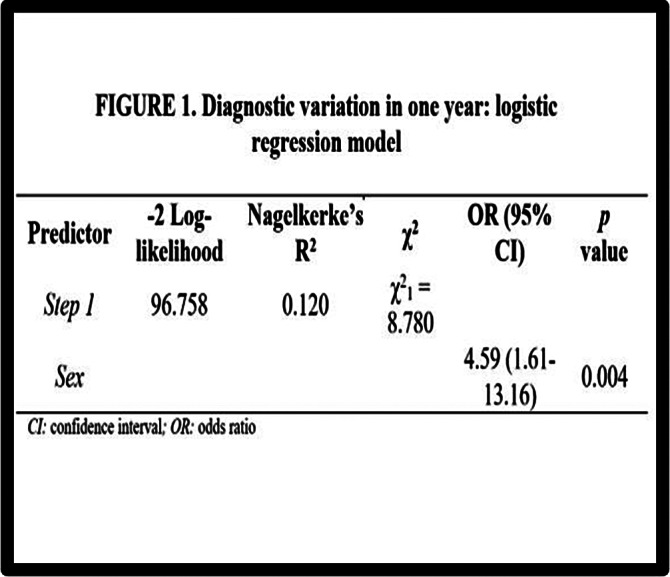 Figure 112
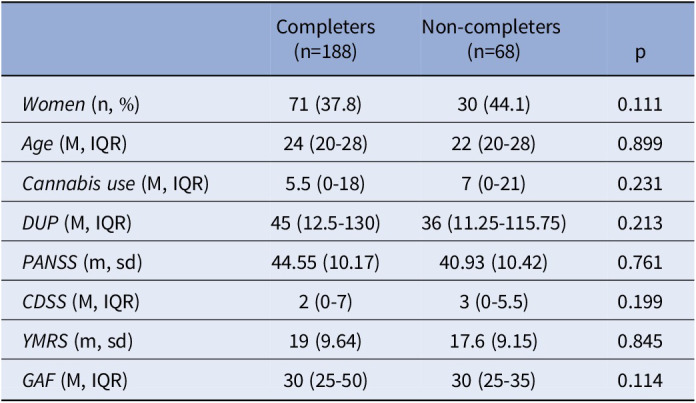 Figure 2
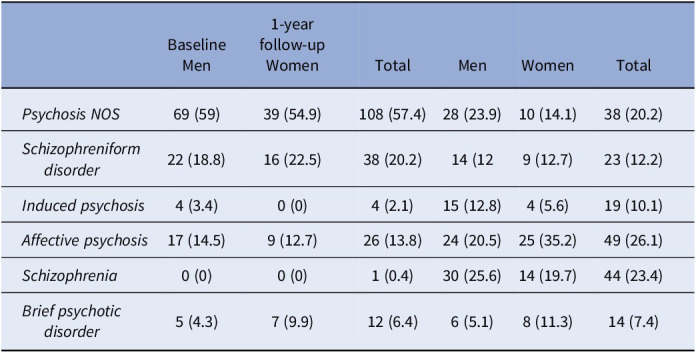 Figure 3
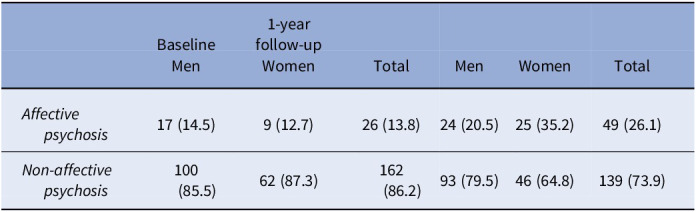 Figure 4
Peer Reviews
No public reviews on file for this paper yet. If you reviewed it on a platform where reviews are public (OpenReview, ICLR, NeurIPS, ICML), you can paste yours below so the community can read it here.
Videos
No videos yet. Explain this paper in a talk, walkthrough, or lecture? Add one.
Taxonomy
TopicsSchizophrenia research and treatment