Advanced disease and CD8+ TEMRA cells predict severe infections in multiple myeloma
Eva Tranter, David Busch, Clarissa Heck, Igor Wolfgang Blau, Axel Nogai, Phillip Schiele, Christian Meisel, Lars Bullinger, Marco Frentsch, Il-Kang Na

TL;DR
This study identifies risk factors for severe infections in multiple myeloma patients, including advanced disease and specific immune cell levels, to help doctors predict and prevent infections.
Contribution
A novel risk score incorporating immune parameters and clinical factors to predict severe infections in MGUS and NDMM patients.
Findings
45% of patients developed infections, with 26% experiencing severe infections within 12 months.
Four key risk factors for severe infections were identified, including elevated CD8+ TEMRA cells and advanced disease stage.
The developed risk score achieved 92.9% sensitivity and 80% specificity in stratifying patients by infection risk.
Abstract
Infections are a major cause of early morbidity and mortality in patients with multiple myeloma (MM) who are characterized by immunodeficiency secondary to disease. However, prospectively collected data on infection risk in this population are scarce. We aimed at identifying parameters in monoclonal gammopathy of undetermined significance (MGUS) and newly diagnosed MM (NDMM) patients with predictive power for early severe infections (SI). We conducted a prospective study with newly diagnosed MGUS and NDMM patients. Besides clinical and laboratory data, immune parameters were collected at initial diagnosis before therapy initiation. Primary endpoint was the occurrence of SI within 12 months after diagnosis. 45% of patients developed infection, 26% with SI. Four main risk factors for SI were identified: ECOG ≥ 2 (p < 0.001), ISS stage II/III (p = 0.002), therapeutic intervention (p <…
Genes, proteins, chemicals, diseases, species, mutations and cell lines named across the full text — each resolved to its canonical identifier and authoritative record.
Click any figure to enlarge with its caption.
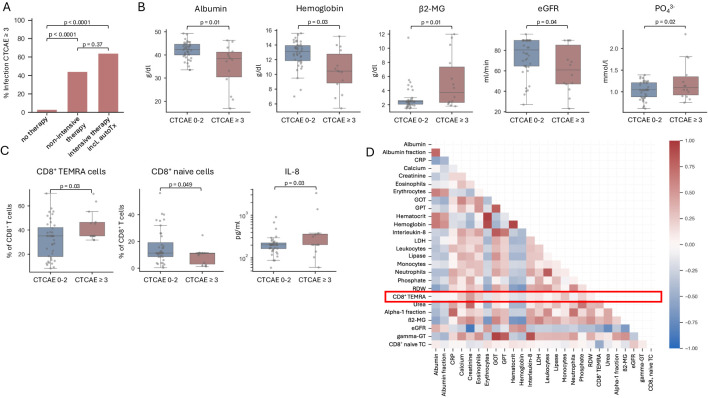 Figure 1
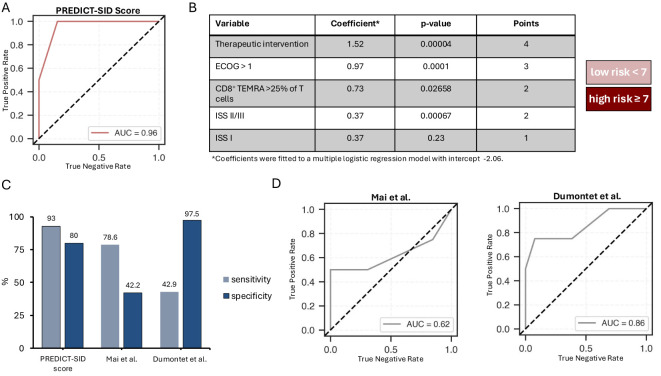 Figure 2
Peer Reviews
No public reviews on file for this paper yet. If you reviewed it on a platform where reviews are public (OpenReview, ICLR, NeurIPS, ICML), you can paste yours below so the community can read it here.
Videos
No videos yet. Explain this paper in a talk, walkthrough, or lecture? Add one.
Taxonomy
TopicsMultiple Myeloma Research and Treatments · Peptidase Inhibition and Analysis · Protein Degradation and Inhibitors