Prognostic Features for Overall Survival in Male Diabetic Patients Undergoing Hemodialysis Using Elastic Net Penalized Cox Regression; A Machine Learning Approach
Mehrdad Sharifi, Razieh Sadat Mousavi-Roknabadi, Vahid Ebrahimi, Robab Sadegh, Afsaneh Dehbozorgi, Seyed Rouhollah Hosseini-Marvast, Mojtaba Mokdad

TL;DR
This study uses machine learning to identify factors affecting survival in male diabetic patients on hemodialysis.
Contribution
The novel use of elastic net penalized Cox regression improves survival prediction in male diabetic hemodialysis patients.
Findings
Six significant predictors of survival were identified, including BMI, vascular access type, and hemoglobin levels.
The model retained 14 out of 35 candidate predictors after backward elimination.
Lower survival rates were observed in patients with certain clinical and demographic characteristics.
Abstract
Diabetics constitute a significant percentage of hemodialysis (HD) patients with higher mortality, especially among male patients. A machine learning algorithm was used to optimize the prediction of time to death in male diabetic hemodialysis (MDHD) patients. This multicenter retrospective study was conducted on adult MDHD patients (2011-2019) from 34 HD centers affiliated with Shiraz University of Medical Sciences. As a special type of machine learning approach, an elastic net penalized Cox proportional hazards (EN-Cox) regression was used to optimize a predictive regression model of time to death. To maximize the generalizability and simplicity of the final model, the backward elimination method was used to reduce the estimated predictive model to its core covariates. Out of 442 patients, 308 eligible cases were used in the final analysis. Their death proportion was estimated to be…
Genes, proteins, chemicals, diseases, species, mutations and cell lines named across the full text — each resolved to its canonical identifier and authoritative record.
Click any figure to enlarge with its caption.
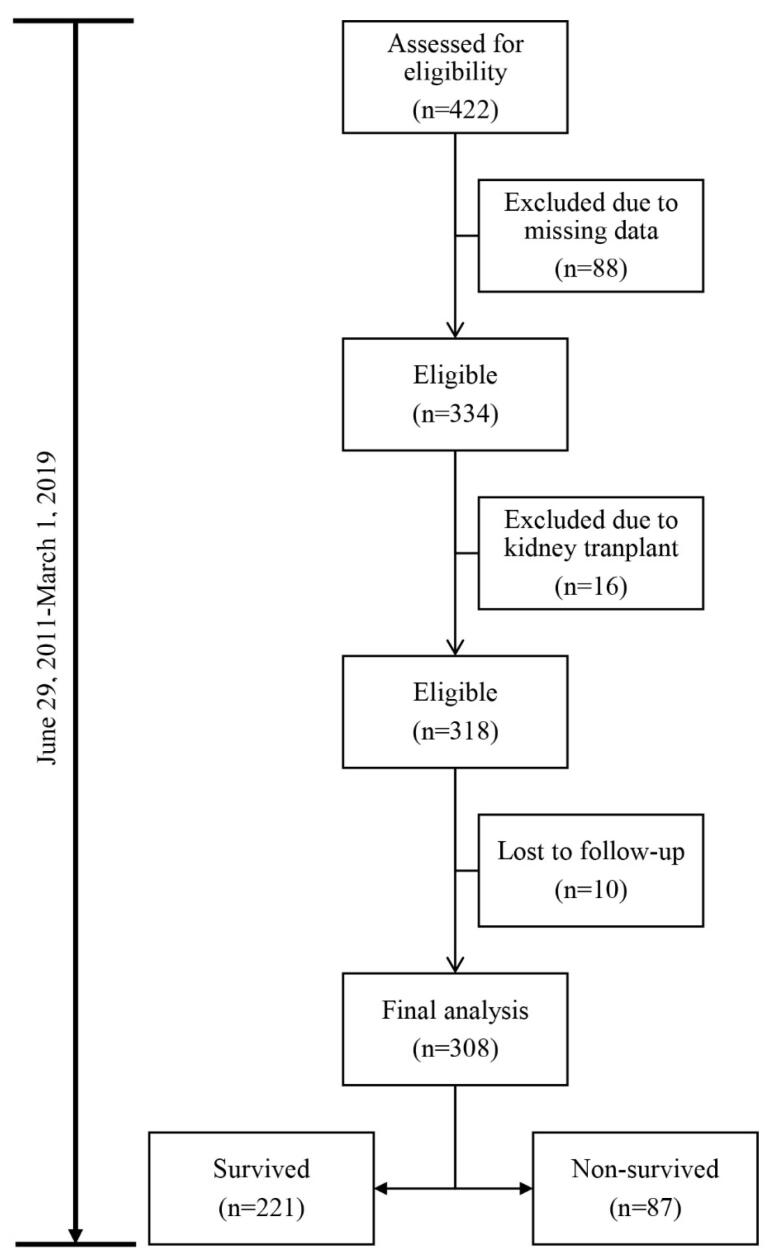 Figure 1
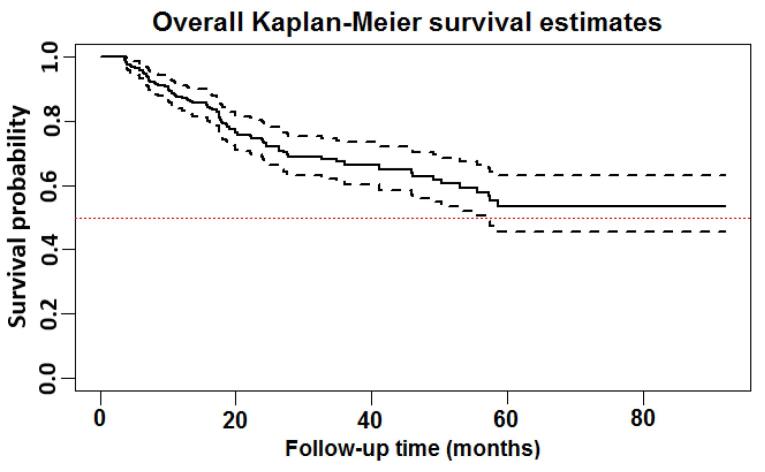 Figure 2
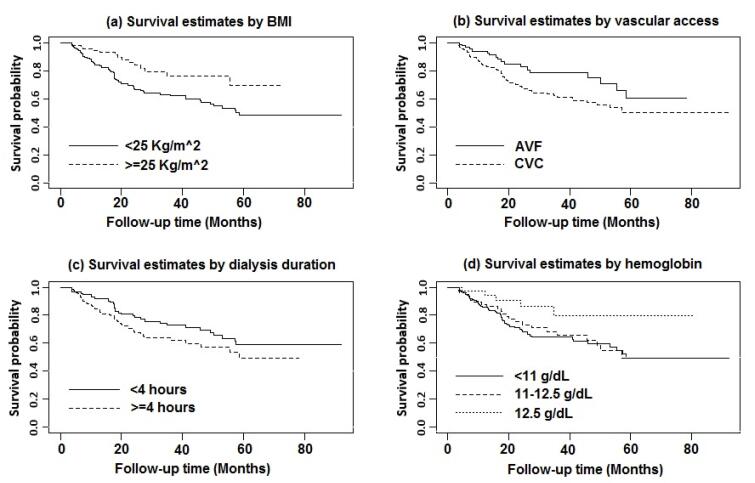 Figure 3
Peer Reviews
No public reviews on file for this paper yet. If you reviewed it on a platform where reviews are public (OpenReview, ICLR, NeurIPS, ICML), you can paste yours below so the community can read it here.
Videos
No videos yet. Explain this paper in a talk, walkthrough, or lecture? Add one.
Taxonomy
TopicsMachine Learning in Healthcare · Artificial Intelligence in Healthcare · Body Composition Measurement Techniques