Differential affection of the visual information sub-streams in a patient with visual agnosia
Kirstin Lederer, Bruno Fimm, Jorn Munzert, Mathias Reiser, Heiko Maurer, Ferdinand Binkofski, Antonello Pellicano

TL;DR
A patient with visual agnosia shows impaired object recognition and grasping when color information is removed, highlighting the role of color processing in both visual streams.
Contribution
The study demonstrates how spared color processing in the ventral stream partially compensates for agnosia and contributes to visuomotor transformations in the dorsal stream.
Findings
The agnosic patient's recognition of color-masked objects was significantly worse than colored ones.
Color-masked objects led to larger kinematic impairments in the patient compared to controls.
Color processing in the ventral stream partially compensates for agnosia and supports visuomotor functions.
Abstract
Visual agnosia is a deficit of object recognition addressed to the damage of the ventral stream (VS). The dorsal stream (DS) is usually intact in these patients, and it can be derived from well-preserved reaching and grasping of visually presented objects. In this study, we presented a new case of a visual agnosic patient (AC) with an extensive lesion of the secondary visual cortex. We examined the kinematics of his grasping behavior towards common day-to-day objects compared to a healthy control group. Both colored and color-masked objects were presented, and participants were instructed to grasp-then-name and name-then-grasp them. The agnosic deficit was particularly evident when no color information was available to the patient: Although AC was able to recognize most colored objects with marked delay, his recognition of color-masked objects was very poor. Furthermore, the…
Genes, proteins, chemicals, diseases, species, mutations and cell lines named across the full text — each resolved to its canonical identifier and authoritative record.
Click any figure to enlarge with its caption.
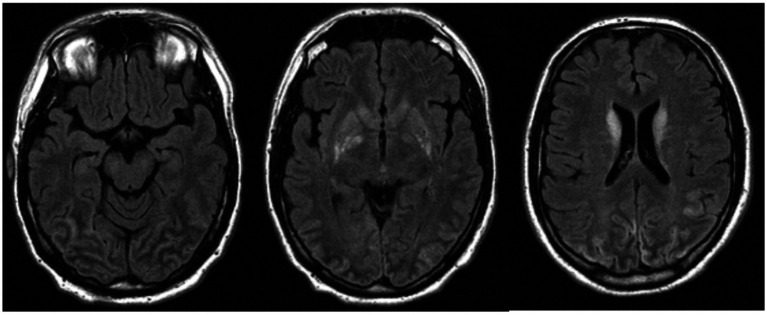 Figure 1
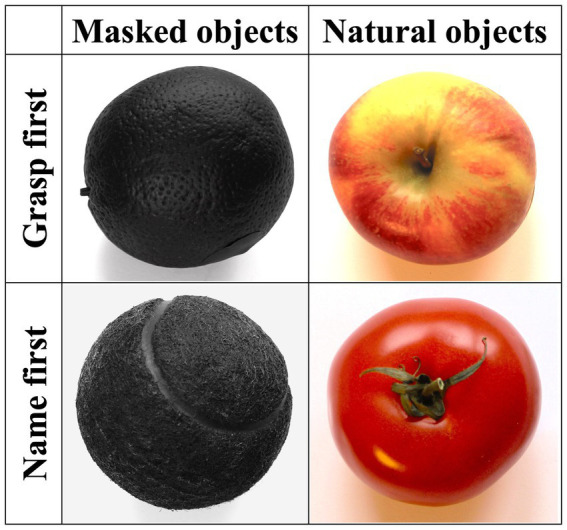 Figure 2
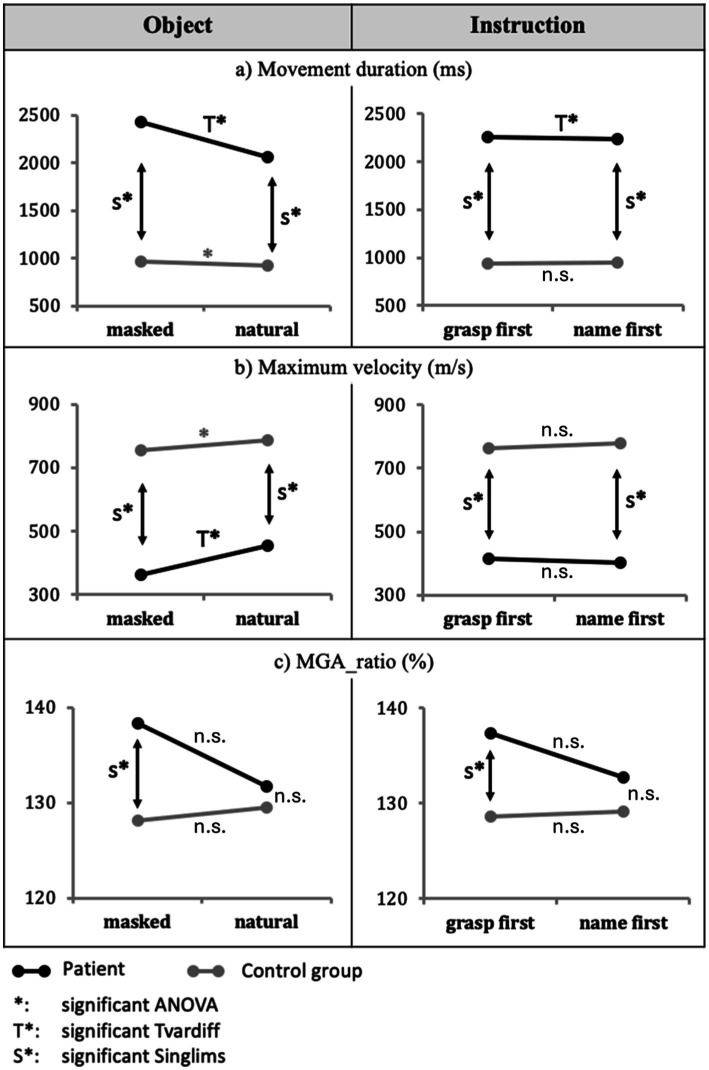 Figure 3
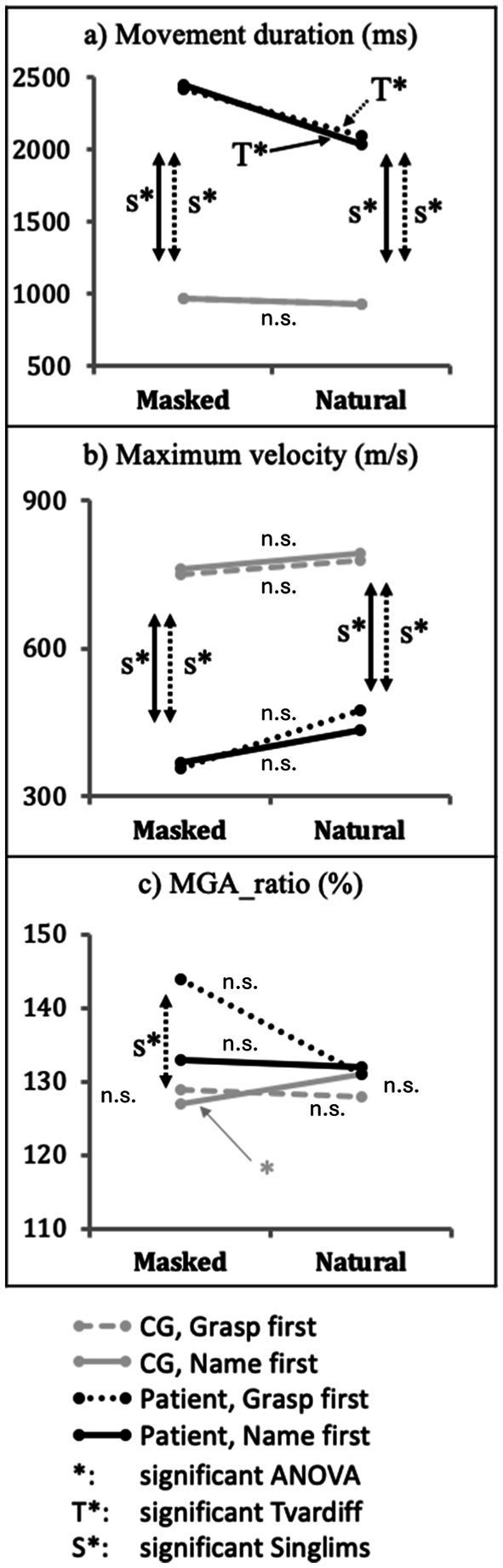 Figure 4
Peer Reviews
No public reviews on file for this paper yet. If you reviewed it on a platform where reviews are public (OpenReview, ICLR, NeurIPS, ICML), you can paste yours below so the community can read it here.
Videos
No videos yet. Explain this paper in a talk, walkthrough, or lecture? Add one.
Taxonomy
TopicsVisual perception and processing mechanisms · Motor Control and Adaptation · Spatial Neglect and Hemispheric Dysfunction