Cemento-Osseous Dysplasia in a Female Bronze Age Skeleton (North Caucasus)
Julia Gresky, Melina Frotscher, Sophia Thiem, Alexander Stoessel, Alexey Kalmykov, Natalia Berezina

TL;DR
A 4500-year-old female skeleton from the North Caucasus shows signs of cemento-osseous dysplasia, a rare bone condition, offering insights into prehistoric health.
Contribution
This study presents the earliest known case of cemento-osseous dysplasia identified in a Bronze Age skeleton.
Findings
Cemento-osseous dysplasia was diagnosed in a 30-40-year-old female skeleton from the North Caucasus using macroscopic, radiographic, and microscopic methods.
Lesions in the mandible showed woven bone and cementum-like structures, consistent with periapical cemento-osseous dysplasia.
A second individual in the same burial mound also showed focal cemento-osseous dysplasia, suggesting potential genetic links.
Abstract
The earliest known case of cemento-osseous dysplasia could be detected in a Bronze Age skeleton, dating back 4500 years ago in the region of the North Caucasus. Although the soft tissue was missing, sufficient diagnosis could be achieved by using different methods that prove the existence of fibro-osseous processes already in prehistory. Skeletal remains provide a direct view of such changes which cannot be obtained from a living patient without compromising. A skeleton of a 30-40-year-old female individual from the burial mound of Budyonnovsk 10 (including 19 individuals) in Southern Russia was investigated using macroscopic, radiographic, and microscopic methods. In the mandible, destruction of the labial wall of the alveoli 32 and 31 is already visible macroscopically. At the base of the lesion, the original bone is replaced by fine porous bone including small dense particles:…
Genes, proteins, chemicals, diseases, species, mutations and cell lines named across the full text — each resolved to its canonical identifier and authoritative record.
Click any figure to enlarge with its caption.
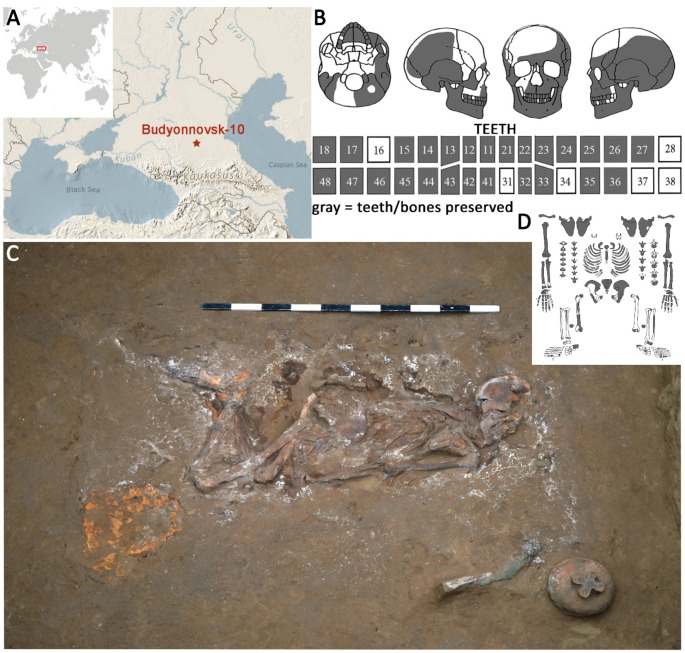 Figure 1
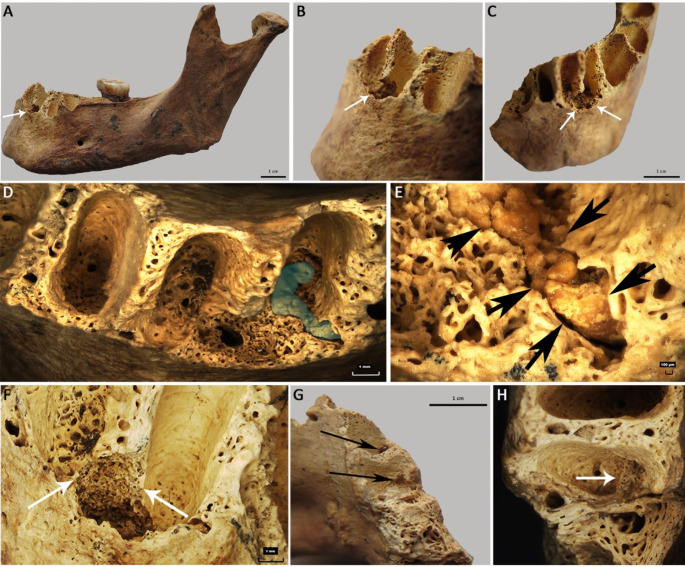 Figure 2
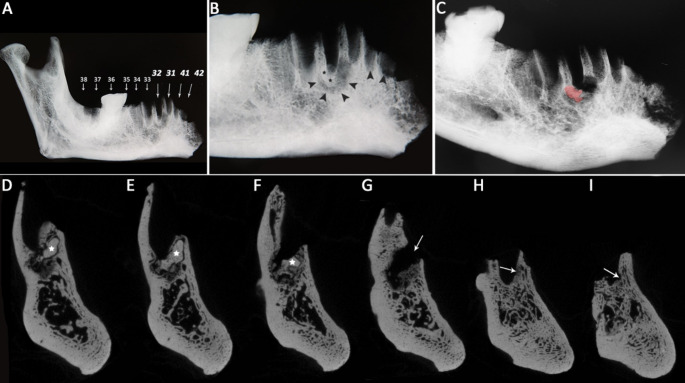 Figure 3
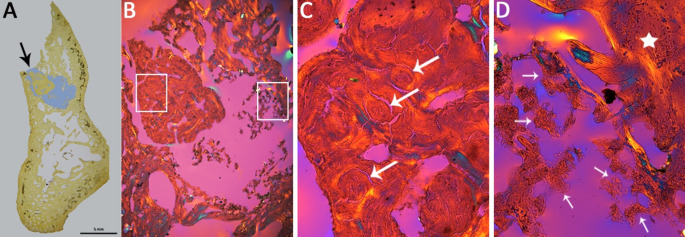 Figure 4
Peer Reviews
No public reviews on file for this paper yet. If you reviewed it on a platform where reviews are public (OpenReview, ICLR, NeurIPS, ICML), you can paste yours below so the community can read it here.
Videos
No videos yet. Explain this paper in a talk, walkthrough, or lecture? Add one.
Taxonomy
TopicsForensic Anthropology and Bioarchaeology Studies · dental development and anomalies · Paleopathology and ancient diseases