Predicting Perennial Ryegrass Cultivars and the Presence of an Epichloë Endophyte in Seeds Using Near-Infrared Spectroscopy (NIRS)
Simone Vassiliadis, Kathryn M. Guthridge, Priyanka Reddy, Emma J. Ludlow, Inoka K. Hettiarachchige, Simone J. Rochfort

TL;DR
This paper shows how near-infrared spectroscopy can quickly and accurately identify perennial ryegrass seed cultivars and whether they contain endophytic fungi, which is important for seed quality control.
Contribution
The study introduces a novel NIRS-based method for bulk seed classification of cultivars and endophyte presence with high accuracy.
Findings
Cultivars were classified with 94.1–98.6% accuracy using NIRS and nested PLS-DA.
Endophyte presence was discriminated with 77.8–96.3% accuracy.
Hierarchical models minimized misclassification of cultivars and endophyte status.
Abstract
Perennial ryegrass is an important temperate grass used for forage and turf worldwide. It forms symbiotic relationships with endophytic fungi (endophytes), conferring pasture persistence and resistance to herbivory. Endophyte performance can be influenced by the host genotype, as well as environmental factors such as seed storage conditions. It is therefore critical to confirm seed quality and purity before a seed is sown. DNA-based methods are often used for quality control purposes. Recently, near-infrared spectroscopy (NIRS) coupled with hyperspectral imaging was used to discriminate perennial ryegrass cultivars and endophyte presence in individual seeds. Here, a NIRS-based analysis of bulk seeds was used to develop models for discriminating perennial ryegrass cultivars (Alto, Maxsyn, Trojan and Bronsyn), each hosting a suite of eight to eleven different endophyte strains.…
Genes, proteins, chemicals, diseases, species, mutations and cell lines named across the full text — each resolved to its canonical identifier and authoritative record.
Click any figure to enlarge with its caption.
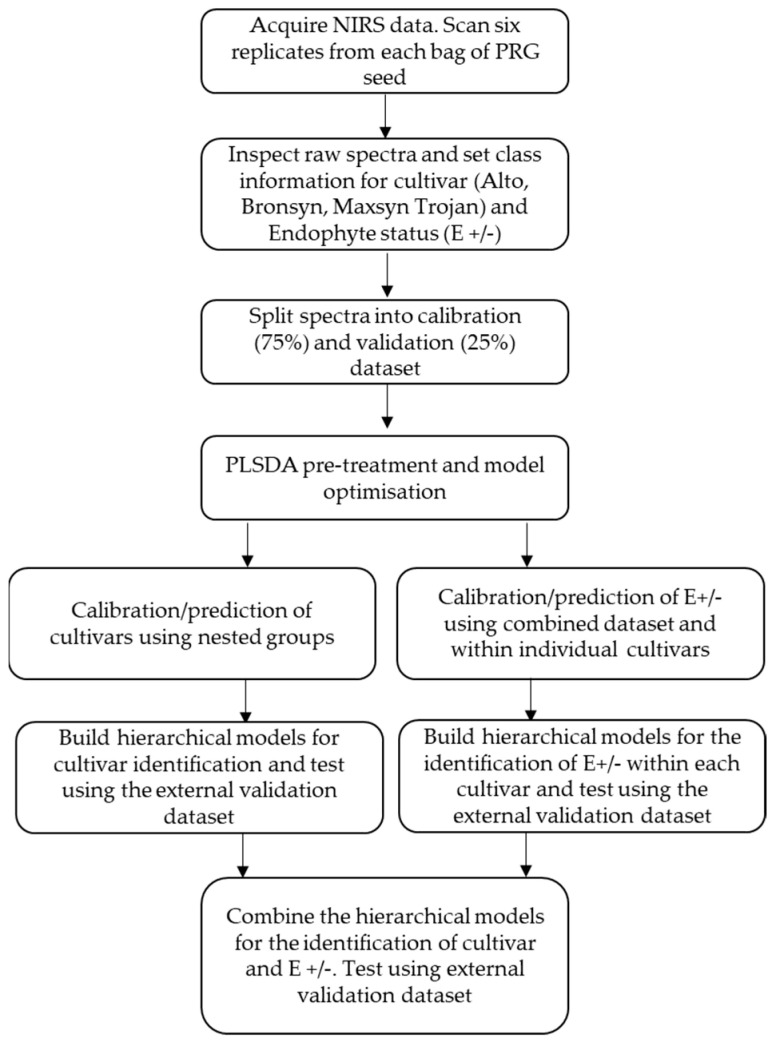 Figure 1
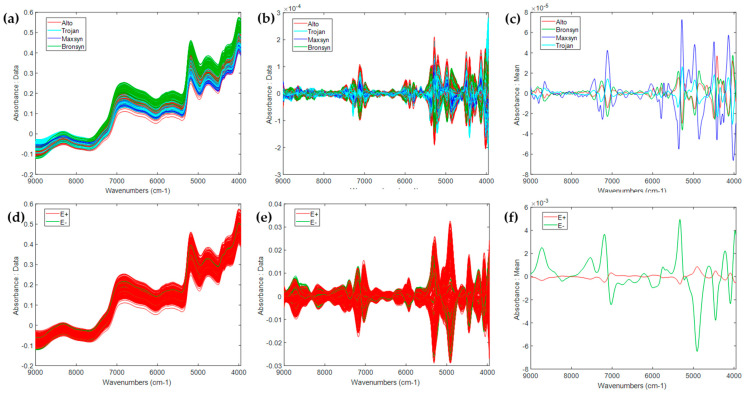 Figure 2
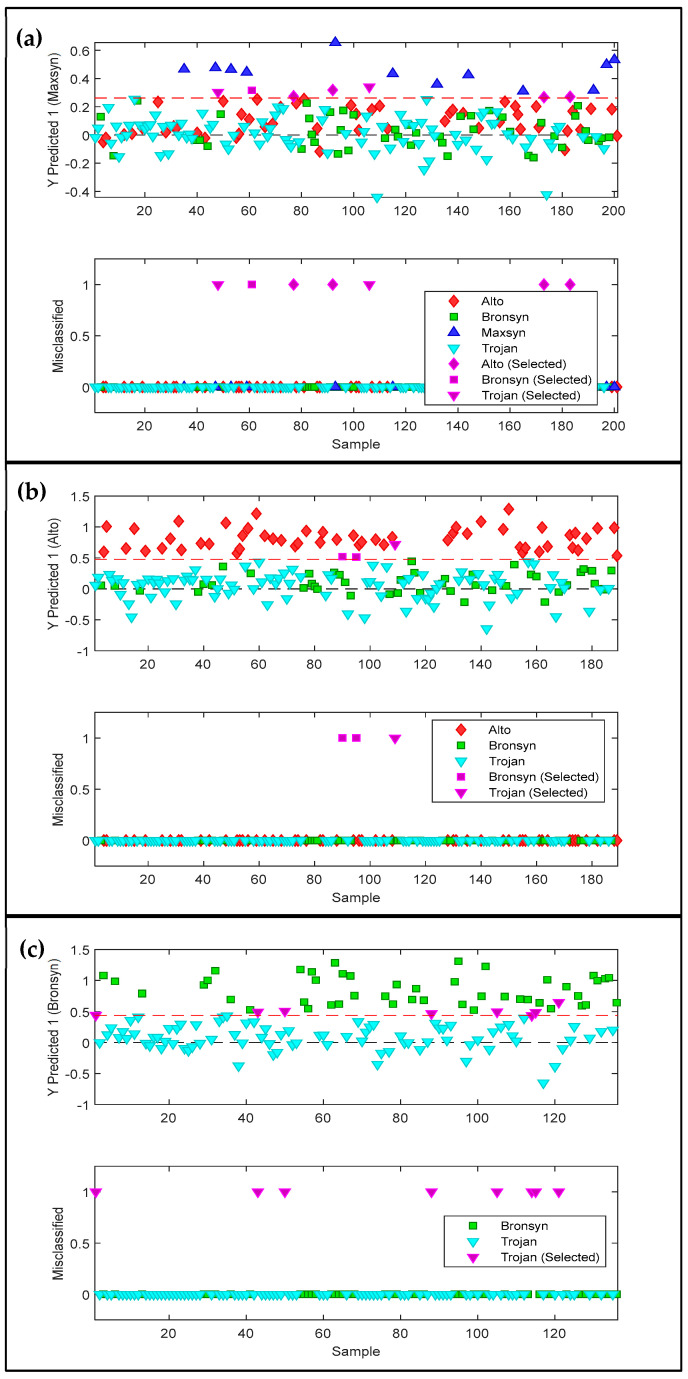 Figure 3
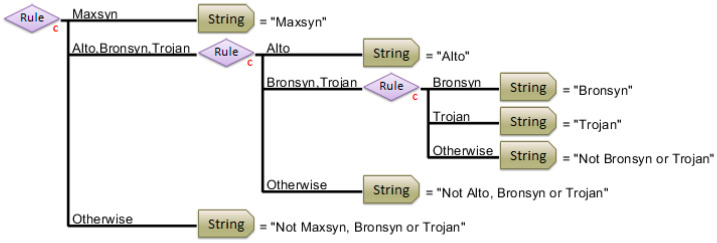 Figure 4
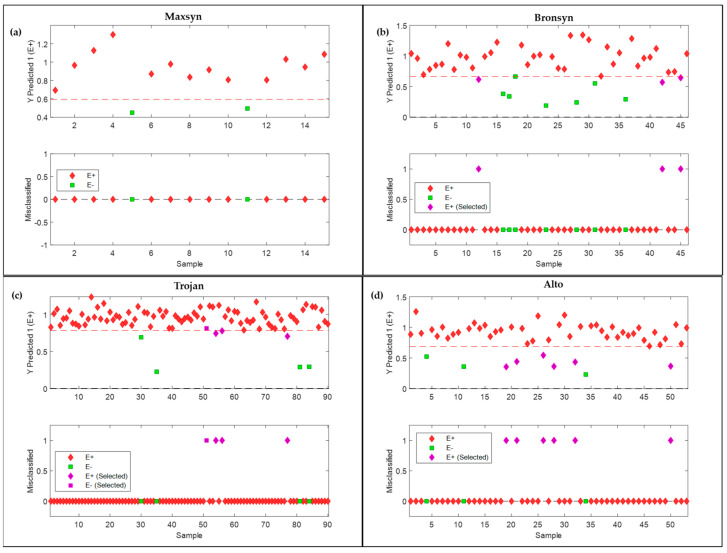 Figure 5
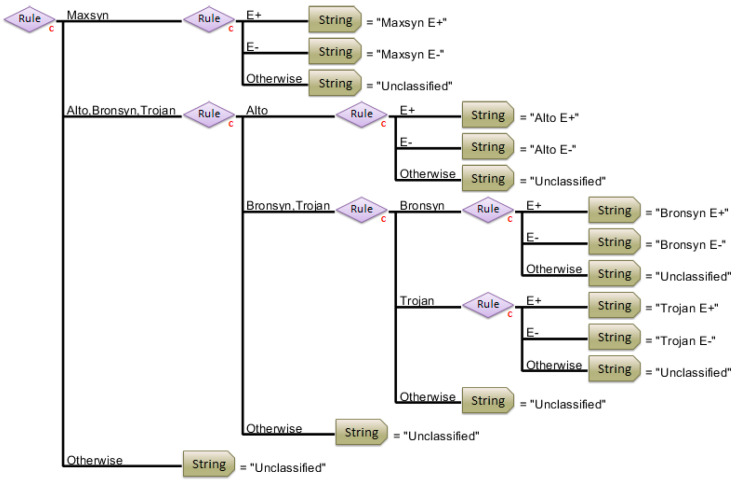 Figure 6
Peer Reviews
No public reviews on file for this paper yet. If you reviewed it on a platform where reviews are public (OpenReview, ICLR, NeurIPS, ICML), you can paste yours below so the community can read it here.
Videos
No videos yet. Explain this paper in a talk, walkthrough, or lecture? Add one.
Taxonomy
TopicsPlant and fungal interactions · Turfgrass Adaptation and Management · Ruminant Nutrition and Digestive Physiology