A non-invasive 25-Gene PLNM-Score urine test for detection of prostate cancer pelvic lymph node metastasis
Jinan Guo, Liangyou Gu, Heather Johnson, Di Gu, Zhenquan Lu, Binfeng Luo, Qian Yuan, Xuhui Zhang, Taolin Xia, Qingsong Zeng, Alan H. B. Wu, Allan Johnson, Nishtman Dizeyi, Per-Anders Abrahamsson, Heqiu Zhang, Lingwu Chen, Kefeng Xiao, Chang Zou, Jenny L. Persson

TL;DR
A new non-invasive urine test using 25 genes can accurately detect prostate cancer spread to lymph nodes, potentially reducing unnecessary surgeries.
Contribution
The first non-invasive machine learning-based urine test for detecting prostate cancer pelvic lymph node metastasis.
Findings
The 25-G PLNM-Score achieved high accuracy (AUC 0.93) in both retrospective and prospective cohorts.
The test could spare 96% and 80% of unnecessary surgeries in retrospective and prospective groups, missing less than 1% of metastases.
It significantly outperformed the MSKCC nomogram in avoiding unnecessary surgeries while maintaining high sensitivity.
Abstract
Prostate cancer patients with pelvic lymph node metastasis (PLNM) have poor prognosis. Based on EAU guidelines, patients with >5% risk of PLNM by nomograms often receive pelvic lymph node dissection (PLND) during prostatectomy. However, nomograms have limited accuracy, so large numbers of false positive patients receive unnecessary surgery with potentially serious side effects. It is important to accurately identify PLNM, yet current tests, including imaging tools are inaccurate. Therefore, we intended to develop a gene expression-based algorithm for detecting PLNM. An advanced random forest machine learning algorithm screening was conducted to develop a classifier for identifying PLNM using urine samples collected from a multi-center retrospective cohort (n = 413) as training set and validated in an independent multi-center prospective cohort (n = 243). Univariate and multivariate…
Genes, proteins, chemicals, diseases, species, mutations and cell lines named across the full text — each resolved to its canonical identifier and authoritative record.
Click any figure to enlarge with its caption.
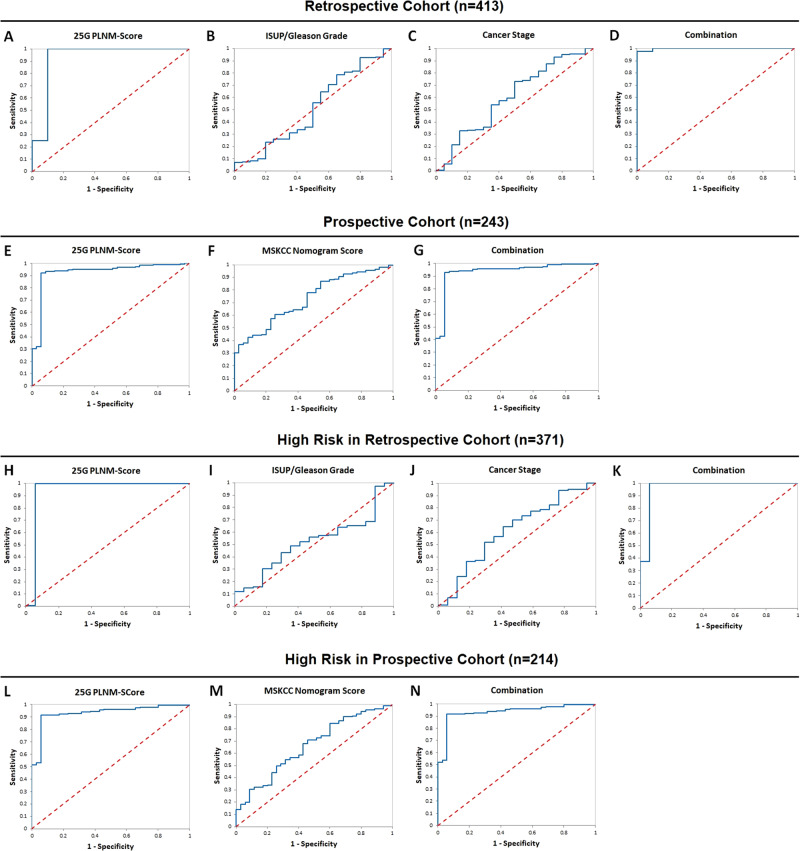 Figure 1
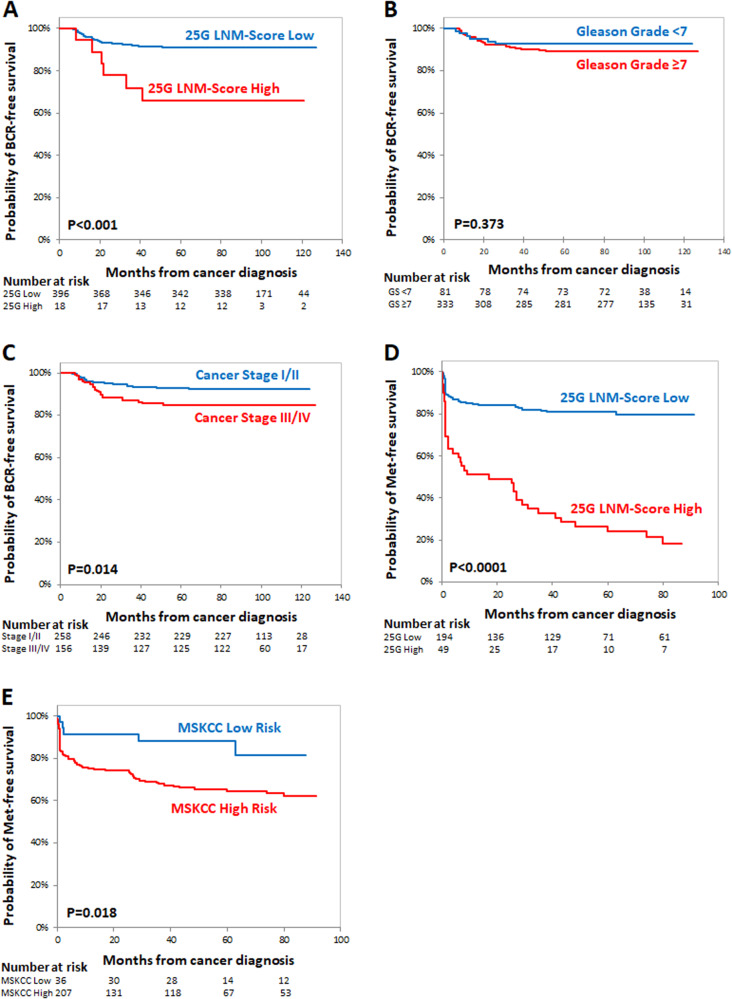 Figure 2
Peer Reviews
No public reviews on file for this paper yet. If you reviewed it on a platform where reviews are public (OpenReview, ICLR, NeurIPS, ICML), you can paste yours below so the community can read it here.
Videos
No videos yet. Explain this paper in a talk, walkthrough, or lecture? Add one.
Taxonomy
TopicsProstate Cancer Diagnosis and Treatment · Prostate Cancer Treatment and Research · Urologic and reproductive health conditions