Bright night sleeping environment induces diabetes and impaired glucose tolerance in non-human primates
Shuxing Wang, Zhenyi Chen, Zihao Liang, Qiang Xu, Jiankai Zhang

TL;DR
Bright night sleeping environments worsen glucose metabolism, leading to diabetes and impaired glucose tolerance in non-human primates.
Contribution
This study experimentally demonstrates in primates that bright night light induces diabetes and interacts with aging and weight.
Findings
Bright night light exacerbates glucose metabolism in pre-diabetic individuals and leads to premature death.
Higher light intensity at night increases the speed and likelihood of developing diabetes and impaired glucose tolerance.
Female monkeys and older/overweight monkeys are more vulnerable to the negative effects of bright night light.
Abstract
According to the IDF Diabetes Atlas regularly published by International Diabetes Federation, the prevalence of diabetes and impaired glucose tolerance (IGT), diabetes-related mortality and health expenditure are becoming serious eventually at the global, regional and national level. While the data alarm people, the exact cause remains unknown. It is widely accepted that glucose metabolism can be impaired by circadian rhythms disruption and sleep disturbances, both closely linked to exposure to light at night. However, there is little direct experiment on primates to study the precise extent of how serious bright sleeping environment at night impairs glucose metabolism, what the relationship is between nocturnal brightness and the development of diabetes and IGT, any difference between male and female, and whether aging and weight are involved. This study aims to address these questions…
Genes, proteins, chemicals, diseases, species, mutations and cell lines named across the full text — each resolved to its canonical identifier and authoritative record.
Click any figure to enlarge with its caption.
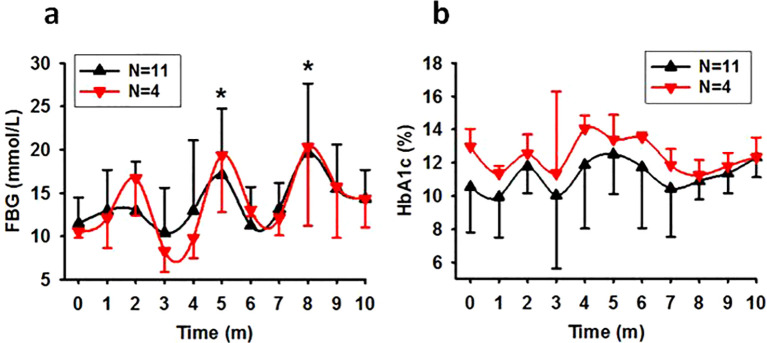 Figure 1
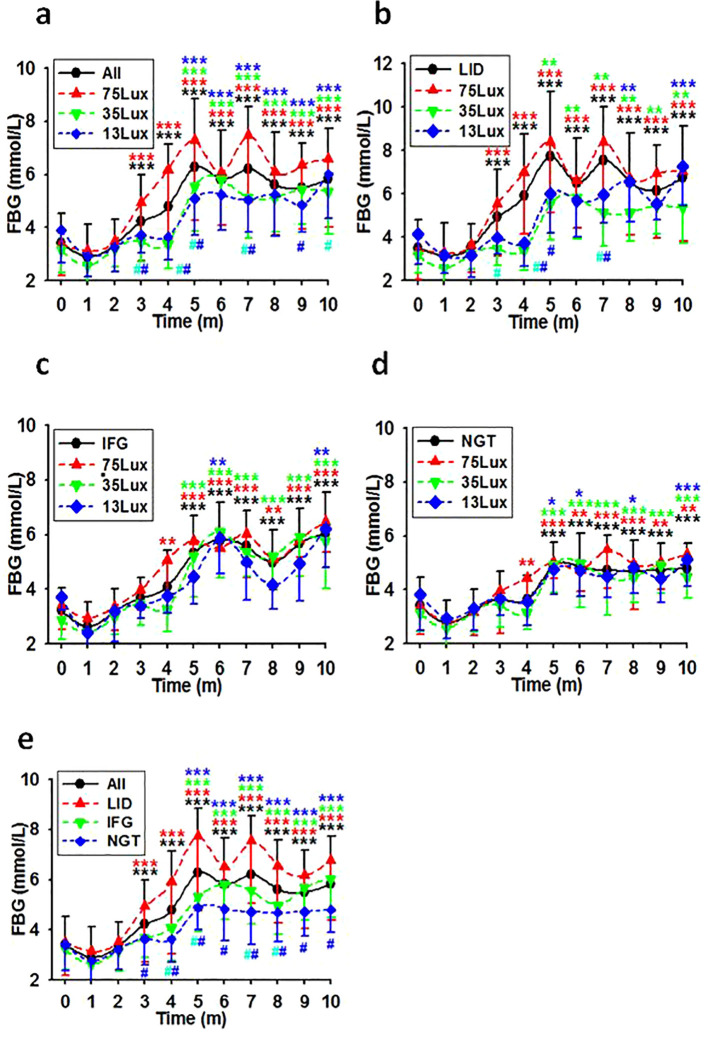 Figure 2
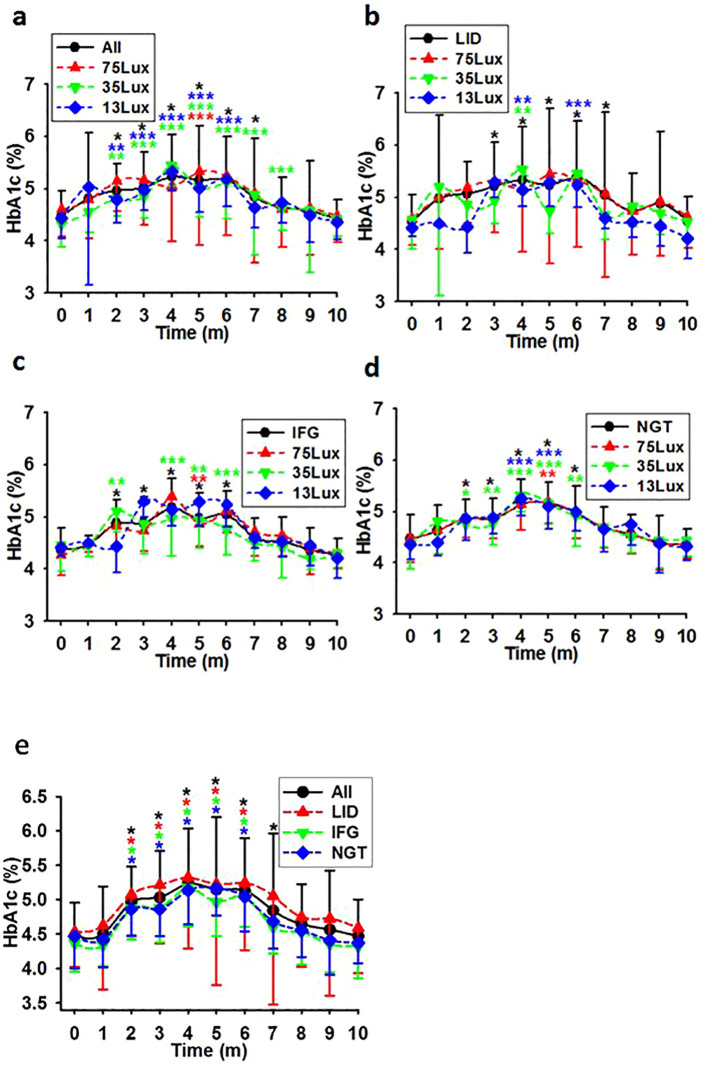 Figure 3
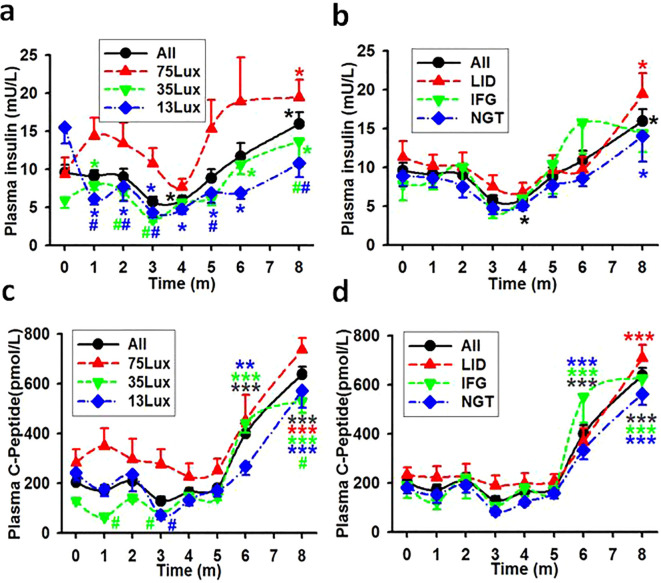 Figure 4
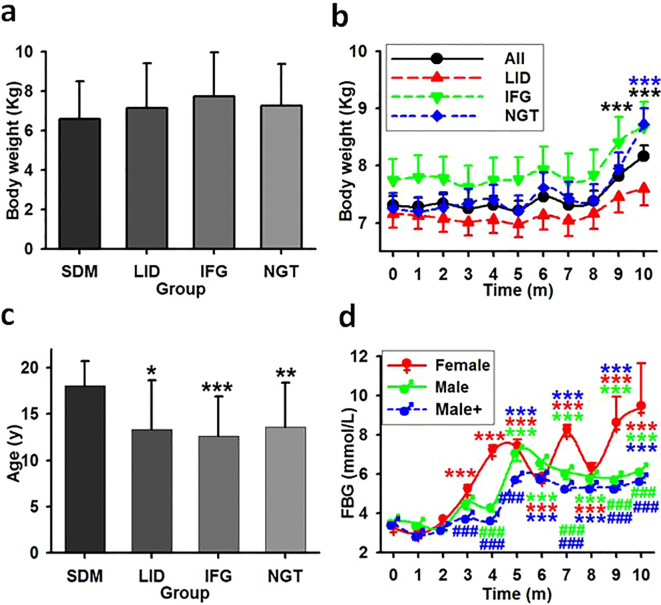 Figure 5
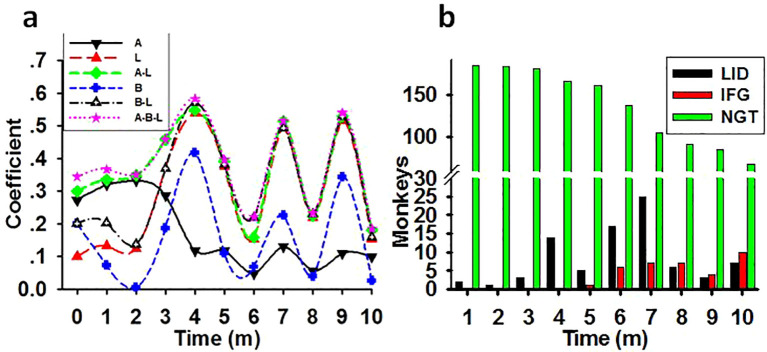 Figure 6
Peer Reviews
No public reviews on file for this paper yet. If you reviewed it on a platform where reviews are public (OpenReview, ICLR, NeurIPS, ICML), you can paste yours below so the community can read it here.
Videos
No videos yet. Explain this paper in a talk, walkthrough, or lecture? Add one.
Taxonomy
TopicsCircadian rhythm and melatonin · Dietary Effects on Health · Sleep and Wakefulness Research