Compact SPICE Model for TeraFET Resonant Detectors
Xueqing Liu, Yuhui Zhang, Trond Ytterdal, Michael Shur

TL;DR
This paper introduces a new compact model for TeraFETs that better captures channel behavior for terahertz applications.
Contribution
A novel nonlinear transmission line-based compact model for TeraFETs that accounts for non-uniform carrier density and electron inertia.
Findings
The model accurately simulates THz responses by incorporating non-uniform channel effects.
Validation shows improved agreement with experimental data compared to existing SPICE models and simulations.
Abstract
This paper presents an improved compact model for TeraFETs employing a nonlinear transmission line approach to describe the non-uniform carrier density oscillations and electron inertia effects in the TeraFET channels. By calculating the equivalent components for each segment of the channel—conductance, capacitance, and inductance—based on the voltages at the segment’s nodes, our model accommodates non-uniform variations along the channel. We validate the efficacy of this approach by comparing terahertz (THz) response simulations with experimental data and MOSA1 and EKV TeraFET SPICE models, analytical theories, and Multiphysics simulations.
Genes, proteins, chemicals, diseases, species, mutations and cell lines named across the full text — each resolved to its canonical identifier and authoritative record.
Click any figure to enlarge with its caption.
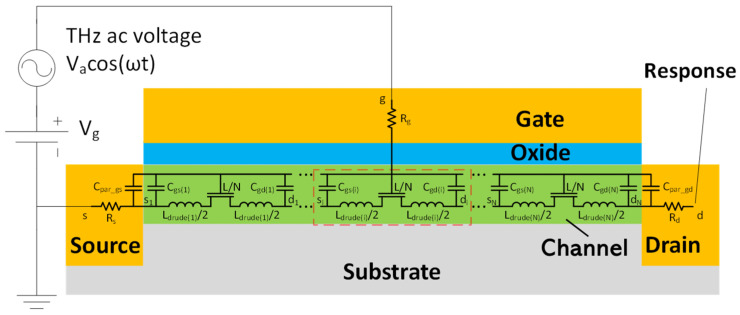 Figure 1
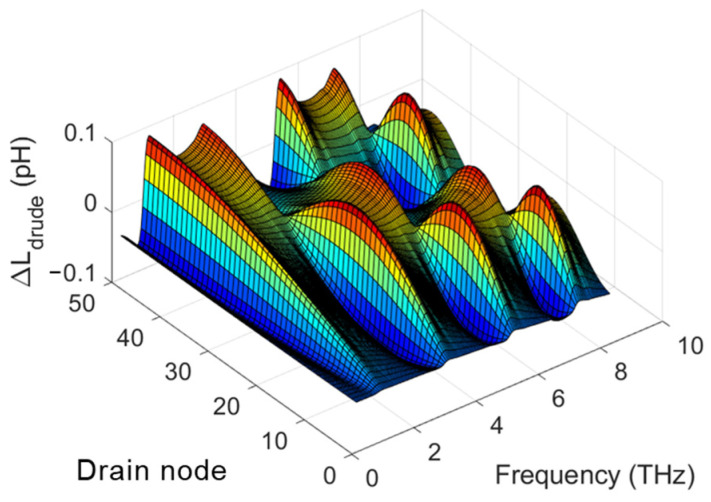 Figure 2
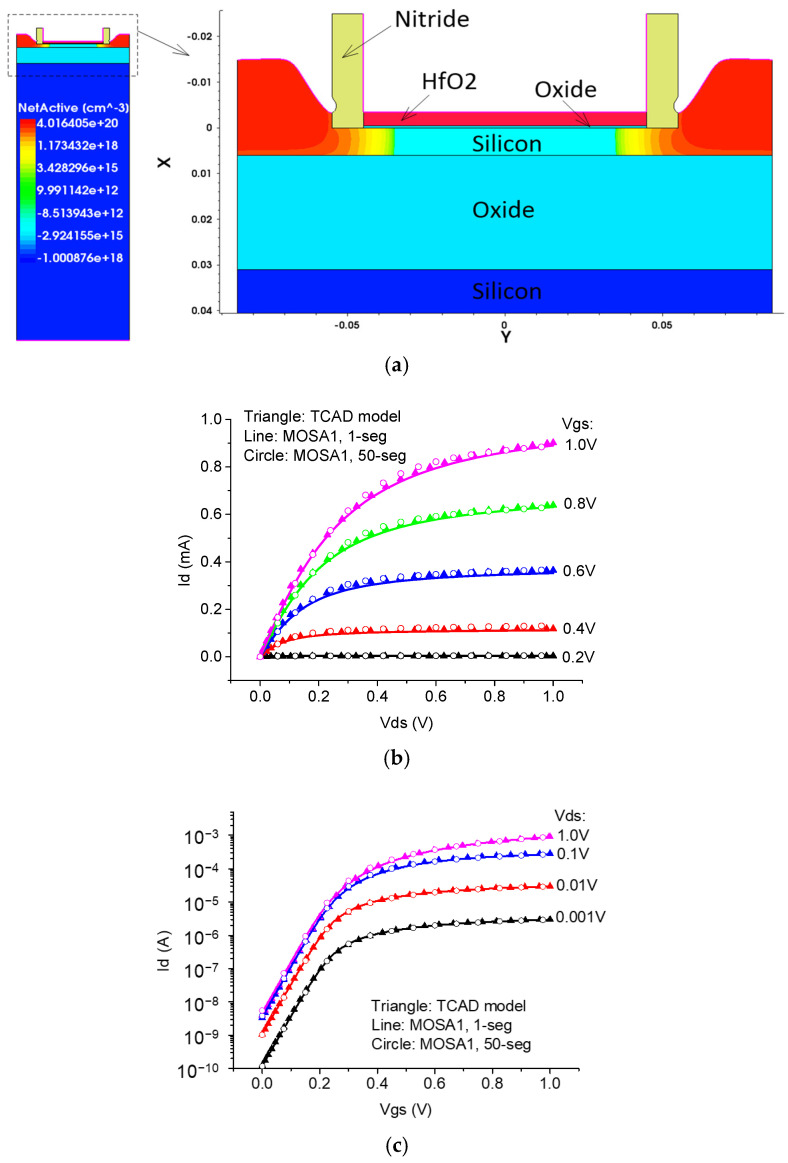 Figure 3
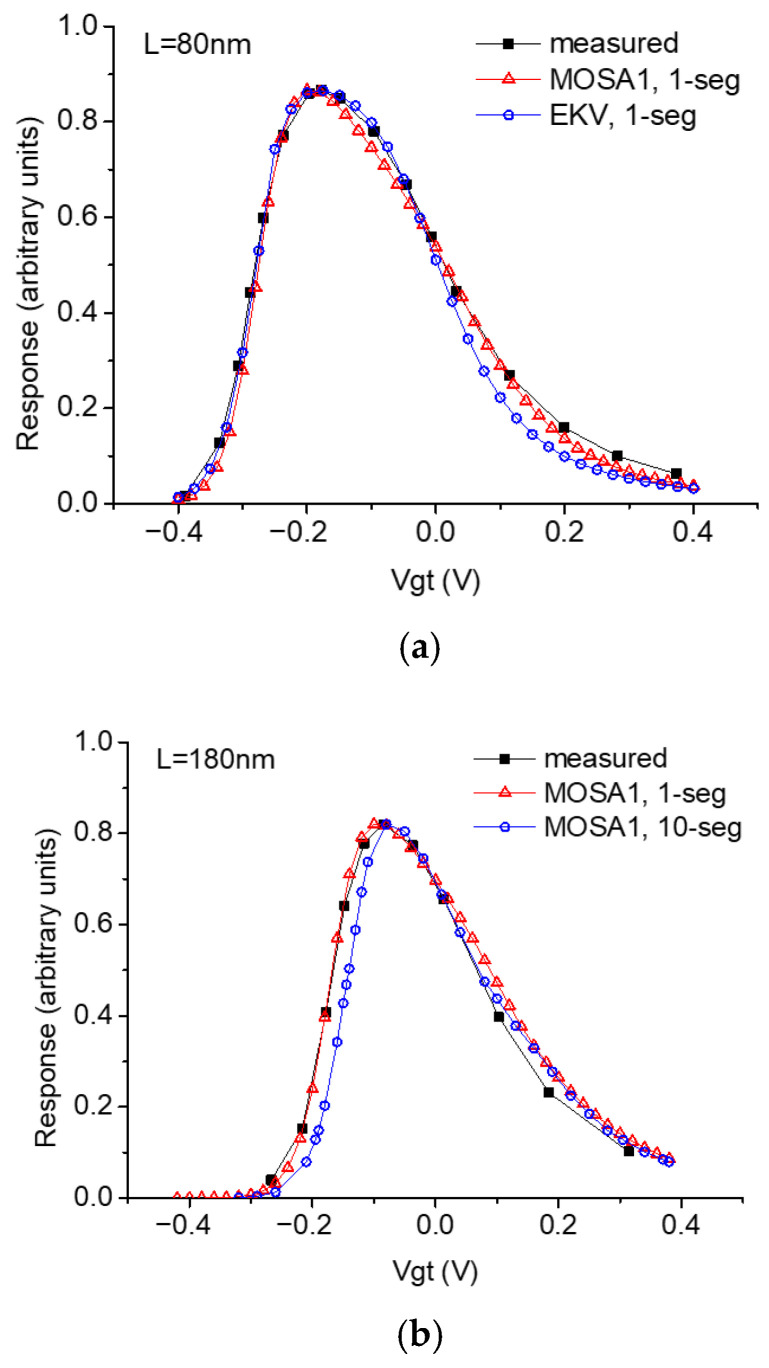 Figure 4
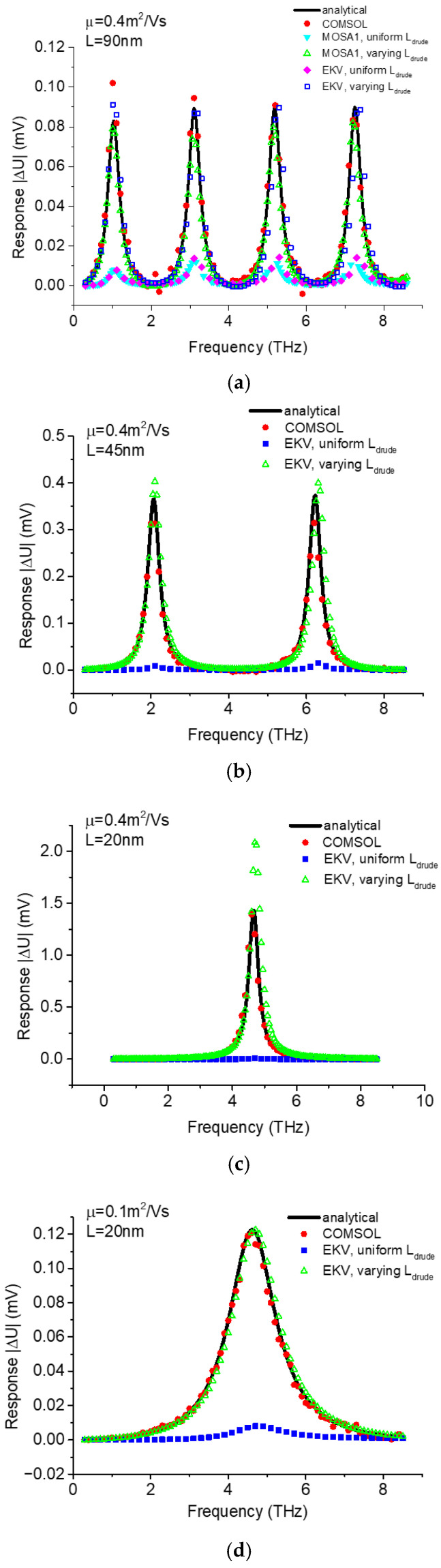 Figure 5
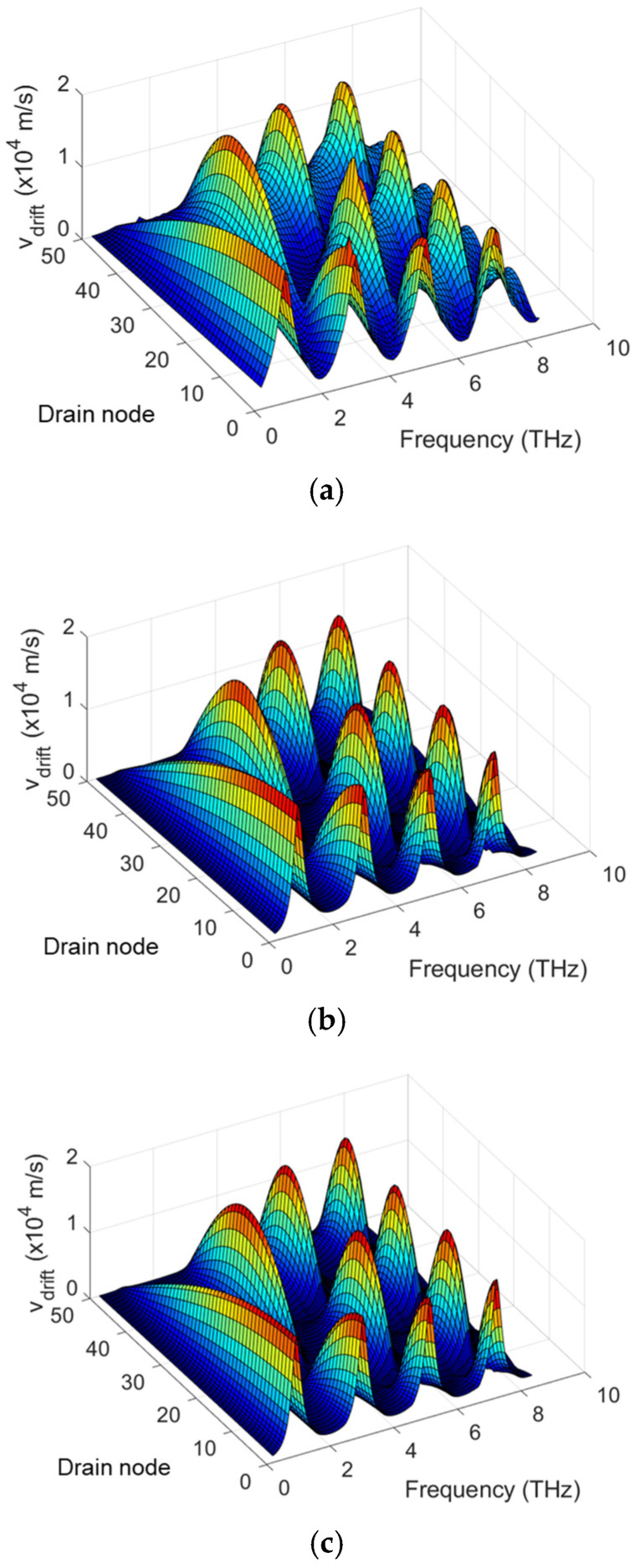 Figure 6
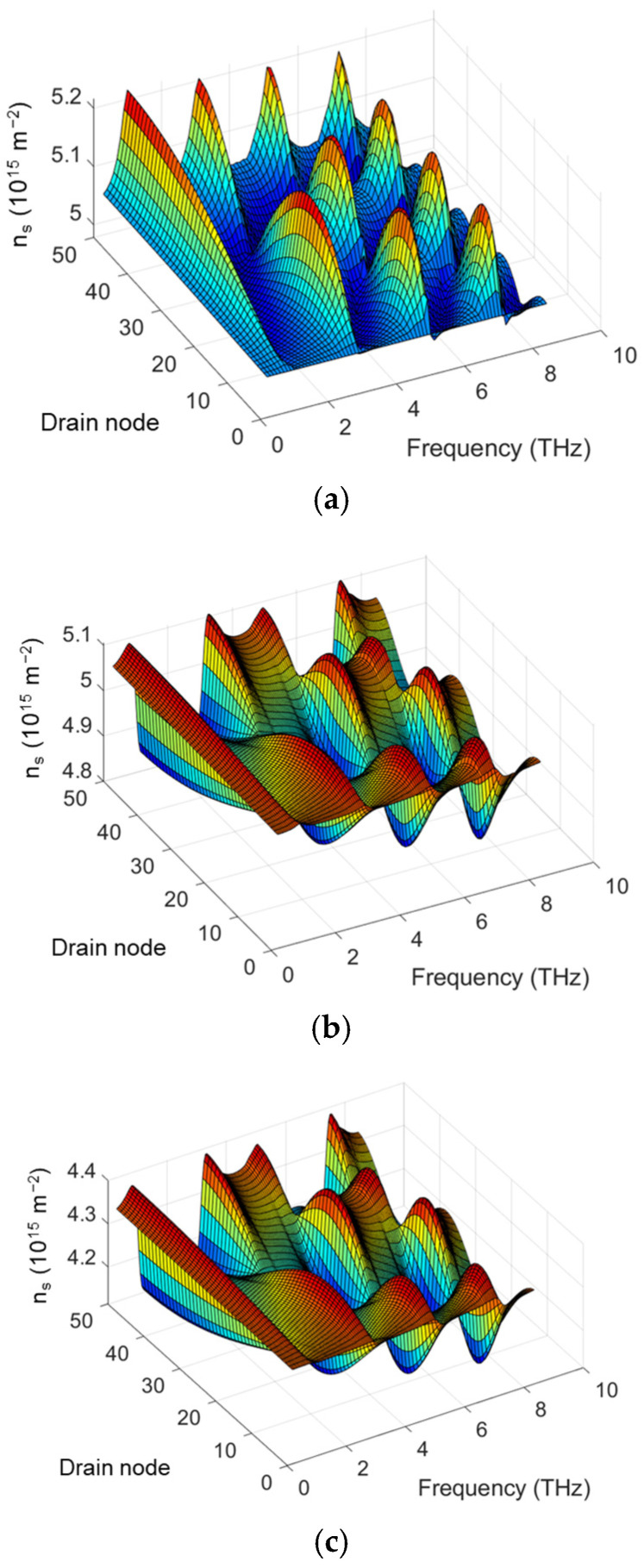 Figure 7
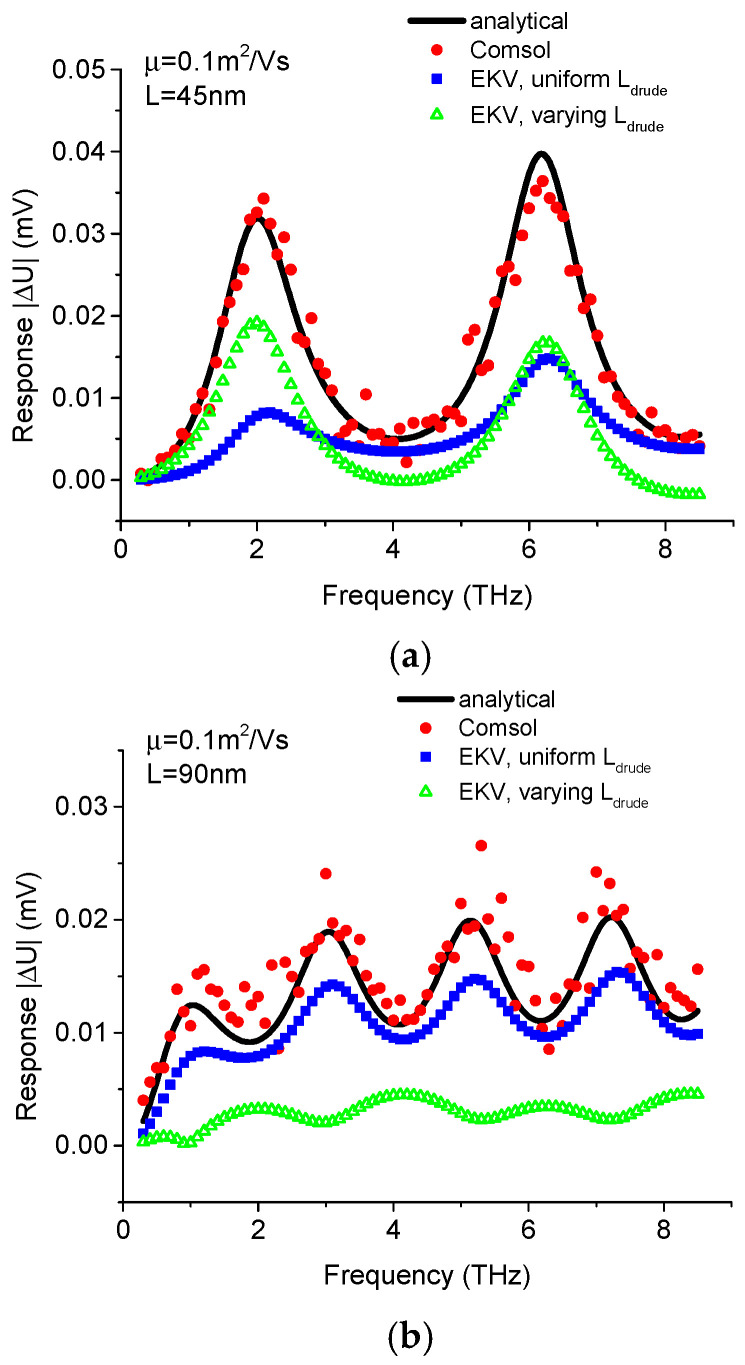 Figure 8
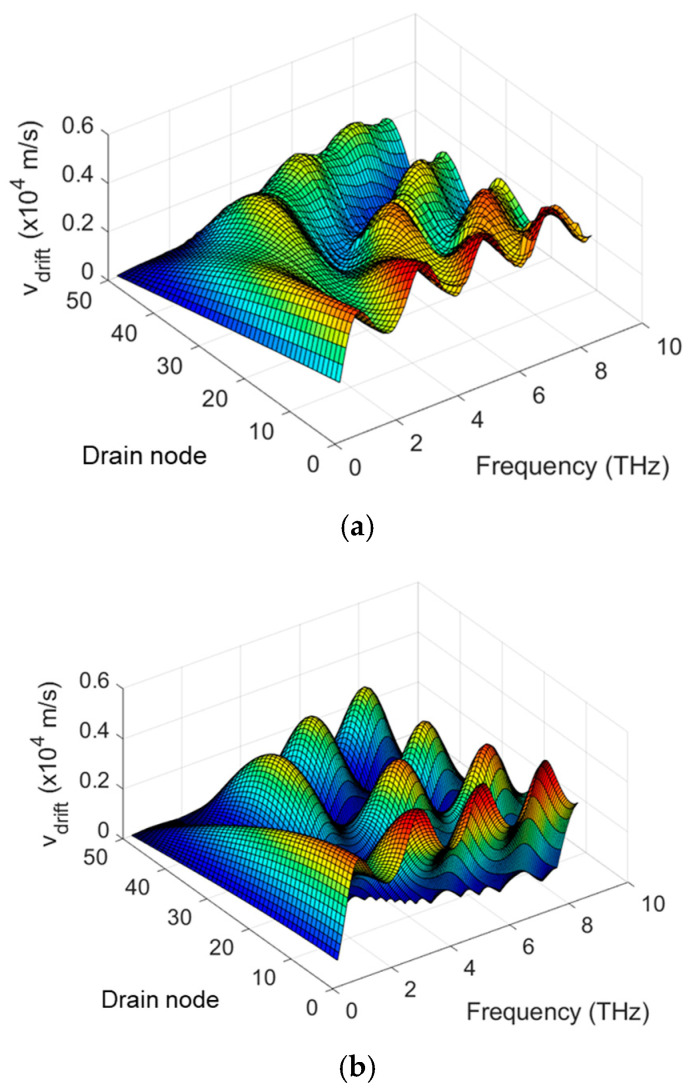 Figure 9
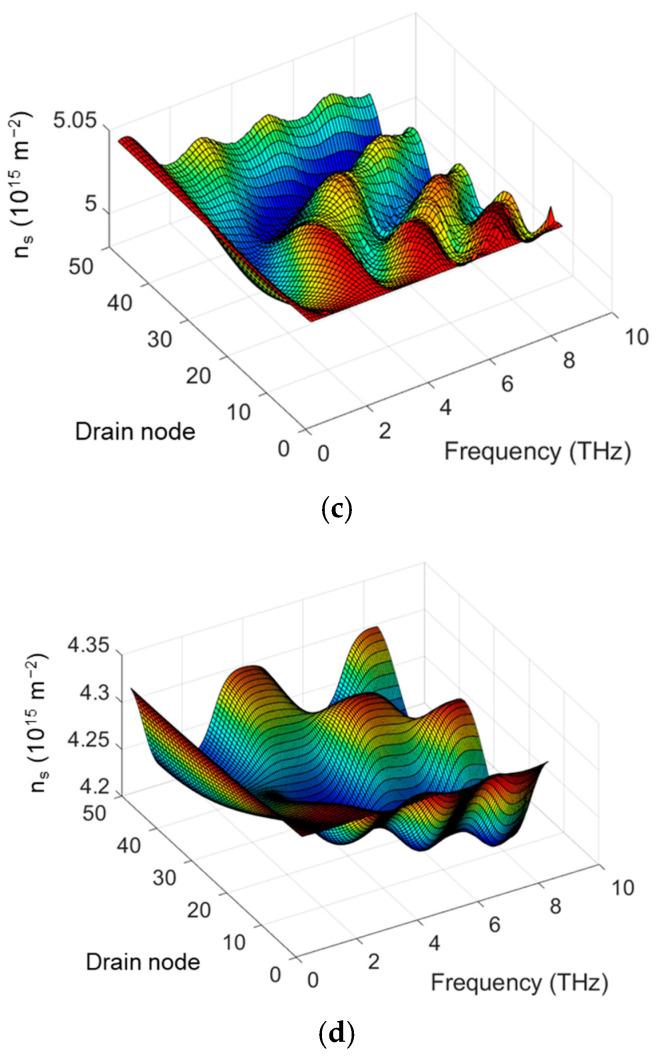 Figure 10
Peer Reviews
No public reviews on file for this paper yet. If you reviewed it on a platform where reviews are public (OpenReview, ICLR, NeurIPS, ICML), you can paste yours below so the community can read it here.
Videos
No videos yet. Explain this paper in a talk, walkthrough, or lecture? Add one.
Taxonomy
TopicsAdvancements in Semiconductor Devices and Circuit Design
1. Introduction
Terahertz plasmonic field effect transistors (or TeraFETs) have found versatile applications such as THz detectors [1,2,3,4,5], imagers [6,7,8,9,10,11], and transceivers [12,13,14]. Effective compact models for TeraFETs have been used for designing and simulating THz components, circuits, and systems [15,16,17,18]. Previously developed compact models for TeraFETs have demonstrated qualitative agreement with analytical theories and measured data [19,20,21,22]. In this work, we propose an upgraded compact model for TeraFETs achieving improved quantitative alignment with analytical theories and experimental data. The model uses an improved segmentation approach for the device channel [20,22] to accommodate the non-uniform carrier density oscillations and electron inertia effects. For each segment, the model computes the equivalent components for the channel, including conductance, capacitance, and inductance, based on the voltages at the segment’s nodes. Consequently, these components vary non-uniformly along the channel. We employ our new approach to improve the previous SPICE model frameworks (MOSA1 [23] and EKV [24]) and validate its effectiveness through comparisons with measured data and previous SPICE modeling results, analytical THz response theories, and finite-element simulations using COMSOL Multiphysics software. We observe good quantitative agreement between our new SPICE models, experimental data, analytical theories, and COMSOL simulations, even at resonant detection conditions. The improved TeraFET SPICE model can be effectively used for the design and simulation of THz electronic and optoelectronic devices and circuits.
2. TeraFET SPICE Model
In the presence of THz radiation, field-effect transistors (FETs) with asymmetric boundary conditions demonstrate a notable DC voltage response which results from the rectification of decayed or resonant plasma waves within the FET channel. The hydrodynamic equations governing carrier density in the channel [25,26,27,28,29] analytically describe this THz response. These equations with asymmetric boundary conditions can also be effectively solved using the finite element method. Also, through simulations conducted in COMSOL Multiphysics [30], one can describe the THz response and examine plasma wave profiles, thereby gaining valuable insights into the behavior of TeraFETs within the THz frequency domain [31,32,33].
Previous studies have reported on the compact SPICE models for TeraFET detectors using the model of distributed transmission lines within the channel [20,22]. Figure 1 illustrates the TeraFET structure and the equivalent circuit of the multi-segment compact model for TeraFETs, including parasitic capacitances and series resistances. The THz wave impinging on the TeraFET is represented by a THz AC voltage source applied between the gate and source terminals. The nonlinear transmission line for the channel is implemented by dividing the channel resistances, capacitances, and inductances for the intrinsic FET into multiple segments. Carrier inertia leads to a temporal delay between the terminal voltage variation and the corresponding current response. This effect is captured in the equivalent circuit by adding inductive elements distributed along the channel and forming (along with distributed resistive and capacitive elements) a transmission line. This transmission line approach has proven to be effective for high-frequency MOSFET modeling including terahertz detection applications [34,35]. The channel length of each FET segment is L/N, where L represents the total channel length and N denotes the number of segments, which could be estimated as N ≥ 3L/L_o_ [14]. L_o_ is the characteristic length of the plasma wave penetration decaying away from the source terminal. It could be estimated by , where is the THz radiation frequency, is the gate voltage swing, and is the threshold voltage, if L<<Lo, N can be chosen using empirical values. The Drude inductance characterizing the electron inertia effect in the channel is expressed for each segment as L_drude_ = τ/g_ch_, where g_ch_ = ∂I_d_/∂V_d_ is the segment channel conductance, I_d_ and V_d_ are the drain current and voltage for the segment, respectively, τ = mμ/q is the electron momentum relaxation time, m is the electron effective mass, and μ is the electron mobility [36,37,38]. In prior models, g_ch_ is calculated based on the voltage at the drain node d and the source node s, subsequently divided by N to enable the same L_drude_ for each segment [20,22]. In the enhanced model presented in this paper, the channel conductance for segment i (as shown in Figure 1) is determined based on the voltages at the respective drain node d_i_ and source node s_i_. Consequently, L_drude_ is no longer uniformly distributed along the channel. This varying L_drude_ accounts for the varying channel resistances across segments. Figure 2 shows a profile for the variation of L_drude_ defined as , where L_drude0_ represents the Drude inductance calculated without THz radiation and L_drude_ is the Drude inductance calculated under THz radiation. Here ΔL_drude_ is plotted as a function of the THz radiation frequency and the drain node for each of the 50 segments, which represents different positions along the 90 nm TeraFET channel. As seen, L_drude_ is highly nonuniform along the device channel and exhibits resonant features at relatively high frequencies.
To obtain a validated compact SPICE model for TeraFETs, we first adjusted the SPICE parameter values to fit the current-voltage characteristics of an FDSOI MOSFET with a 90 nm channel length simulated in Sentaurus TCAD. Figure 3 shows the good agreement of I-V characteristics between the MOSFET TCAD model and both the single-channel and multi-segment MOSA1 SPICE models.
The validated MOSA1 SPICE model can be used to simulate the THz response of TeraFETs under open-drain boundary conditions. We also add the EKV model as the core for the TeraFET SPICE model to compare with experimental data [39]. Figure 4 shows the comparison of simulated THz response using the single-channel or multi-segment SPICE models and the measured THz response for NMOSFETs with different channel lengths [39]. The good agreement further justifies the use of the SPICE models for TeraFET simulations.
To evaluate the efficacy of the varying L_drude_ approach, we used both MOSA1 and EKV multi-segment SPICE models to compare simulation results with the analytical THz response [25] and the simulated response with COMSOL Multiphysics.
The description of our COMSOL model can be found in [31,32,33]. Figure 5 shows the THz response as a function of the frequency of the THz signal applied between the gate and source for the TeraFET biased above threshold (gate voltage swing V_gt_ = 0.15 V). The comparison employs different approaches, which include the analytical THz response equations, COMSOL simulations, and SPICE simulations with multi-segment MOSA1 or EKV models using uniform or varying L_drude_. Different channel length and mobility values (0.1 m^2^/Vs for room temperature and 0.4 m^2^/Vs for low temperature [40]) are chosen for comparison. The comparison reveals that for conditions involving relatively long channels with high mobility or short channels with low mobility, the improved SPICE models using varying L_drude_ exhibit excellent quantitative agreement with the analytical and COMSOL results. In contrast, the previous SPICE models using uniform L_drude_ yield significantly reduced response values and only have qualitative agreement with the analytical and COMSOL results. This discrepancy stems from the uniform L_drude_ model’s inability to account for the nonlinear dependence of L_drude_ on distance. The response is significantly enhanced by the nonlinearity of L_drude_, as the underlying mechanism relies on nonlinearity-induced rectification. For high-mobility TeraFETs with shorter channels, the SPICE models using the varying L_drude_ demonstrate higher response than the analytical and COMSOL results but still show much better quantitative agreement than the SPICE models using uniform L_drude_. The overshot THz response in this parametric range might result from the intensified resonant feature of L_drude_, which overestimates the nonuniformity of the device channel. The comparison of THz response in Figure 5 indicates that the TeraFET response is a strong function of the channel length. One must be careful with the selection of models when modeling TeraFETs with different channel lengths.
A high electron mobility of 0.4 m^2^/Vs achieved at cryogenic temperatures [40] is linked to a high momentum relaxation time and, therefore, to a large quality factor ωτ. This enables a resonant response and leads to a dramatic increase in responsivity.
Since the THz response stems from the rectification of the nonlinear THz current in the channel and the THz current is induced by the modulation of the carrier drift velocity and the carrier density under the THz radiation [25], it is crucial to investigate the distributions of the carrier drift velocity and the carrier density. Figure 6 and Figure 7 show the profiles of drift velocity and electron density in the channel for a relatively long channel and high-mobility TeraFET, simulated by COMSOL and SPICE using multi-segment MOSA1 or EKV models with varying L_drude_. The comparison shows similar drift velocity distributions but different electron density profiles between COMSOL and SPICE simulations. This suggests the dominant role of the drift velocity in determining the THz response under the resonant conditions, as the small-signal condition for electron density is retained.
Discrepancies in the electron density profiles may arise from different bias conditions for each segment in COMSOL and SPICE simulations. The analytical THz response expressions and the COMSOL simulations are based on the gradual channel approximation and one-dimensional modeling of boundary conditions, while the SPICE simulations adopt a more complex two-dimensional modeling approach without simplified assumptions.
In the high-mobility or the short-channel low-mobility conditions, TeraFETs exhibit a clear resonant response, where the resonant peaks in the drift velocity profiles may overshadow any difference in the electron density profiles between COMSOL and SPICE simulations when determining the THz response.
Figure 8 shows a comparison of the TeraFET response among the analytical results, COMSOL simulations, and SPICE simulations using multi-segment EKV models with uniform or varying L_drude_, for TeraFETs with relatively low mobility (0.1 m^2^/Vs) and channel lengths of 45 nm and 90 nm. For the 45 nm channel length, the SPICE model with varying L_drude_ exhibits a smaller response than the analytical results and COMSOL simulations. However, when the channel length increases to 90 nm, the results of the SPICE model with varying L_drude_ deviate from the analytical results of COMSOL simulations. Figure 9 shows the profiles of drift velocity and electron density in the channel for the 90 nm low-mobility TeraFET simulated by COMSOL and multi-segment EKV model with varying L_drude_. The comparison also shows similar drift velocity distributions but different electron density profiles between COMSOL and SPICE simulations.
However, for the condition of 90 nm channel length and 0.1 m^2^/Vs mobility, drift velocity peaks are considerably smaller compared to high-mobility conditions, where the resonant response is evident. Consequently, differences in electron density profiles between COMSOL and SPICE simulations become significant, potentially playing a larger role in determining the THz response.
The above observations indicate that the proposed varying-Ldrude model is valid only in the strong resonant mode. In this mode, the channel length L << Lcr, where Lcr = sτ(1 + (ωτ)^−1^)^0.5^ is a critical length signifying the traveling distance of plasma waves, and s and τ are plasma wave velocity and momentum relaxation time of carriers, respectively [41]. When L approaches Lcr, both the uniform and varying Ldrude approaches fail to keep track of the subtle changes in electron inertia, thereby leading to differences observed between the SPICE models and the analytical results or COMSOL simulations in the non-resonant response conditions.
3. Conclusions
The enhanced compact model for TeraFETs significantly improves quantitative alignment with measured data, analytical THz response theories, and FEM numerical simulations. By incorporating non-uniform carrier density oscillations and electron inertia effects in the nonlinear transmission line of the channel, our model accurately captures the behavior of TeraFET detectors, particularly in scenarios involving resonant detection. This advanced TeraFET SPICE model can be used for more accurate predictions and optimizations of TeraFET response for THz technology applications.
The reference list from the paper itself. Each links out to its DOI / PubMed record.
- 1Lewis R.A. A review of terahertz detectors J. Phys. D Appl. Phys.20195243300110.1088/1361-6463/ab 31d 5 · doi ↗
- 2Ikamas K. Cibiraite D. Lisauskas A. Bauer M. Krozer V. Roskos H.G. Broadband Terahertz Power Detectors Based on 90-nm Silicon CMOS Transistors With Flat Responsivity Up to 2.2 T Hz IEEE Electron Device Lett.2018391413141610.1109/LED.2018.2859300 · doi ↗
- 3Teppe F. Knap W. Veksler D. Shur M.S. Dmitriev A.P. Kachorovskii V.Y. Rumyantsev S. Room-temperature plasma waves resonant detection of sub-terahertz radiation by nanometer field-effect transistor Appl. Phys. Lett.20058705210710.1063/1.2005394 · doi ↗
- 4Jain R. Zatta R. Grzyb J. Harame D. Pfeiffer U.R. A terahertz direct detector in 22nm FD-SOI CMOS Proceedings of the 2018 13th European Microwave Integrated Circuits Conference (Eu MIC)Madrid, Spain 23–25 September 20182528
- 5Pfeiffer U. Grzyb J. Sherry H. Cathelin A. Kaiser A. Toward low-NEP room-temperature T Hz MOSFET direct detectors in CMOS technology Proceedings of the 2013 38th International Conference on Infrared, Millimeter, and Terahertz Waves (IRMMW-T Hz)Mainz, Germany 1–6 September 201312
- 6Knap W. Dyakonov M. Coquillat D. Teppe F. Dyakonova N. Łusakowski J. Karpierz K. Sakowicz M. Valusis G. Seliuta D. Field Effect Transistors for Terahertz Detection: Physics and First Imaging Applications J. Infrared Millim. Terahertz Waves 2009301319133710.1007/s 10762-009-9564-9 · doi ↗
- 7Dyakonova N. Coquillat D. Teppe F. Knap W. Suszek J. Siemion A. Sypek M. But D.B. Sai P. Yahniuk I. Terahertz vision using field effect transistors detectors arrays Proceedings of the 2018 22nd International Microwave and Radar Conference (MIKON)Poznan, Poland 14–17 May 2018711714
- 8Valusis G. Lisauskas A. Yuan H. Knap W. Roskos H.G. Roadmap of Terahertz Imaging 2021 Sensors 202121409210.3390/s 2112409234198603 PMC 8232131 · doi ↗ · pubmed ↗